
Cape Breton Island
Large island at the northeastern end of Nova Scotia, Canada, known for the Cabot Trail, Cape Breton Highlands, Bras d'Or Lake, Celtic and Mi'kmaq cultures, and a maritime and resource-based history.
Overview
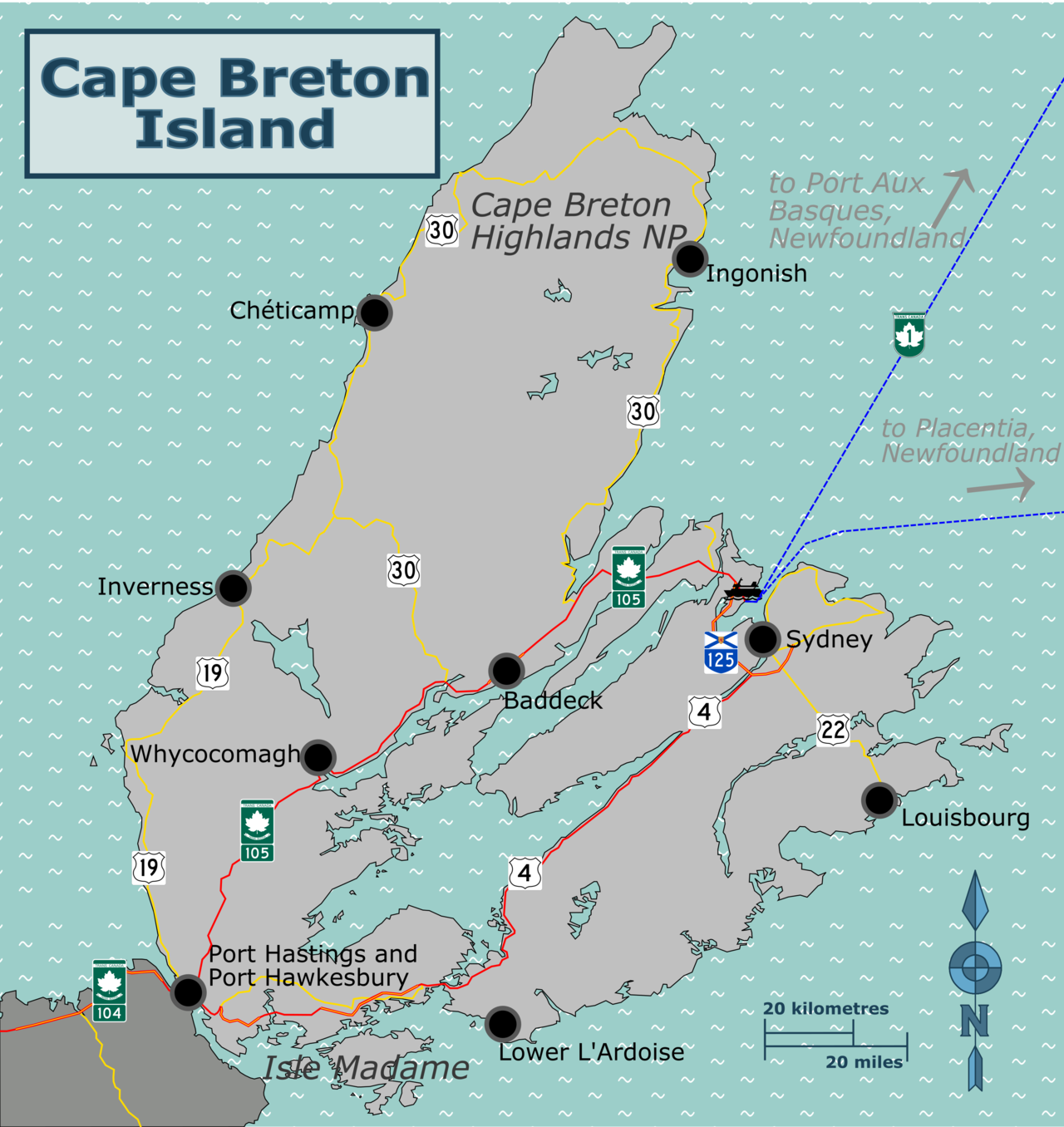
Cape Breton Island lies at the northeastern end of the Canadian province of Nova Scotia. Separated from the provincial mainland by the Strait of Canso and linked by the Canso Causeway, the island faces the Gulf of St. Lawrence to the north and the open Atlantic to the east. It is known in French as île du Cap-Breton, in Scottish Gaelic as Eilean Cheap Breatuinn and in the Mi'kmaq language as Únamakika. The island is often referred to simply as Cape Breton.
Image gallery
7 Images



Geography and natural features
Cape Breton combines low-lying coastal areas, inland lakes and a dramatic upland called the Cape Breton Highlands. The province's national park, Cape Breton Highlands National Park, protects steep cliffs, coastal headlands and boreal woodland. A defining water body is Bras d'Or Lake, a large brackish inland sea with tidal connections to the ocean that supports unique fisheries and recreational boating. The island's coastline, forests and marine environments support diverse wildlife and attract outdoor recreation such as hiking, whale watching and sea kayaking.
History and settlement
Indigenous Mi'kmaq people have inhabited the island for millennia. European contact led to French settlement and the island was known as Île Royale in earlier colonial records. Later British control brought additional settlement by Scottish Gaels and Acadian French communities; the island's name likely reflects a link to Breton or Brittany traditions in Europe — see Breton for linguistic context. Throughout the colonial and industrial eras, the island played roles in fisheries, shipbuilding and resource extraction.
Culture and communities
Cape Breton is renowned for its strong Celtic music and Scottish Gaelic traditions, preserved in song, step dancing and fiddle music. Acadian French communities and Mi'kmaq nations contribute to a multicultural social fabric. The island hosts festivals that celebrate music and heritage, attracting visitors and maintaining local artistic traditions.
Economy and transport
The island's economy has historically relied on fisheries, forestry, coal mining and associated industries; tourism and services have become increasingly important. Major population centres include the regional hub around Sydney and smaller coastal towns and fishing villages. The island is connected to mainland Nova Scotia by road across the causeway and by ferry and air services, tying it into wider maritime and continental networks.
Attractions and conservation
- Scenic drives such as the Cabot Trail provide access to mountain vistas and coastal views.
- Cape Breton Highlands National Park protects extensive natural landscapes and wildlife.
- Bras d'Or Lake offers recreational and ecological value as an inland saline lake system.
- Cultural events celebrate Gaelic, Acadian and Mi'kmaq heritage.
For general reference, the island is an island on the Atlantic coast of North America, combining natural, cultural and historical significance. Readers seeking in-depth study may consult regional archives, Indigenous community resources and conservation organisations for current research, community planning and heritage programmes.
Related articles
Author
AlegsaOnline.com Cape Breton Island Leandro Alegsa
URL: https://en.alegsaonline.com/art/16693