
Cairns, Queensland (Australia)
Cairns is a tropical regional city in Far North Queensland, Australia, known as a gateway to the Great Barrier Reef and Daintree Rainforest. It developed from a 19th-century export port to a tourism and service hub.

Overview
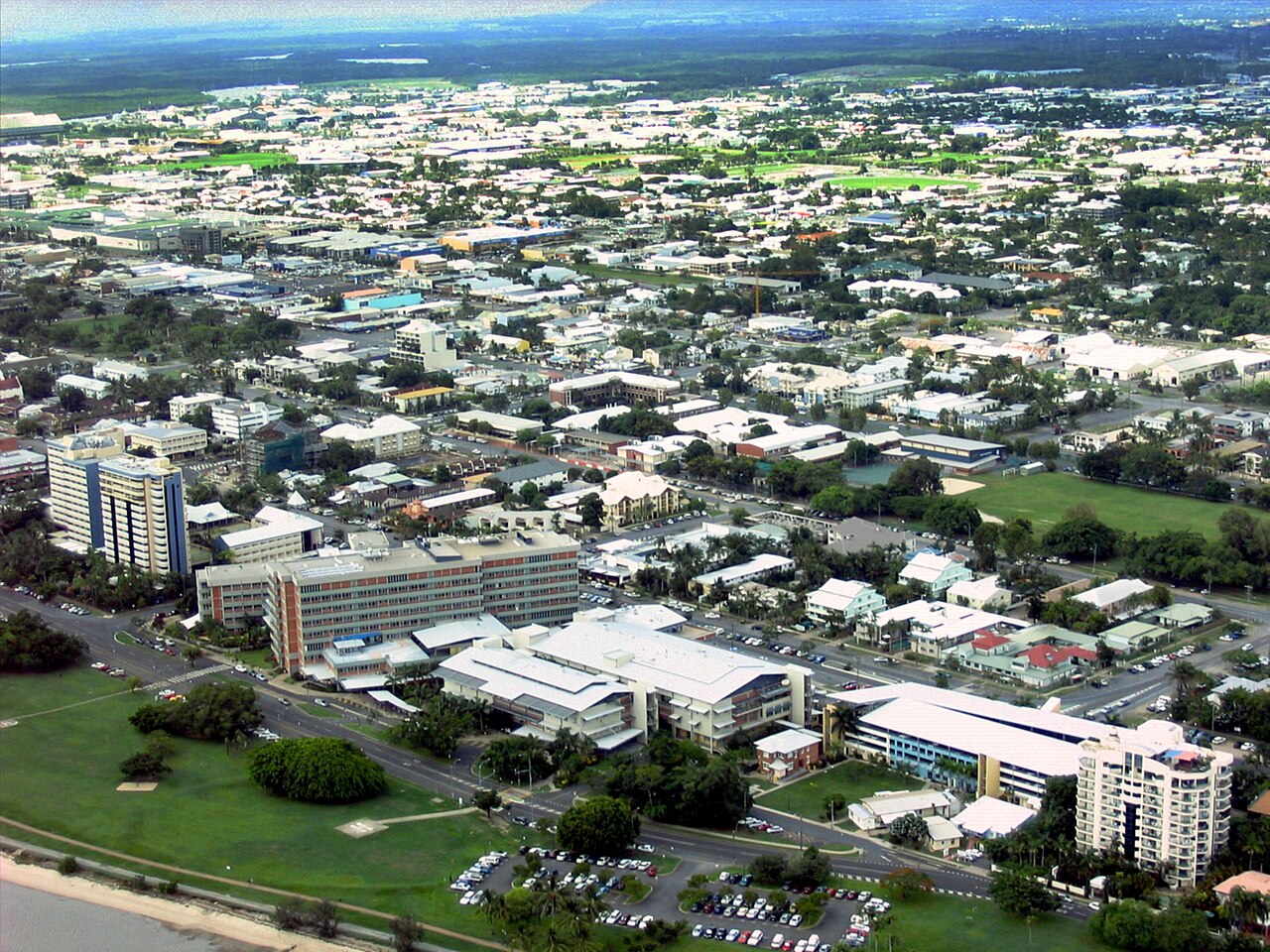
Cairns is a coastal city in Far North Queensland that functions as a principal service and transport centre for the surrounding tropics. Set on Trinity Bay, it is widely recognised as one of the main gateways to the Great Barrier Reef and to the ancient rainforests of the region. The city combines a compact central business district, a waterfront esplanade, and a network of suburbs that extend into nearby lowland and upland areas.
Image gallery
10 Images


Geography and climate
Cairns lies on the northeastern coast of Australia and experiences a tropical monsoon climate, with distinct wet and dry seasons. Summers are hot, humid and prone to heavy rains and occasional tropical cyclones; winters are warm and relatively dry. The nearby landscape includes coastal wetlands, mangroves, coral sea waters, and elevated terrain of the Atherton Tablelands to the west.
History and development
The settlement began in the late 19th century as a port established to support mining and pastoral activity inland. It was named after a colonial governor and initially exported minerals and agricultural produce. Over decades the economy diversified: sugar cultivation and milling became important regional industries, and the mid-20th century brought rising visitor numbers that transformed the local economy toward tourism and services.
Economy, transport and services
The contemporary economy is dominated by tourism, hospitality, health, education and government services, supplemented by agriculture and some mining logistics. Transport connections include an international airport, a functioning commercial port and ferry services to reef and island destinations. Scenic railways and regional highways link the city with mountain tablelands and inland communities.
Attractions and culture

Major attractions are centred on natural heritage: access to the Great Barrier Reef for diving and boating, guided excursions into the Daintree Rainforest, and day trips to the Atherton Tablelands. The city also hosts cultural institutions, markets, and events that reflect local Indigenous histories and a multicultural population. Public spaces such as the Esplanade, botanic gardens and waterfront promenades are focal points for both residents and visitors.

Notable facts and distinctions
Cairns is often described as a regional hub rather than a large metropolitan centre. Its strategic position beside internationally significant reef and rainforest systems gives it a prominent role in tourism, conservation efforts and studies of tropical environments. The city balances economic activity with ongoing environmental and cultural stewardship challenges.


Location
Due to its proximity to many attractions, Cairns has become a popular destination for foreign tourists and is considered by many backpackers to be the main tourist destination in Australia.
The Great Barrier Reef can be reached in an hour and a half by speedboat. Green Island and Fitzroy Island National Park are popular destinations for a yacht trip. The Daintree National Park in the north offers visitors the experience of a tropical rainforest. To the west are the Atherton Tablelands. This high plateau offers a cooler climate compared to the tropical heat of the coastal region. There are many attractions in the vicinity that have been specially developed for tourists, such as the Tjapukai Aboriginal Cultural Park, the Skyrail, a 7.5 km long cable car to Kuranda or the AJ Hackett Bungee Center in the rainforest. Although Cairns is located directly at the sea, the city does not have a direct beach access in the real sense. But there is an artificial lagoon that is filled with salt water and therefore very child-friendly. The beach promenade, which was modernized with a lot of effort, is bordered by a hundreds of meters long mud plain at low tide, on which small mangroves grow. However, a few kilometres further north are some of Queensland's most beautiful beaches (such as Trinity Beach). The botanical garden "The Flecker Botanical Gardens" is located 4 km from the centre. This tropical garden is home to rare plants and flowers: titanium root, orchids and pitcher plants among others.


Admin
Cairns belongs to the administrative area Cairns Region. In the area of the city live 98.000 inhabitants (2007). The following districts and localities belong to Cairns: Aeroglen, Aloomba, Babinda, Barron, Barron Gorge, Bayview Heights, Bentley Park, Bramston Beach, Brinsmead, Bungalow, Cairns City, Cairns North, Caravonica, Clifton Beach, Deeral, Earlville, East Russell, East Trinity, Edge Hill, Edmonton, Ellis Beach, Eubenangee, Fitzroy Island, Freshwater, Goldsborough, Gordonvale, Green Hill, Green Island, Holloways Beach, Kamerunga, Kanimbla, Kewarra Beach, Lamb Range, Macalister Range, Machans Beach, Manoora, Manunda, Mirriwinni, Mooroobool, Mount Peter, Mount Sheridan, Palm Cove, Parramatta Park, Portsmith, Redlynch, Smithfield, Stratford, Trinity Beach, Trinity Park, Westcourt, White Rock, Whitfield, Woopen Creek, Wooroonooran, Woree and Yorkeys Knob.
Related articles
Author
AlegsaOnline.com Cairns, Queensland (Australia) Leandro Alegsa
URL: https://en.alegsaonline.com/art/15993
Sources
- cairns-australia.com : "Cairns History"