
Calcasieu Parish, Louisiana: geography, history, economy and culture
Calcasieu Parish is a coastal parish in southwestern Louisiana with Lake Charles as its seat; known for petrochemical industry, ports, wetlands, and a mix of Cajun and Creole cultural influences.
Overview
Calcasieu Parish lies on the southwestern edge of the U.S. Gulf Coast and is part of the state’s coastal plain. The parish (a Louisiana parish is equivalent to a county elsewhere) includes urban, industrial and extensive wetland areas, with Lake Charles serving as the administrative and economic center. According to the 2010 census, the population was 192,768. The parish’s French name is shown as Paroisse de Calcasieu, reflecting the region’s Francophone heritage.
Image gallery
6 Images


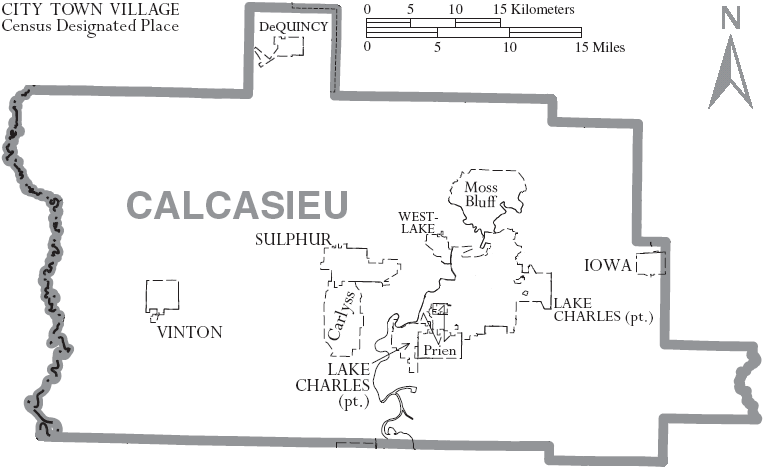

Geography and environment
Calcasieu occupies low-lying coastal terrain shaped by rivers, marshes and estuaries. The Calcasieu River and associated bayous link inland waters to the Gulf of Mexico, supporting fisheries, migratory birds and important wetland ecosystems. The parish’s landscape and economy are influenced by coastal processes and the risk of storms and flooding.
Economy and infrastructure
Industry is a major driver of the local economy. Petroleum refining, chemical plants, liquefied natural gas terminals and shipping facilities are concentrated near the Port of Lake Charles, while commercial fishing and seafood processing remain important along the coast. Recreational and riverine tourism, including casinos and outdoor activities, contribute to services and hospitality. Transportation links connect the parish to the wider region and the U.S. state and national markets.
History and culture
The parish was organized in the 19th century and takes its name from the Calcasieu River; the name reflects Native American and French linguistic influences. Over time the area has blended Anglo-American, French, Acadian (Cajun) and Creole traditions, visible in local cuisine, festivals, music and place names. Lake Charles serves as a cultural hub for arts, education and regional events within Louisiana.
Government, communities and notable facts
Lake Charles is the parish seat and principal city (Lake Charles). Local government manages services such as coastal protection, emergency preparedness and economic development. Calcasieu Parish is notable for its mix of heavy industry next to rich coastal habitats, a pattern that shapes planning, conservation and community life.
- Key sectors: petrochemicals, shipping, fisheries, tourism.
- Environment: marshes, riverine estuaries, Gulf influence.
- Cultural notes: Cajun and Creole influences, French linguistic heritage.
Related articles
Author
AlegsaOnline.com Calcasieu Parish, Louisiana: geography, history, economy and culture Leandro Alegsa
URL: https://en.alegsaonline.com/art/16031
Sources
- quickfacts.census.gov : "State & County QuickFacts"
- naco.org : "Find a County" · web.archive.org