
Aigues-Mortes: fortified medieval port town in the Camargue
Aigues-Mortes is a well-preserved fortified town in southern France, known for its medieval walls, salt marshes, and role as the embarkation point for the Crusades. It lies near the Camargue and the city of Nîmes.
Aigues-Mortes is a small fortified town in southern France, famous for its intact medieval ramparts, salt marshes and its historical role as a royal port. Its name, from the Occitan and Old French roots meaning "dead waters," refers to the shallow, marshy lagoons that surround the settlement. The town lies in the Camargue plain and has long served as a local center for salt production and coastal access, despite the shoreline having shifted since medieval times. For linguistic and cultural context see name and meaning.
Image gallery
10 Images

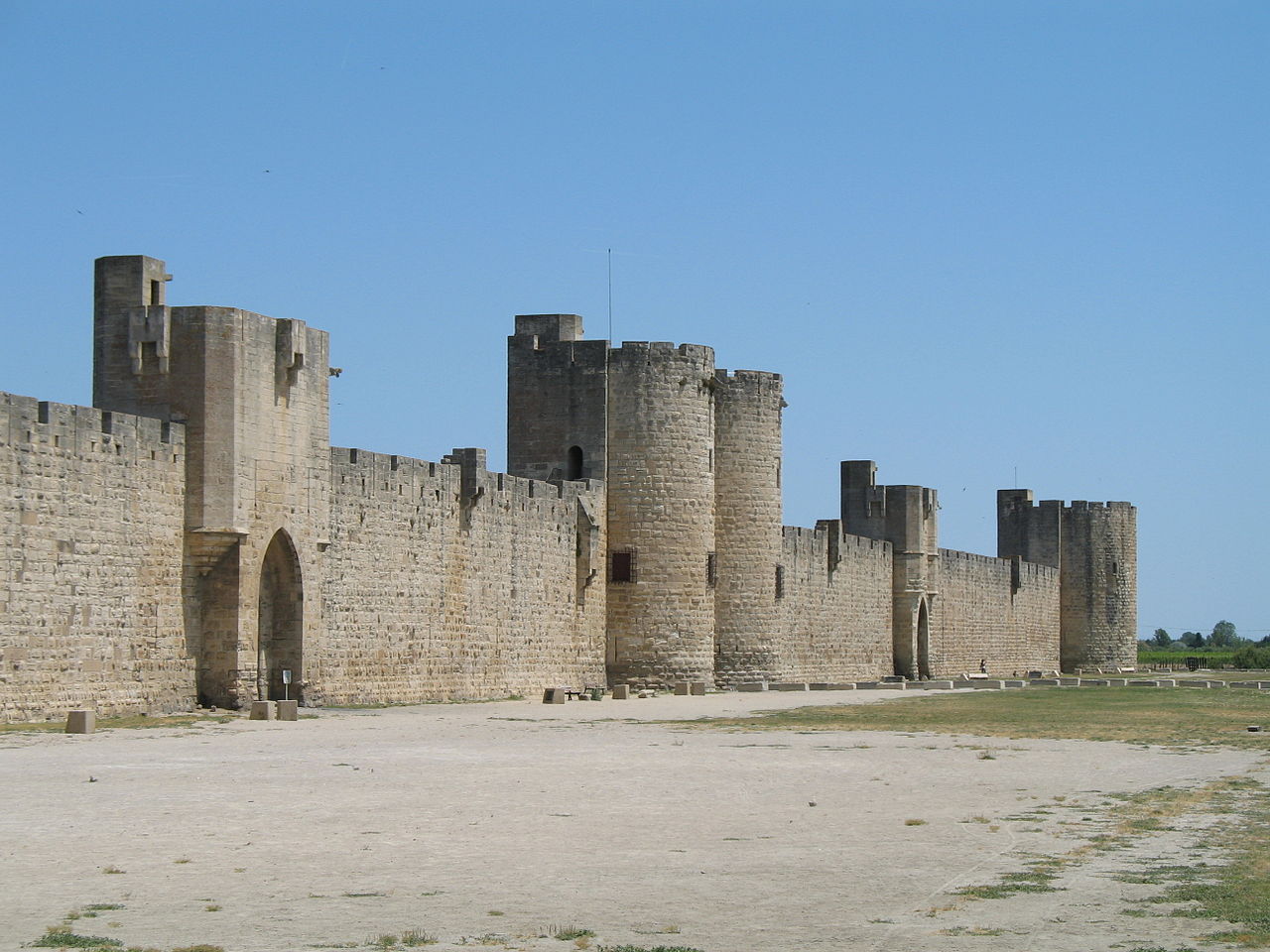


Overview and layout
Aigues-Mortes is a planned medieval town, or bastide, laid out with a regular street pattern and a clear central market area. This design reflects deliberate urban planning in the Middle Ages intended to support trade and defense. The town retains strong visual character: stone ramparts punctuated by towers and gateways enclose the historic core, and narrow streets open onto squares and the former port area. The bastide concept and its urban grid are discussed in more detail at bastide towns.
History and development
The settlement has ancient roots: archaeological and documentary traces link the site to Roman activity in the region from the late Republic period, and classical foundations are often associated with the wider Roman colonization of southern Gaul; for background see Roman origins. Medieval references to the place under its current name appear from the 10th century onward (early records). In the 13th century King Louis IX of France rebuilt and enlarged the port and fortifications, seeking a secure Mediterranean embarkation point under royal control; his projects and their dates are summarized at Louis IX and 13th-century works. The town served as the departure point for the Seventh and Eighth Crusades in the mid- to late 1200s.
Fortifications and the changing coastline
Aigues-Mortes is best known for its well-preserved walls, towers and fortified gates that visitors can still walk along. Over centuries the Rhône delta and coastal processes caused silting and shoreline change, so the medieval harbor no longer lies directly on the open sea. A canal and managed waterways today re-establish a navigable link to the coast, and modern infrastructure maintains access for boats and commerce. Readers can find regional context at Languedoc-Roussillon and administrative ties at regional links.
Economy, salt and tourism
The economy around Aigues-Mortes has long depended on salt extraction from the surrounding marshes and saline ponds. Large salt flats in the Camargue produce sea salt that has been harvested since medieval times; the relationship between the town and salt production remains a defining characteristic. Today tourism plays a major role: visitors come to walk the ramparts, explore the saline landscapes, take boat trips toward the coast and enjoy regional festivals. Practical visitor information and local services may be found via resources such as city guides and regional portals (nearby Nîmes provides transport connections).
Visiting and notable facts
Highlights for visitors include the circuit of medieval walls, the towers and gates, strolls through the historic center, and excursions into the Camargue's wetlands for birdwatching and salt marsh scenery. Key points of interest can be summarized:
- Medieval ramparts and defensive towers — intact and walkable.
- Historic port area and canals linking to coastal waterways.
- Saline landscapes and traditional salt pans central to the local economy.
- Proximity to regional centers and cultural sites—approximately a short drive from larger cities; see transport and locality info at regional links and Nîmes.
For historical summaries, tourism materials, and academic overviews, consult dedicated resources and local archives; additional reading and external references are indicated by general portals such as name studies, administrative listings at municipal pages, and heritage guides at documentary records and royal archives. Further cultural and travel information can be found through broader regional sites at Languedoc resources, economic background at Roman-era context and contemporary visitor services at historical overviews and urban planning references.
Aigues-Mortes remains an instructive example of a medieval royal port adapted to changing natural conditions: a compact, walkable town whose fortifications and salt marsh setting continue to define its identity and attract study and visitors alike.
Related articles
Author
AlegsaOnline.com Aigues-Mortes: fortified medieval port town in the Camargue Leandro Alegsa
URL: https://en.alegsaonline.com/art/1548