
Broth — culinary liquid used as soup base and cooking stock
Broth is a flavored cooking liquid made by simmering meat, bones, fish or vegetables. Used as a base for soups, sauces and grains, its definition and preparation vary by region and culinary tradition.
Broth is a savory, flavored liquid produced by simmering ingredients such as meat, bones, fish or vegetables in water and then straining the solids. In the broadest sense it is the liquid component used to make a soup or to add depth of flavor in many recipes. Broth can be eaten on its own as a light soup or used as an ingredient to build more complex dishes.
Image gallery
3 Images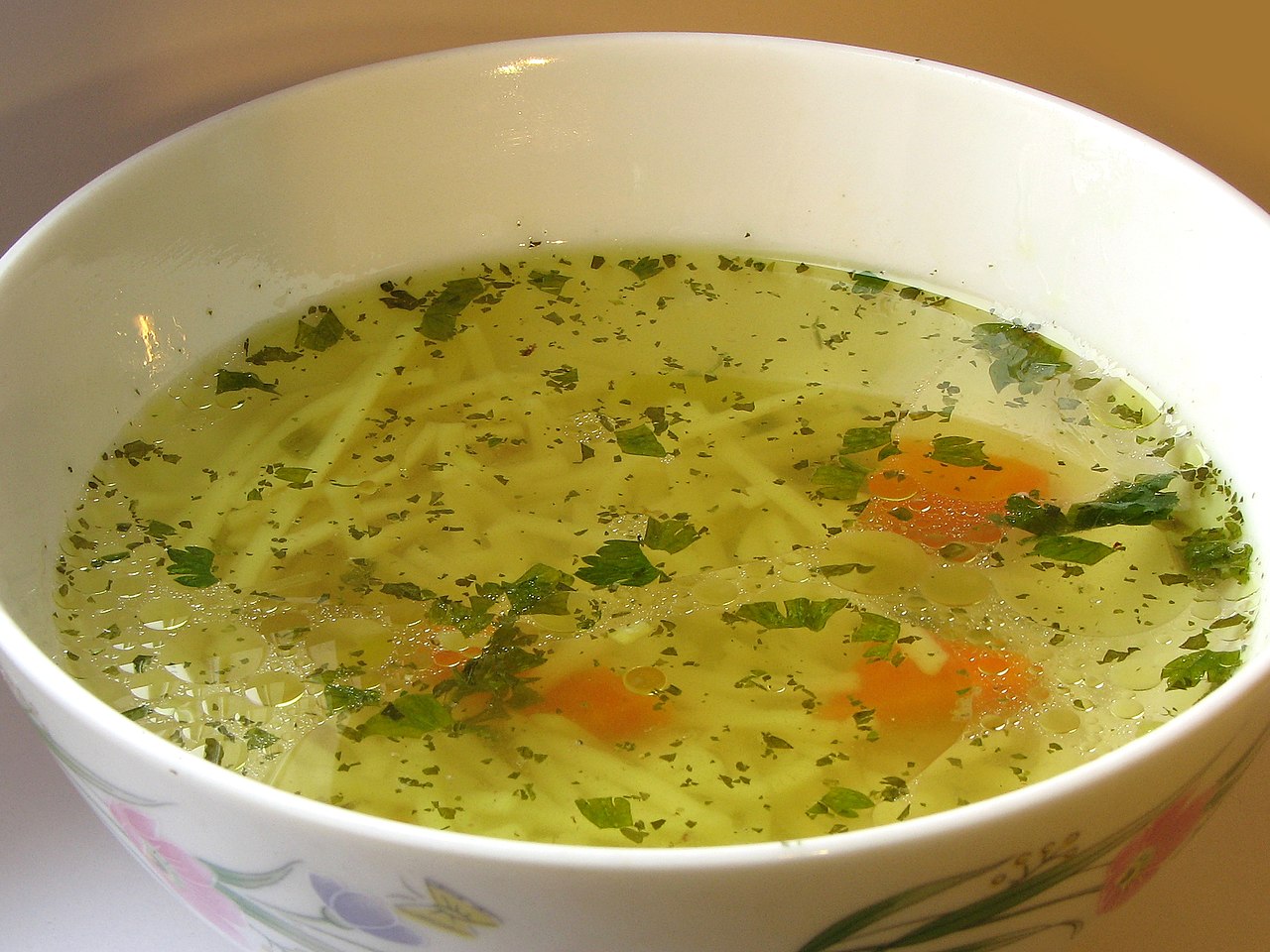


Common ingredients and varieties
Typical broths begin with animal proteins (for example, meat or bones) or plant material. Vegetable broths rely on aromatic vegetables and herbs; chicken, beef and fish broths use the corresponding proteins. Some regional types have specific names: a fish-derived concentrated broth is often called a fumet, while slow-simmered bone preparations are sometimes marketed as "bone broth." In Japanese cooking, non-animal sources such as kelp and dried bonito flakes are used to make dashi.
Preparation and characteristics
Broth is usually prepared by covering ingredients with cold water and gently bringing them to a simmer. Long, gentle simmering extracts flavors and, from bones, gelatin that gives body to the liquid. Fat and scum are skimmed from the surface during cooking, and the finished liquid is typically strained to remove solids. Some preparations are clarified (as in a consommé) for a clear, refined result.
Regional definitions and culinary distinctions
Terms such as "broth" and stock are used differently in various culinary traditions. In some professional kitchens, stock is made primarily from bones and is left unseasoned so it can be reduced or adapted, while broth is made from meat and is seasoned for direct consumption. In British English, the word "broth" often denotes a soup containing pieces of meat or fish and vegetables. In everyday home cooking these categories overlap and usage varies.
Uses and examples
Broth is a foundational liquid in cooking: it forms the base for soups, stews and sauces; it is used to poach proteins, to deglaze pans and to cook grains and legumes. For example, using broth instead of water when cooking rice or barley infuses the grain with additional flavor. Chefs and home cooks also use broth in recipes for risottos, braises and pan sauces.
Storage, nutrition and notable facts
Prepared broth chills and freezes well. Refrigerate promptly and use within a few days or freeze for longer storage. Nutritionally, broths provide fluids, some protein and dissolved minerals; broths made from simmered bones can contain gelatin and small amounts of collagen breakdown products. Modern trends have popularized slow-cooked bone broths for perceived health benefits, but such claims vary and broths can be high in sodium if store-bought or heavily seasoned.
- Common types: vegetable broth, chicken broth, beef broth, fish fumet, bone broth.
- Related techniques: clarification (consommé), reduction to make a demi-glace.
- Practical tip: skim fat during cooking for a cleaner-tasting broth.
Broth remains one of the most versatile components in cooking, valued both as a finished light soup and as a building block for more elaborate dishes.
Related articles
Author
AlegsaOnline.com Broth — culinary liquid used as soup base and cooking stock Leandro Alegsa
URL: https://en.alegsaonline.com/art/14750