
Agustinia — early Cretaceous sauropod with controversial armour
Agustinia is a fragmentary sauropod genus from Early Cretaceous Argentina, originally noted for unusual dermal plates and later the subject of taxonomic debate. Its classification remains uncertain.
Overview
Agustinia is a genus of sauropod dinosaur known from fragmentary remains found in Argentina. It lived during the Early Cretaceous, roughly in the Aptian–Albian interval (about 116–100 million years ago). The fossil material is limited, and interpretations of its anatomy—especially the presence of dermal armour—have been debated since the genus was first described. For a basic taxonomic entry see Agustinia (genus).
Image gallery
10 Images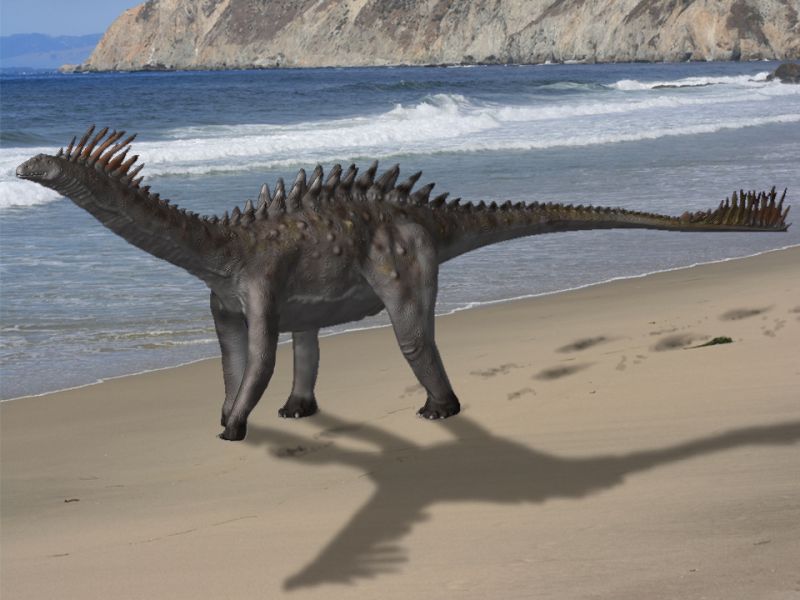


Description and notable features
The specimens attributed to Agustinia consist mainly of incomplete postcranial elements, including vertebrae and parts that were originally interpreted as ossified plates or spines. The original description proposed a row of irregular plates and spikes along the back, an arrangement unusual among sauropods and therefore widely remarked upon. Later re-evaluations have suggested that some of the elements were misidentified, and that the ‘‘armour’’ might represent fragmentary or reworked bone rather than true dermal ossifications.
Classification and scientific debate
Because the material is incomplete, Agustinia has been difficult to place with confidence within sauropod groups. It was described as unique enough to warrant attention, but subsequent authors have varied in their opinions, placing it among rebbachisaurids, titanosauriforms, or regarding it as too fragmentary to diagnose reliably. Some researchers treat Agustinia as a dubious name; others consider it potentially informative but in need of more complete material. For species-level context see type species.
Discovery and naming
The holotype material was discovered in Early Cretaceous deposits of northern Patagonia and was named and described in the late 20th century. The species honors the collector Giancarlo Ligabue, giving the specific name ligabuei. The genus was originally christened with a different spelling, but that name proved preoccupied; the formal replacement name became Agustinia. The find locality and stratigraphic information are summarized in regional overviews of South American Cretaceous vertebrates; see regional summaries such as Neuquén and Patagonia records.
Importance and legacy
Agustinia is significant more for the questions it raised than for what is solidly known about its biology. Its initial portrayal as an "armoured" sauropod drew attention because armored plates are rare in this group, prompting further scrutiny of sauropod integument and of how fragmentary fossils are interpreted. It serves as a cautionary example in paleontology: fragmentary remains can lead to striking but uncertain reconstructions.
Key points and further reading
- Known from fragmentary postcranial elements and contested dermal plates.
- Named in honor of Giancarlo Ligabue; original genus name was preoccupied by another animal group — see taxonomic notes naming history.
- Its classification remains unresolved and is discussed in reviews of South American sauropods; historical naming conflicts for the genus are comparable to other taxa (see nomenclatural examples).
Related articles
Author
AlegsaOnline.com Agustinia — early Cretaceous sauropod with controversial armour Leandro Alegsa
URL: https://en.alegsaonline.com/art/1468
Sources
- museocivico.rovereto.tn.it : An armoured sauropod from the Aptian of northern Patagonia, Argentina