
Ajkaceratops — a small ceratopsian from the Late Cretaceous of Europe
Ajkaceratops is a genus of small beaked ceratopsian dinosaur from the Late Cretaceous Tethyan archipelago, named after Ajka, Hungary. It highlights insular faunas and Eurasian dispersal patterns.
Ajkaceratops is a genus of small, beaked ceratopsian genus discovered in Central Europe and formally described in 2010. It belongs to the broader group of horned dinosaurs often referred to as ceratopsians, though Ajkaceratops itself lacks the large cranial horns typical of some relatives and is known mostly from fragmentary cranial material. Scientists place this animal within the diverse clade of herbivorous dinosaur lineages that dominated many Late Cretaceous landscapes.
Image gallery
10 Images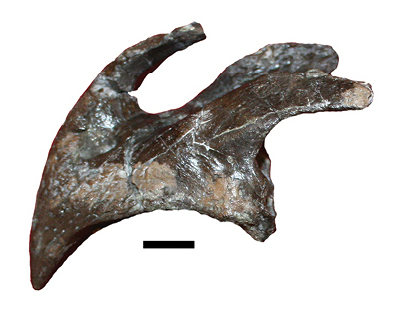


Description and anatomy
Known remains of Ajkaceratops are limited, primarily pieces of the skull that show a sharp, parrot-like beak and bones associated with a small frill. These features indicate a plant-eating lifestyle relying on cropping vegetation. The overall body of Ajkaceratops is inferred to have been modest in size compared with larger North American ceratopsids, and its skull morphology shares notable similarities with smaller, Asian relatives, suggesting a connection across regions.
Geological age and environment
Ajkaceratops lived during the Cretaceous period. Its fossils come from deposits that represent the European portion of the Tethyan archipelago, a mosaic of islands and shallow seas that characterized much of Europe at that time. Such insular settings produced distinctive faunas and sometimes led to evolutionary trends different from those on large, continental landmasses.
Discovery, name, and context
The genus name honors the town of Ajka in Hungary, near the site where the fossil material was recovered. The specific epithet used in the original description commemorates a researcher associated with the discovery. The name Ajkaceratops combines the locality with the Greek-derived root "ceratops," meaning "horned face"—a term stemming from Greek language roots commonly used in dinosaur names (Greek).
Significance and relationships
Ajkaceratops is important because it expands evidence of ceratopsian presence in Europe and contributes to discussions about Late Cretaceous biogeography. Morphological similarities to small Asian ceratopsians have been interpreted as evidence of faunal interchange across the Tethys realm or parallel evolution in island settings. Its discovery helps paleontologists trace how herbivorous dinosaur groups dispersed and adapted to insular environments in the northern hemisphere (Europe).
Notable facts and open questions
- Ajkaceratops is primarily known from cranial fragments; much of its anatomy remains uncertain.
- Its modest size and island occurrence raise questions about possible insular adaptations, but limited material makes such interpretations tentative.
- Ongoing and future finds are needed to clarify its exact position among ceratopsians and to better reconstruct its appearance and ecology.
Research on Ajkaceratops illustrates how fragmentary fossils can nevertheless illuminate broader paleobiological patterns, including island biogeography and the spread of dinosaur lineages across ancient seaways. For further context on ceratopsian diversity and Cretaceous faunas consult specialist literature and museum resources (more on genera, ceratopsian overview, dinosaur resources, Cretaceous time, European paleofaunas, etymology and naming, locality information).
Related articles
Author
AlegsaOnline.com Ajkaceratops — a small ceratopsian from the Late Cretaceous of Europe Leandro Alegsa
URL: https://en.alegsaonline.com/art/1754