
British Rail Class 42 'Warship' diesel-hydraulic locomotives
Type 4 diesel-hydraulic 'Warship' locomotives introduced 1958 for BR Western Region, adapted from the German V200 design; notable for twin-engine hydraulic layout, Western Region service and later preservation.
Overview
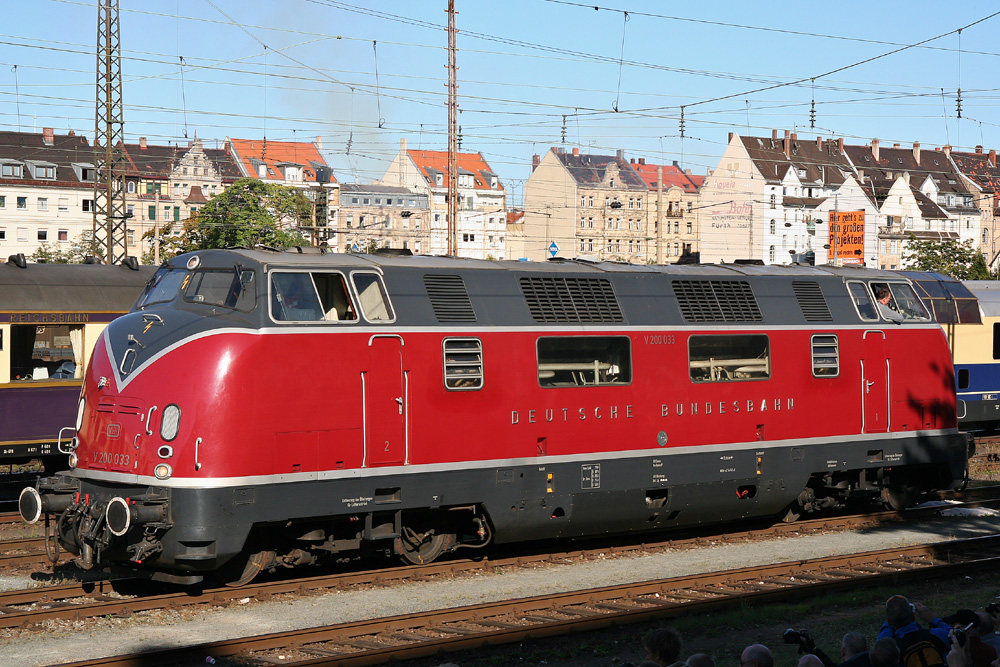
The British Rail Class 42, commonly known as the "Warship" class, was a family of Type 4 diesel-hydraulic locomotives introduced from 1958 for use on BR's Western Region. Developed under licence from German manufacturers, the design was a scaled-down adaptation of the Deutsche Bundesbahn V200 to fit the British loading gauge. Locomotives built at BR's Swindon Works carried numbers in the D800–D832 and D866–D870 series and are classed as Class 42. They replaced steam power on many express services and were a visible sign of modernisation on West Country and Bristol–Paddington routes.
Image gallery
9 Images



Design and technical characteristics
The Class 42 adopted the diesel-hydraulic principle common to several German designs of the period: twin power units driving hydraulic transmissions that in turn powered the bogies. This arrangement produced a distinctive twin-nacelle silhouette and provided good acceleration for passenger work. Key characteristics included a B-B wheel arrangement suitable for mixed-traffic duties, a compact body to meet British clearances, and components largely specified to allow construction by British firms under licence.
- Configuration: twin-engine, diesel-hydraulic transmission.
- Wheel arrangement: B-B (four axles, two bogies).
- Intended duties: express passenger and fast secondary services.
- Builders: BR Swindon Works (Class 42) and, separately, North British Locomotive Company for the related Class 43 batch; see more on North British Locomotive Company.
Origins and development
During the 1950s British Railways sought rapid diesel traction development and looked to established continental experience. The Western Region acquired a licence to adapt the German V200 concept, reflecting contemporary industrial links and the need to respect domestic sensitivities after World War II — a factor discussed in period accounts of railway procurement and public feeling at the time (post-war context). The resulting Warship family shared many cosmetic and engineering cues with its German predecessor but was modified for British gauges and operating practices.
Service history and allocation
Class 42 locomotives were principally allocated to Western Region depots and regularly worked expresses out of London Paddington to destinations in the West Country and South West. Main allocations included Bristol Bath Road, Plymouth Laira, Newton Abbot and Old Oak Common. They offered good journey times on the routes they served, but the fleet's hydraulic transmissions and non-standard components eventually made servicing and standardisation more challenging for BR as diesel-electric designs became the national norm.
Legacy, preservation and distinctions
The Warships are notable for their clear German influence and for forming part of an early wave of mainline diesel traction in Britain. A related batch built by the North British company is treated separately as British Rail Class 43 (Class 43) and differed in construction detail and service record. As BR moved towards diesel-electric standardisation in the 1960s and 1970s, the Warships were gradually withdrawn. A small number escaped scrap and have been preserved on heritage lines, where they demonstrate mid-20th-century diesel-hydraulic technology and the cross-channel exchange of locomotive ideas.
For a technical comparison and roster details, enthusiasts and researchers can consult historical works and preserved-railway records that document individual locomotives, allocations and withdrawal dates. The Class 42 remains an important chapter in the transition from steam to diesel traction on British main lines.
Tags
Related articles
Author
AlegsaOnline.com British Rail Class 42 'Warship' diesel-hydraulic locomotives Leandro Alegsa
URL: https://en.alegsaonline.com/art/14446