
North British Locomotive Company
A major Scottish locomotive manufacturer formed in 1903 by the merger of three firms, based in Glasgow, notable for large-scale steam production, global exports and a mid-20th century decline.
The North British Locomotive Company (commonly abbreviated NBL) was established in 1903 through the consolidation of three Scottish builders. The move combined the facilities, staff and expertise of long-established firms into a single company based in the Springburn district of Glasgow. From its formation it became one of the most important makers of railway locomotives in Britain and, for a time, the largest producer in Europe, serving domestic railways and a wide range of overseas customers. Foundation and grouping brought together the strengths of several local firms into a single engineering concern.
Image gallery
10 Images


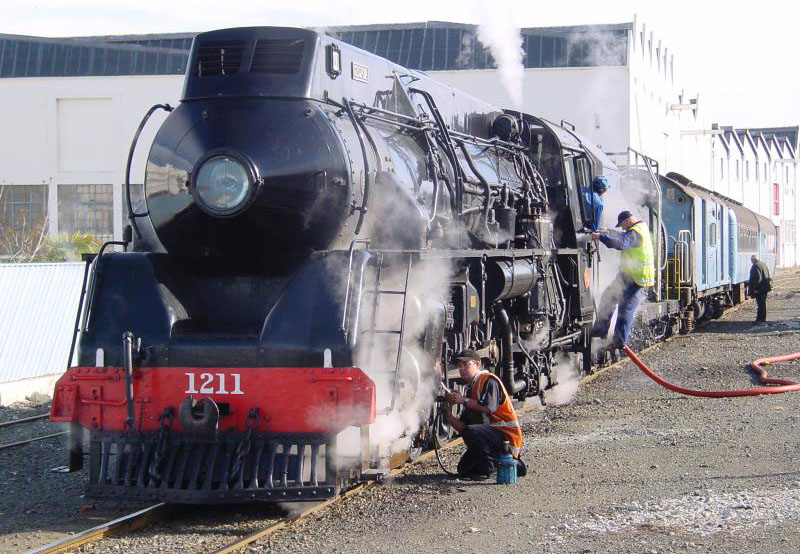

Characteristics and products
NBL's core output for the first half of the 20th century was steam locomotives of many sizes and types, built for mainline, branch and industrial use. The company also produced associated heavy engineering work, spare parts and specialised rolling stock elements. As rail technology evolved in the mid-20th century NBL attempted to adapt by building diesel and electric traction equipment, a transition that proved technically and commercially challenging for many traditional steam builders.
History and development
The company emerged from the merger of three Scottish engineering firms, reflecting a broader pattern of consolidation in heavy industry at the start of the 20th century. Its factories and workshops in Glasgow drew on a local supply chain of ironfoundries, boiler makers and skilled labour. During the two world wars, like many industrial firms, NBL directed much of its capacity to war-related work alongside continuing locomotive manufacture. Scottish roots and a large skilled workforce underpinned production during this era.
Markets, examples and importance
NBL supplied locomotives to railway companies across the British Empire and beyond. Exports reached markets in Asia, Africa, Australasia and the Americas, making the firm an important contributor to the global spread of British engineering. Its products were notable for being purpose-built for a wide range of track conditions and climates, and the company often supplied spare components and maintenance support with exported machines. Locomotive manufacturing at NBL thus had both local and international significance.
Decline, closure and legacy
The post-war era brought major change: nationalisation, new competition, and rapid technological shifts from steam to diesel and electric traction. NBL struggled to adapt to these changes and to the economic environment of the 1950s and early 1960s. Attempts to retool and diversify achieved limited success, and the company ultimately ceased trading and closed in 1962. Closure in 1962 marked the end of an era for Glasgow locomotive manufacture. Its scale at peak production had previously made it the largest manufacturer in Europe by some measures.
- Notable facts: a major exporter, employer and contributor to early 20th-century railway expansion.
- Legacy: several locomotives built by NBL survive in preservation and museums, and the company's history is studied by industrial historians and railway enthusiasts.
- Distinction: the firm represents both the strengths and limits of heavy engineering firms that grew from regional specialisation into international suppliers.
For further reading on the company's formation, products and later years, see sources covering British locomotive industry history and regional industrial development in Glasgow. Formation details, local context and technical perspectives on locomotive manufacture provide useful starting points for researchers and enthusiasts alike. Additional summaries and archival materials are referenced through specialist railway history collections. Closure records and retrospective accounts describe the final years and the firm's long-term impact on railway engineering. Comparative industrial status highlights how NBL fitted into the wider European manufacturing scene.
Related articles
Author
AlegsaOnline.com North British Locomotive Company Leandro Alegsa
URL: https://en.alegsaonline.com/art/70833