
British Rail Class 43 (Warship Class)
Diesel-hydraulic 'Warship' locomotives built for British Rail by the North British Locomotive Company, noted for German-influenced design, named after Royal Navy ships, and later withdrawn with some preserved examples.
The British Rail Class 43 locomotives of the "Warship" series were a group of diesel-hydraulic engines built for mainline passenger work. They were constructed by the North British Locomotive Company and entered service for British Rail in the early 1960s. These locomotives adopted a continental approach to diesel-hydraulic transmission and styling that contrasted with many British diesel-electric designs of the same era.
Image gallery
5 Images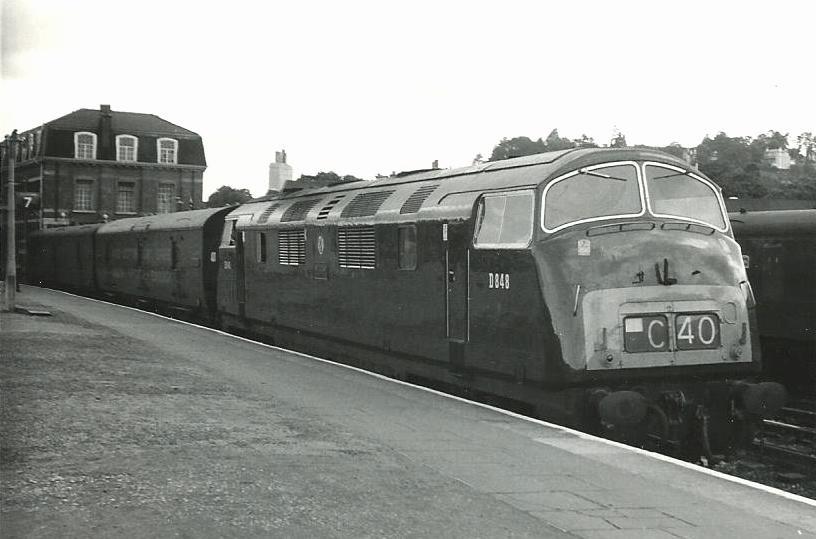


Characteristics
- Transmission: Diesel-hydraulic layout, following German practice of compact, high-power hydraulic drives.
- Role: Intended for express and semi-fast passenger services, giving good acceleration for regional and intercity work.
- Appearance: Distinctive bodywork with end cabs and side panels; many carried names rather than numbers in publicity and service timetables.
- Naming: Nicknamed "Warship" because units were often named after Royal Navy vessels.
The mechanical concept relied on compact, high-revving diesel engines coupled to hydraulic transmissions. This arrangement offered a favorable power-to-weight ratio and smooth torque delivery, though it also required specialised maintenance practices different from diesel-electric locomotives.
History and production
Production took place during a concentrated programme in the early 1960s under a British Rail modernisation context that experimented with several traction types. The choice to commission diesel-hydraulic units was influenced by contemporary continental examples and by the desire for rapid acceleration on densely scheduled routes.
While the Warship class performed well in some duties, the build quality and reliability varied between manufacturers. The builder behind this Class 43 batch faced financial and engineering challenges, which affected fleet availability and long-term support. As operational experience accumulated, British Rail progressively standardised on other traction types for future fleets.
Withdrawal, legacy and preservation
Over time the Warship Class units were withdrawn from regular service as newer designs and maintenance philosophies took precedence. A number of locomotives found second lives on heritage lines or in museum collections, where they are maintained by volunteer groups and railway trusts keen to preserve an example of this distinctive diesel-hydraulic era.
Notable distinctions include the Warship Class's difference from the later and unrelated Class 43 power cars used on the InterCity 125 high-speed trains: the two share a class number but are entirely separate designs and generations of traction. The Warship series remains of interest to historians and enthusiasts as an example of mid‑20th century experimentation in British diesel traction.
Related articles
Author
AlegsaOnline.com British Rail Class 43 (Warship Class) Leandro Alegsa
URL: https://en.alegsaonline.com/art/14451