
British Rail Class 26
A medium-powered Type 2 diesel-electric locomotive built by BRCW in 1958–59. Forty-seven were produced for British Rail, mainly used in Scotland; the last were withdrawn from service in 1993.
Overview
The British Rail Class 26 is a class of medium-powered diesel-electric locomotives built for British Rail during the late 1950s. Originally marketed as the BRCW Type 2, the locomotives were produced by the Birmingham Railway Carriage and Wagon Company at Smethwick between 1958 and 1959. A total of forty-seven examples were completed for mainline service. They filled a niche in BR's modernisation programme as versatile mixed-traffic engines, used for both secondary passenger trains and freight workings.
Image gallery
10 Images



Design and characteristics
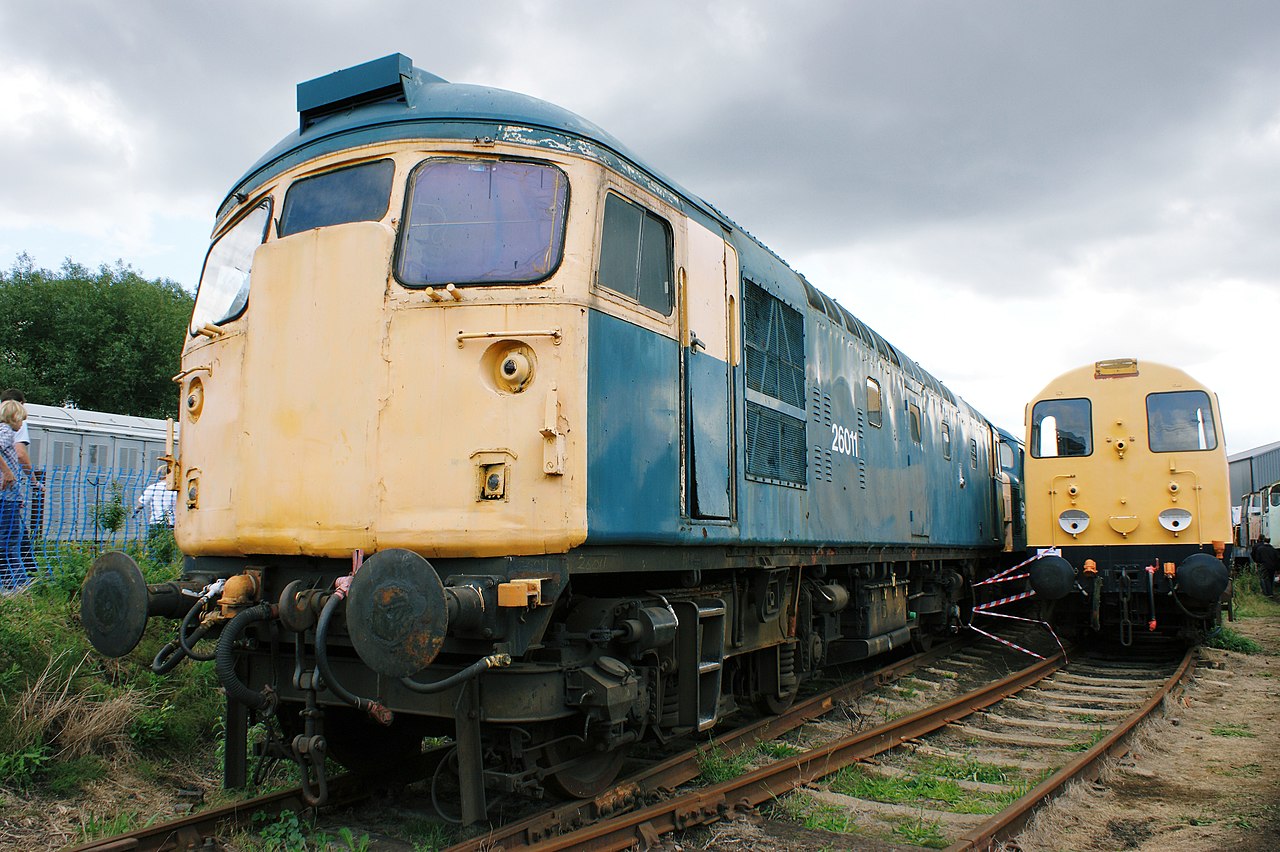
Class 26 locomotives were conventional Type 2 designs of their era: diesel-electric transmission with a compact body and a driving cab at each end. They had a relatively low axle load and a wheel arrangement typical of medium-powered road locomotives, intended to offer a balance between tractive effort and route availability. Early examples carried traditional headcode displays, which were modified or removed as working practices changed. Over their careers many received detail alterations to braking, multiple-working equipment and cab fittings to suit regional requirements.
Service history
After introduction the Class 26s saw widespread use on secondary passenger services, local freight and yard pilot duties. They were particularly associated with the Scottish Region, where the majority spent much of their working life, but individual locomotives also appeared elsewhere on the network. The class proved reasonably reliable and adaptable, which extended their operational usefulness into the 1980s. Withdrawals began as newer locomotive types and changing traffic patterns reduced the demand for Type 2s; the last commercial examples were retired by 1993.
Operational roles and examples
- Mixed-traffic duties: local passenger and freight trains.
- Shunting and yard pilot work when required by depots.
- Occasional departmental or engineering train use later in life.
Legacy and preservation
Although never produced in large numbers compared with some other BR types, the Class 26 has remained of interest to enthusiasts because of its association with the early diesel era and its regional character. Several locomotives have been saved from scrap and survive on heritage railways; preserved examples are regularly seen at galas and on short public workings. For comparisons with related designs, the Class 26 is frequently mentioned alongside other Type 2 classes such as those built by the same manufacturer or by other firms.
Further reading and photographic records can be found in specialised sources and preserved-railway websites: Class 26 details, background on the original designation as the BRCW Type 2, and information about the builder Birmingham Railway Carriage and Wagon Company.
Tags
Related articles
Author
AlegsaOnline.com British Rail Class 26 Leandro Alegsa
URL: https://en.alegsaonline.com/art/14383