
British Rail Class 415 (4EPB) suburban electric multiple unit
Four-car 750 V DC third-rail suburban EMU built 1951–1957 for the Southern Region (4EPB); long-serving commuter stock later replaced in the 1990s; several vehicles preserved.
Overview
The British Rail Class 415, commonly known by the formation code 4EPB, was a four-car suburban electric multiple unit introduced on the Southern Region of British Railways in the early 1950s. Built between 1951 and 1957, the units were designed for intensive stop-start commuter services and operated from the region's 750 V DC system (750 V DC) using the local current collection method (third rail). As electric multiple units (EMU), they could work in multiple with other sets and were fitted with electro-pneumatic brakes, which gave rise to the 'EPB' part of their designation.
Image gallery
3 Images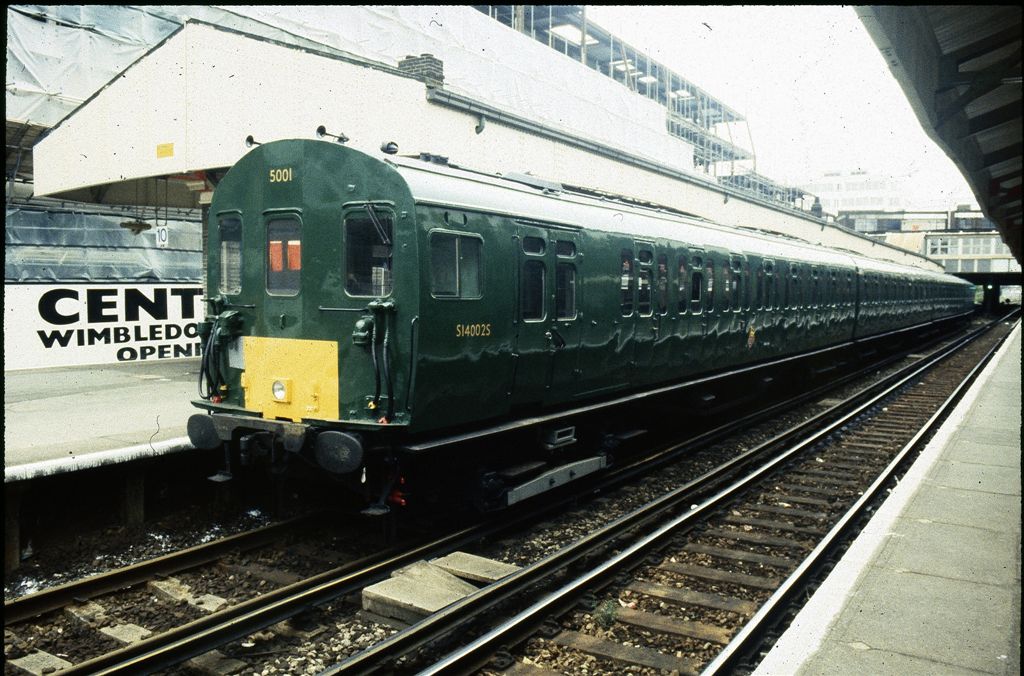


Design and formation
Each 4EPB set comprised four vehicles with a mixture of motor and trailer cars arranged to provide rapid acceleration and adequate seating for commuter flows. The exterior and interior layouts reflected mid-20th century suburban practice: slam doors, a mix of compartment and open saloon seating in different subclasses and refurbishments, and relatively simple electrical equipment designed for ease of maintenance. The class represented a post-war standardisation effort on the Southern Region and supplanted older pre-war suburban types such as the 4Sub units (4Subs).
Service history
Class 415 units worked a wide variety of inner-suburban and outer-suburban services into and around London and in other parts of the Southern Region. Their duties included frequent shuttle services, peak-time commuter workings and short-distance trips where rapid acceleration and dependable braking were essential. Over the decades they carried several different liveries and minor technical updates as maintenance and refurbishment programmes were carried out.
Withdrawal and replacement
By the late 20th century the ageing 4EPB fleet was increasingly costly to maintain and lacked many safety and passenger comfort features of newer designs. During the 1990s they were gradually withdrawn and replaced by modern suburban stock, including units of Classes 455, 456, 465 and 466, which offered improved reliability, sliding or automatic doors and up-to-date passenger facilities.
Technical notes
- Traction system: DC electric traction suitable for third-rail supply via shoe gear.
- Brakes: Electro-pneumatic braking allowed consistent performance on stop-start services.
- Multiple working: Sets could be coupled and controlled together, permitting flexible train lengths for peak services.
Preservation and legacy
A modest number of 4EPB vehicles have survived into preservation on heritage railways and in museums, where they demonstrate post-war suburban rolling stock design and operation. Preserved examples are used for static display and occasional demonstration passenger use, often after careful restoration of interiors and exterior liveries. The Class 415 played a key role in mid-20th century commuter transport on the Southern Region and is frequently cited by historians and enthusiasts as representative of that era of electrified suburban services (Southern Region, British Railways).
Further reading and research
For technical details, builder lists, unit formations and the history of individual vehicles consult specialist publications and preserved railway records. Enthusiast groups and heritage organisations maintain up-to-date registers of surviving cars and restoration projects; these sources provide the most reliable information on preserved examples and operational status.
Notes: the designation 4EPB highlights both the four-car formation and the electro-pneumatic brake equipment; the type remains of interest to railway historians, preservationists and those studying the evolution of suburban EMU design in Britain.
Related articles
Author
AlegsaOnline.com British Rail Class 415 (4EPB) suburban electric multiple unit Leandro Alegsa
URL: https://en.alegsaonline.com/art/14442