
British Rail Class 202 (6L) – narrow‑profile diesel‑electric multiple unit
Diesel‑electric multiple units built 1957–58 with a narrow body profile for the restricted clearances on the London Charing Cross to Hastings route.
The British Rail Class 202, sometimes referred to by the formation code 6L, is a family of diesel‑electric multiple units designed and built in the late 1950s to work services on the London Charing Cross to Hastings corridor. They are most notable for their narrow body profile, a direct response to limited clearances on parts of the line.
Image gallery
2 Images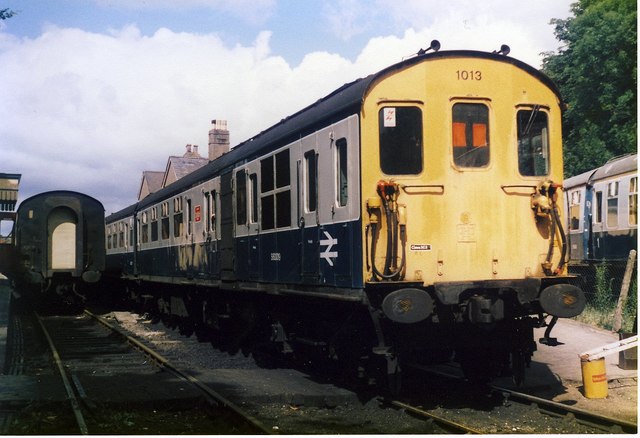

Overview
Constructed between 1957 and 1958 at the main works of British Rail, the Class 202 units were produced at both Eastleigh and Ashford works. Intended for mainline passenger duty, these sets were deployed where the standard width of contemporary rolling stock could not be used because of tunnel and structure restrictions. They operated on express and semi‑fast services to and from central London via Charing Cross and terminating beyond Hastings.
Design and characteristics
- Body profile: reduced width compared with standard multiple units to pass safely through constrained sections of the line and tight clearances in certain tunnels.
- Traction: diesel‑electric multiple unit arrangement, with underframe machinery and driving cabs designed for mainline speeds and frequent stops.
- Formation: built as fixed sets intended to operate together; interiors were arranged for passenger comfort on longer suburban and regional workings.
- Construction: assembled and fitted out at Eastleigh and Ashford works, which were principal BR depots for rolling stock manufacture and overhaul.
History and development
The Class 202 emerged from a specific operational need: sections of the Hastings branch included tunnels and platforms with restricted clearance that precluded the use of standard rolling stock. Rather than modifying the civil structures or resorting to altered timetables, British Rail commissioned purpose‑built narrow units. Design work in the mid‑1950s led to production starts in 1957, and the units entered traffic soon after completion.
Operation, significance and distinctions
During their years in service the Class 202 sets provided regular, reliable services on the Charing Cross–Hastings route and related workings. Their narrow bodies made them visually distinct from most contemporary British multiple units and required specific operational considerations, for example platform clearances and depot arrangements. They are often discussed alongside other restricted‑loading‑gauge stock introduced to meet regional infrastructure limits.
Because they were tailored to a particular line, the Class 202 units are an example of how rolling stock design can respond directly to civil engineering constraints rather than vice versa. For more detail on the route and infrastructure that shaped their design, see references on the Charing Cross–Hastings services and the tunnels that imposed the restrictions: Charing Cross, Hastings and the local tunnels. Additional background on the works where they were built can be found via Eastleigh and Ashford, and a general entry on the class is available at Class 202.
The Class 202 story illustrates a pragmatic period in British railway practice when bespoke vehicle design was used to maintain services on legacy infrastructure rather than carrying out extensive civil engineering works.
Related articles
Author
AlegsaOnline.com British Rail Class 202 (6L) – narrow‑profile diesel‑electric multiple unit Leandro Alegsa
URL: https://en.alegsaonline.com/art/14367