
British Rail Class 205 (3H) diesel-electric multiple unit
A Southern Region three-car diesel-electric multiple unit built at Eastleigh between 1957–1962, later classed as Class 205 under TOPS and used on non-electrified regional services.
Overview
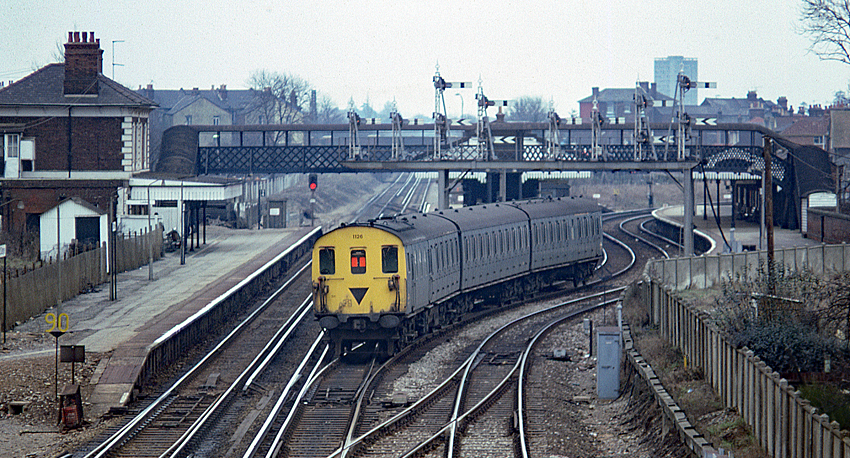
The British Rail Class 205, originally designated 3H, is a family of three-car diesel-electric multiple units constructed for use on the Southern Region's non-electrified routes. Built at the Eastleigh works between 1957 and 1962 for British Rail, these sets were intended to replace steam hauled services on secondary and rural lines and to provide a flexible, self-contained train for services where electrification was not available.
Image gallery
5 Images


Design and technical characteristics
Class 205 units are diesel-electric multiple units: each set carries its own diesel prime mover that drives electrical traction equipment. Typical formations comprised a powered car and trailer cars arranged into three-car sets with driving cabs at each end. Interiors were fitted for regional passenger comfort, with corridor connections and manually operated side doors common to the design.
- Three-car formation with through gangways for passenger circulation.
- Diesel-electric transmission providing traction without a separate locomotive.
- Built with robust underframes and standard Southern Region fittings, enabling long service lives.
Operational history
Introduced in the late 1950s and early 1960s, the 3H units replaced steam on many secondary routes across southern England. During the 1970s they were allocated the TOPS classification Class 205, part of a wider family of Southern Region diesel multiple units. They were deployed on branch and commuter workings where electrification was absent, adapting over decades to changing traffic patterns and liveries as British Rail introduced corporate branding.
Uses and notable services
Class 205s routinely worked commuter and rural services, providing frequent local links and serving lines with limited infrastructure where longer locomotives were impractical. Their flexibility made them useful on short-distance inter-urban routes as well as quieter branch lines, and they remained a familiar sight on several corridors until more modern DMUs and electrification reduced the need for these older designs.
Legacy and preservation
Because of their long service and straightforward construction, several Class 205 vehicles have been preserved by heritage railways and enthusiast groups. Preserved examples allow the public to experience mid-20th century regional rail travel and demonstrate diesel-electric multiple unit technology of the period. The Class 205s are often discussed alongside other Southern Region units of the era, reflecting a transitional phase in British rail traction from steam to diesel and electric operation.
Related articles
Author
AlegsaOnline.com British Rail Class 205 (3H) diesel-electric multiple unit Leandro Alegsa
URL: https://en.alegsaonline.com/art/14370
Sources
- preservedthumpers.com : "Pres 1121"
- thisiswiltshire.co.uk : "Replacement carriage arrives at Swindon and Cricklade Railway as arson investigation continues"
- preservedthumpers.com : "Pres 1123"
- cs.vintagecarriagestrust.org : "BR 60669 'Hampshire' demu trailer second built 1959"
- preservedthumpers.com : "Pres 1127"
- preservedthumpers.com : "Pres 1131"