
Charing Cross railway station
Central London rail terminus in the City of Westminster, opened in 1864; a busy commuter hub with a distinctive iron roof, an attached hotel and a replica Eleanor Cross at its forecourt.
Charing Cross is a central London rail terminus located in the City of Westminster. It functions as a major departure and arrival point for commuter and regional services serving southeast London and parts of Kent. The station is managed by Network Rail and most passenger services are operated by Southeastern. It ranks among the busiest terminal stations in London and sits immediately north of the River Thames, facing The Strand.
Image gallery
6 Images




Location and layout
The station occupies a tight site at the junction known as Charing Cross, with its southern end feeding across Hungerford Bridge. All trains serving the terminus cross that bridge when approaching or departing. The station has six terminal platforms arranged beneath a single-span wrought-iron roof, a characteristic 19th-century engineering solution that creates a wide, uninterrupted canopy over the lines; the material and structure are often described simply as wrought iron. Ticket barriers control access to the platforms inside the main concourse, although a riverside entrance on the bridge is not fitted with barriers.
Architecture and buildings
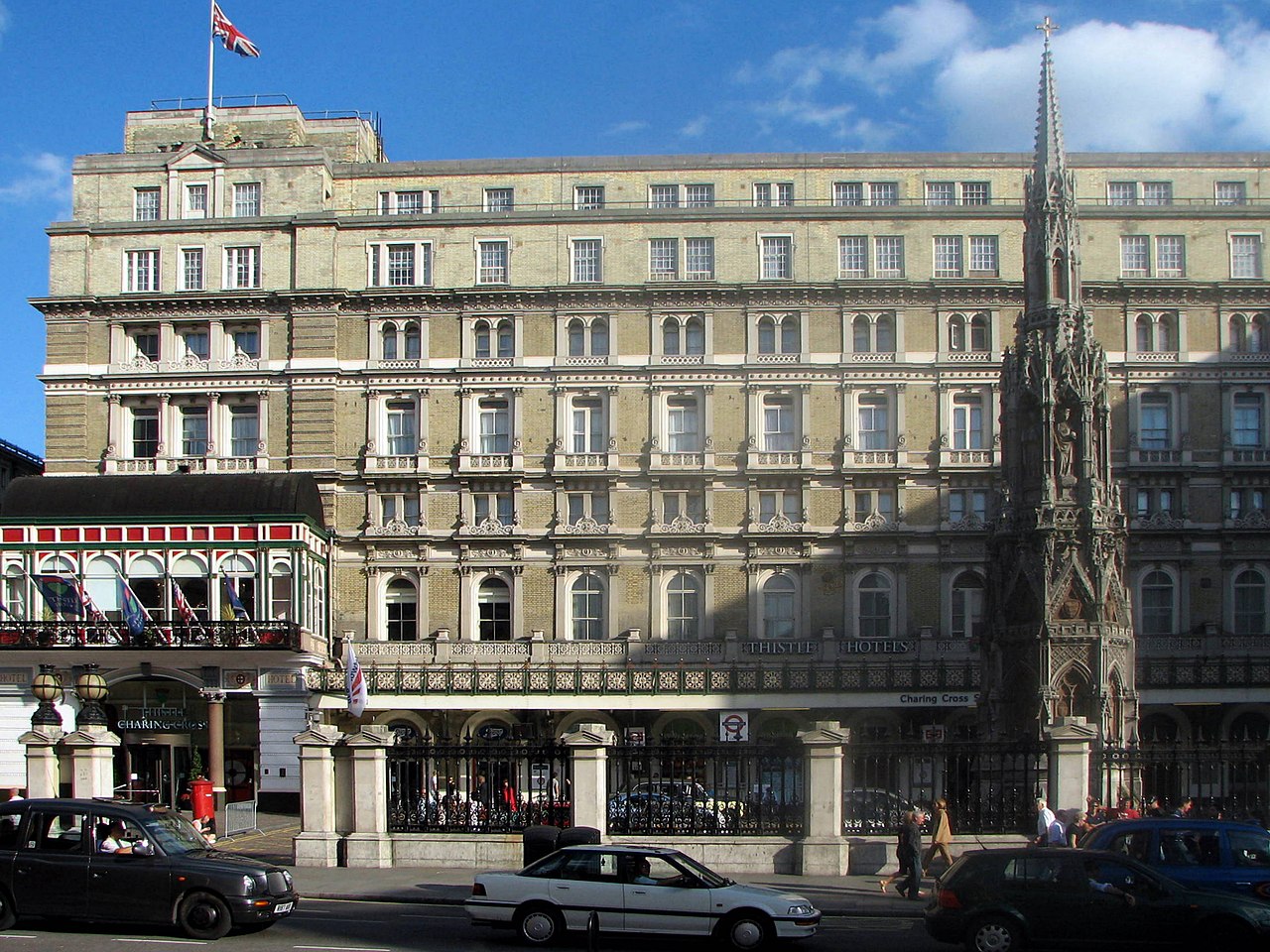
The station front is notable for its ornate façade and the adjoining hotel block. When the complex opened the hotel provided an elegant face to the street, designed in a continental style that critics and guidebooks repeatedly label as French Renaissance in inspiration. A replica of the medieval Eleanor Cross was erected in the station forecourt shortly after opening; this copy commemorates the lost 13th-century monument that once stood in nearby Whitehall.
History and development
Charing Cross station opened in the mid-19th century on the site of the former Hungerford Market. Its inauguration provided a new central terminus for services that had previously used less convenient approaches to the heart of London. Over time the station has been updated to handle growing commuter volumes: the iron roof and platform layout remain recognisable from the original construction, while passenger facilities and access arrangements have been modernised to meet contemporary standards.
Services, connections and role
Today the station primarily handles suburban and regional trains, forming a key hub for journeys between central London and the southeastern counties. It has frequent connections to the London Underground network via the associated Charing Cross tube station and is within easy walking distance of numerous central London destinations. These connections make it an important interchange for both daily commuters and visitors to the city.
Notable facts and distinctions
- Distances along several road and rail measurements in London are defined from the original Eleanor Cross site in Whitehall; the official datum point is the statue of Charles I, not the station forecourt replica — the historical location is linked to Whitehall.
- The attached hotel opened shortly after the station and contributed significantly to the building’s street-level character; the hotel remains a landmark for travellers and local residents alike.
- As a managed terminus in central London, Charing Cross is included among the core stations administered by the national infrastructure body City of Westminster authorities and rail overseers, while passenger operations are provided by the train company referenced above.
For further architectural, operational and historical detail, readers can consult specialist works on London’s railway termini and contemporary transport planning resources. General overviews and schedules are maintained by rail operators and infrastructure managers; for official updates see local transport pages and operator notices (central London service information).
While the station has retained many original features, it continues to evolve to serve changing passenger needs and city development pressures. Its combination of Victorian engineering, a prominent hotel frontage, and a replica medieval monument make Charing Cross a distinctive element of London’s transport and urban history.
Additional references and external links are available from transport archives and heritage summaries maintained by railway historians and civic organisations (Charing Cross junction, ironwork studies, and other specialist sources).
Questions and answers
Q: What is Charing Cross station?
A: Charing Cross station is a central London rail terminus in the City of Westminster.
Q: Who manages Charing Cross station?
A: Charing Cross station is one of 18 stations managed by Network Rail.
Q: Which train operator serves Charing Cross station?
A: Trains serving Charing Cross station are operated by Southeastern.
Q: How busy is Charing Cross station?
A: Charing Cross station is the fifth busiest rail terminal in London.
Q: Why is Charing Cross station named Charing Cross?
A: Charing Cross station takes its name from the central London road junction of Charing Cross.
Q: When was Charing Cross station originally built?
A: The original station building was built on the site of Hungerford Market and opened on 11 January 1864.
Q: What important landmarks are located near Charing Cross station?
A: The front of Charing Cross station faces The Strand and the other end is the northern end of Hungerford Bridge, which is crossed by all trains serving the station. Additionally, a replica of the Eleanor Cross was erected in the station forecourt.
Related articles
Author
AlegsaOnline.com Charing Cross railway station Leandro Alegsa
URL: https://en.alegsaonline.com/art/18657
Sources
- networkrail.co.uk : "Stations run by Network Rail"