
British Rail Class 207 (3D) diesel‑electric multiple unit
Three‑car diesel‑electric multiple unit built for British Rail's Southern Region in 1962. Known as 3D, these units worked regional and commuter services and some examples survive in preservation.
Overview
The British Rail Class 207, originally classified 3D, is a three‑car diesel‑electric multiple unit introduced by British Rail in 1962. Constructed at the Eastleigh works, these sets were part of the post‑war modernization program that replaced steam traction on many regional and commuter lines. The Class 207 combined a single power car with driving trailers to provide a compact, self‑contained train suitable for frequent stopping services.
Image gallery
4 Images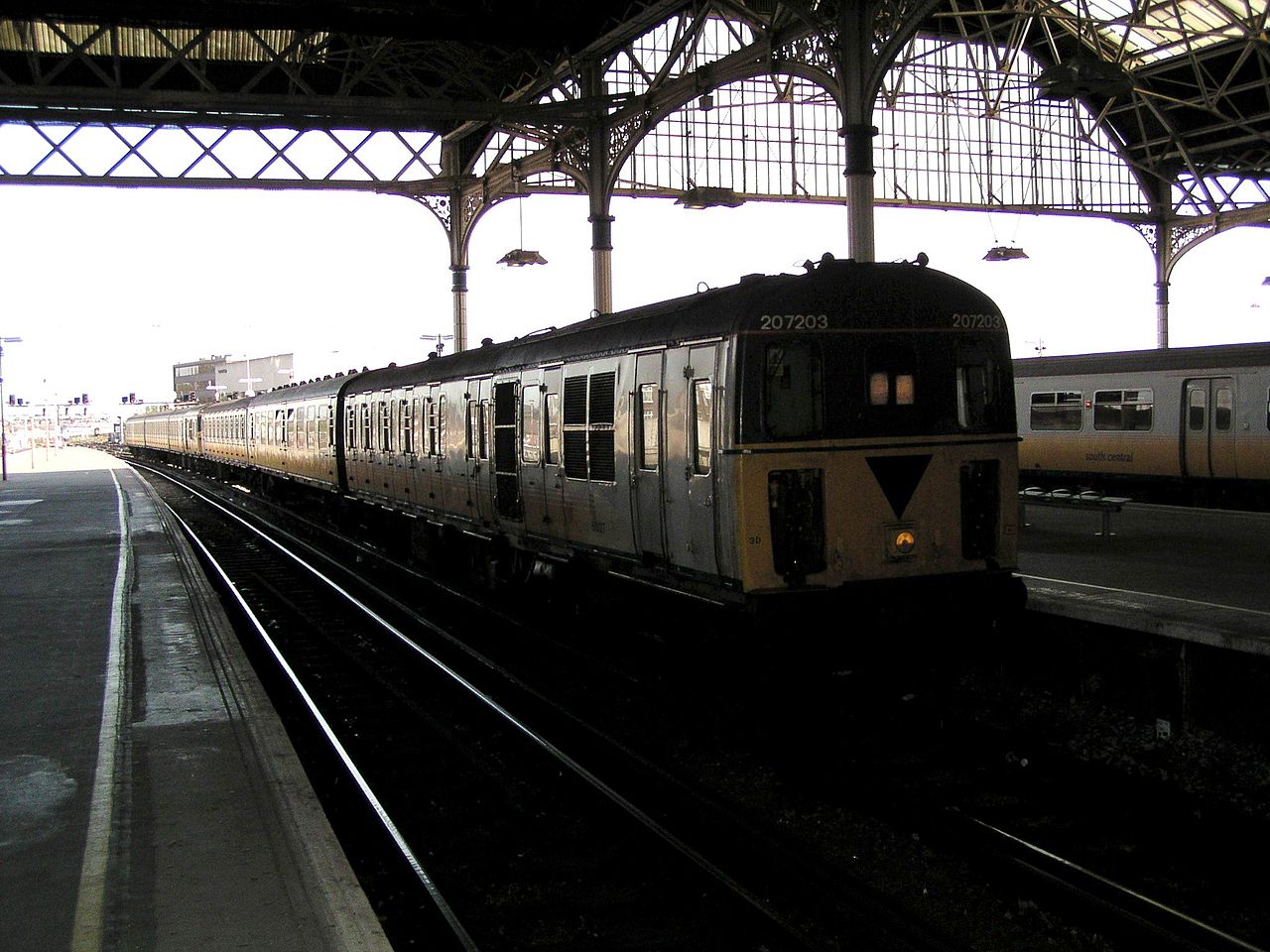


Design and formation
Class 207 sets were built as fixed three‑car formations with driving cabs at each end to allow quick reversals at terminal stations. The units used a diesel engine to drive an electrical generator, which supplied traction motors on the powered vehicle—hence the description "diesel‑electric." Interiors featured standard regional seating and simple gangways between cars. The design emphasized reliability and maintainability for intensive daily use.
Technical characteristics
- Configuration: three‑car multiple unit with one powered vehicle and two trailers
- Propulsion: diesel engine coupled to electrical traction equipment
- Control: multiple‑unit control allowing sets to work in multiple
- Bodywork: riveted/steel construction typical of British Rail rolling stock of the period
Service history
Introduced in the early 1960s, the Class 207 was mainly assigned to regional and commuter duties on the Southern Region and similar routes where electrification was not yet available. They provided dependable peak and off‑peak services for many years, later giving way to more modern units and electrification schemes. During their service life they were maintained at regional works, including the original build site at Eastleigh.
Preservation and legacy
After withdrawal from regular service, several Class 207 vehicles found a second life on heritage railways and in preservation, where they illustrate mid‑20th century DMU development. The class is remembered for its role in replacing steam services and for being a practical, robust solution to non‑electrified regional routes during a period of rapid change on Britain’s railways.
Notable facts
- Commonly known by the Southern Region code "3D" reflecting its three‑car formation.
- Represents the transition era between steam traction and widespread electrification.
Related articles
Author
AlegsaOnline.com British Rail Class 207 (3D) diesel‑electric multiple unit Leandro Alegsa
URL: https://en.alegsaonline.com/art/14372