
British Rail Class 206 (3R) — the 'Tadpole' diesel-electric multiple unit
Three-car diesel-electric multiple units built 1964 by re‑forming older vehicles for services on the North Downs Line; six sets (1201–1206) nicknamed 'Tadpole' for their mismatched body widths.
The British Rail Class 206, also known by the departmental designation 3R, was a small fleet of three-car diesel-electric multiple units created in 1964. These sets were not newly built from scratch but assembled by combining vehicles from different existing classes to meet a specific operational need. Six sets were formed and numbered 1201–1206 to work local services on the route between Reading, Redhill and Tonbridge on the North Downs Line.
Image gallery
1 Image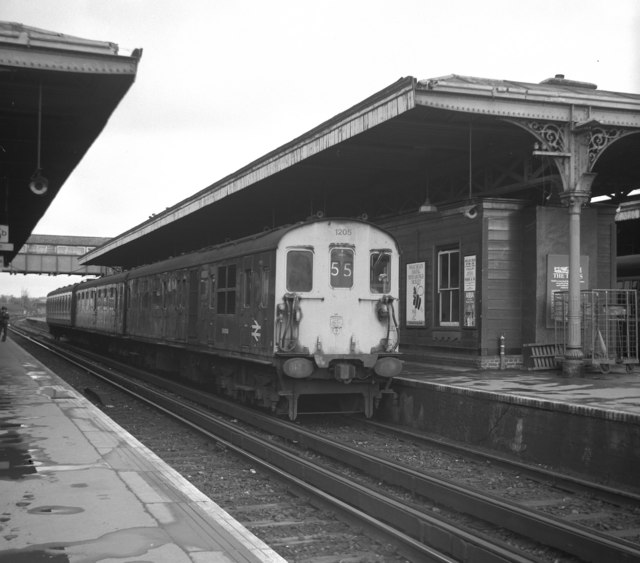
Characteristics and formation
The Class 206 units were diesel-electric multiple units (DEMUs) featuring mixed components taken from other types. They combined cars originating from the narrow-bodied Class 201 and the wider-bodied suburban Class 416. The resulting three-car sets had a distinctive appearance because of the contrast between the wider and narrower vehicle bodies. Mechanically they used diesel engines driving electrical transmission equipment, with a mixture of powered and trailer vehicles within each formation.
History and purpose
British Rail created the Class 206 formations during a period when re‑using and re‑coding existing rolling stock was a pragmatic way to cover route-specific needs and shortfalls in suitable trains. By reforming available vehicles the railway could provide through services on the North Downs corridor without waiting for purpose-built units. Their informal identity arose from the visual mismatch: passengers and staff dubbed them "Tadpole" units because the wide front end and narrow rear suggested the shape of a tadpole.
Operational role and examples
The six sets were dedicated mainly to local and regional passenger duties, handling commuter and stopping services rather than express workings. Their use illustrates the mid-20th century British Rail practice of adapting existing assets for particular lines. While not numerous, the Class 206 sets fulfilled a useful transitional role on the North Downs Line while BR reorganised fleets elsewhere.
Notable facts and legacy
- Only six three-car units were formed: numbered 1201–1206.
- They were made by combining vehicles from the Class 201 and Class 416.
- The nickname Tadpole reflects the visible contrast in body widths.
- The units operated on the Reading–Redhill–Tonbridge route, part of the North Downs Line.
Today the Class 206 is remembered as an example of British Rail's flexible approach to rolling-stock management in the 1960s, adapting older vehicles into a workable local fleet rather than commissioning entirely new trains. For further technical or historical detail consult specialised sources on multiple-unit development and the specific histories of the constituent classes.
Related articles
Author
AlegsaOnline.com British Rail Class 206 (3R) — the 'Tadpole' diesel-electric multiple unit Leandro Alegsa
URL: https://en.alegsaonline.com/art/14371