
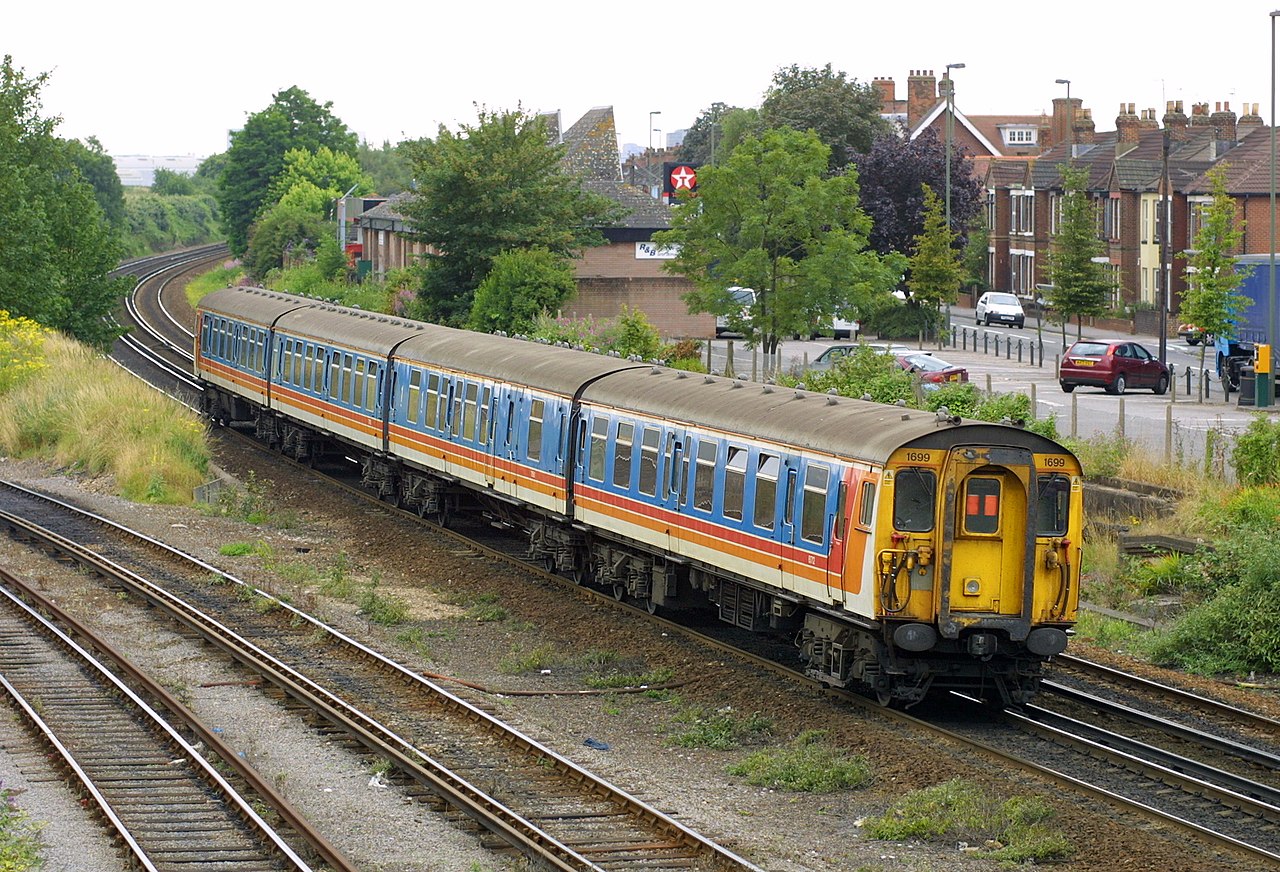
British Rail Class 411 (4Cep) electric multiple unit
British Rail Class 411 (4Cep) four-car electric multiple units built at Eastleigh for Kent electrification; based on a 1937 Southern Railway design and later used widely until replacement by modern units.
The Class 411, commonly known by its operational code 4Cep, is a family of British four‑car electric multiple units introduced for main‑line services on the Kent network. Built at Eastleigh works between 1956 and 1963, these units were intended to work newly electrified routes into coastal towns and suburban destinations. They are direct descendants of an earlier Southern Railway design of 1937.
Image gallery
6 Images




Characteristics
- Formation: four‑car sets arranged to provide driving cabs at each end and a mixture of motor and trailer vehicles for traction and accommodation.
- Design: corridor stock with compartment and saloon accommodation, fitted with slam doors typical of mid‑20th century British EMUs.
- Construction: manufactured at Eastleigh and using mechanical and electrical components evolved from pre‑war Southern Railway practice.
- Role: built for suburban and regional passenger services on electrified third‑rail lines serving London and Kent.
History and development
The 4Cep concept adapted features of the Southern Railway 4Cor layout introduced in 1937 and updated them for post‑war electrification programmes. The batch production at Eastleigh between 1956 and 1963 supplied multiple units to replace older steam and early electric stock as the Kent coast and commuter lines were progressively converted. Operators commonly referred to the units by their set code, and later refurbishments extended their service lives.
During their decades of operation the Class 411s worked a mix of short commuter and longer regional diagrams, frequently running from London termini to coastal destinations in Kent and on associated suburban routes. The units were robust and familiar on their routes, but their slam‑door, compartment‑style layout and older control systems meant they were eventually superseded by modern sliding‑door multiple units and high‑density rolling stock.
By the late 20th and early 21st centuries many Class 411 sets had been withdrawn as operators modernised fleets. A number of vehicles and complete sets were rescued for heritage railways and museums, preserving examples of mid‑century electric traction and corridor coaching practice. For further technical and historical detail see contemporary sources on the Kent electrification and the pre‑war designs that inspired the 4Cep units: Kent electrification, the original 4Cor lineage and broader Southern Region EMU development are useful starting points.
Notable aspects of the Class 411 story include the continuity of Southern design traditions into the post‑war era, the practical four‑car layout that suited a mix of service patterns, and the survival of several units in preservation where they illustrate mid‑century suburban and regional electric traction in Britain. Enthusiasts still refer to these sets by their fleet code, and preserved examples appear at special events and heritage operations.
Tags
Related articles
Author
AlegsaOnline.com British Rail Class 411 (4Cep) electric multiple unit Leandro Alegsa
URL: https://en.alegsaonline.com/art/14439