
British Rail Class 142 Pacer diesel multiple unit
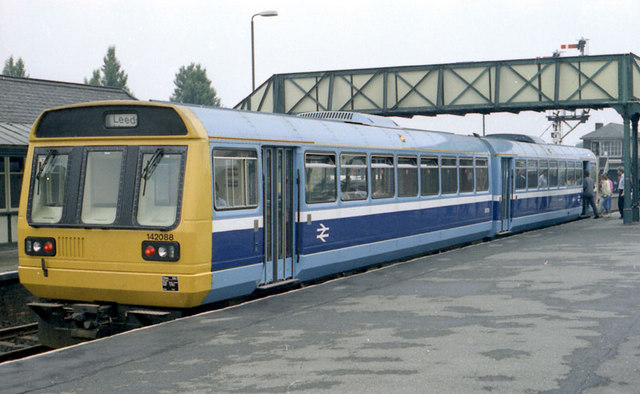
Two‑car Pacer DMU built by BREL Derby in the mid‑1980s. Ninety‑six units produced as a cost‑conscious development of the Class 141; widely used on local services and later largely withdrawn or preserved.
Overview
The British Rail Class 142 is a member of the Pacer family of diesel multiple units introduced for local and regional passenger services in the United Kingdom. Ninety‑six two‑car units were constructed by British Rail Engineering Limited (BREL) at Derby between 1985 and 1987 as a development of the earlier, experimental Class 141 which first appeared in 1984. The 142s were designed as a low‑cost short‑term solution to replace ageing first‑generation diesel multiple units and to reduce operating costs on lightly used routes.
Image gallery
9 Images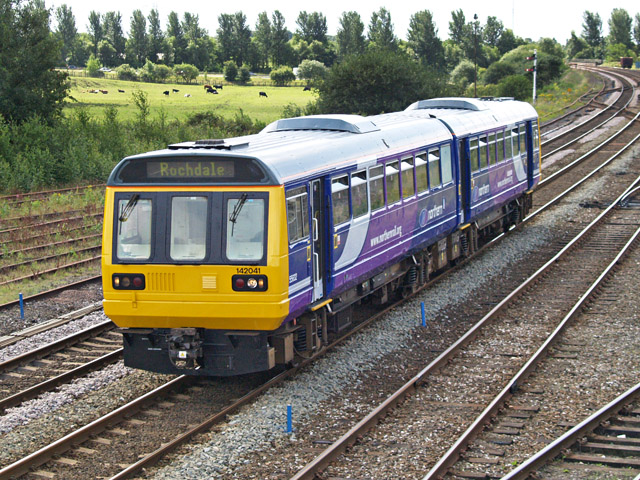


Design and construction
Pacers combined elements drawn from bus manufacturing with a rail underframe to keep costs and weight down. The Class 142 retained the Pacer philosophy of simple, economical construction: bus‑style body panels and interiors mounted on a conventional steel underframe with straightforward mechanical running gear. The concept prioritised low purchase and maintenance costs over ride refinement, and the resulting vehicles were compact and inexpensive to build.
Technical characteristics
- Formed as fixed two‑car sets intended for short‑haul services with frequent stops.
- Powered by underfloor diesel engines driving mechanical transmissions; the layout emphasised simplicity and ease of maintenance.
- Interior fittings were similar to contemporary bus practice, with basic seating and limited passenger facilities compared with more modern DMUs.
- The ride quality was firmer than conventional multiple units because of the lightweight construction and basic suspension design.
Operation and service history
Following introduction the Class 142 units operated widely on local routes, particularly in northern England and Wales, where low operating cost and simple maintenance made them economical. Over decades of use they proved robust for basic duties but were increasingly criticised for ride quality, accessibility and passenger comfort as expectations, regulations and rolling stock standards evolved. For an overview of the wider family see Pacer units, while national fleet summaries and timetables provide context for their UK operation national summaries.
Refurbishment and modification
Throughout their service lives many Class 142s received interior refurbishments, secondary glazing, improved lighting and, where possible, accessibility modifications to meet evolving standards. Operators carried out mid‑life upgrades to seating and passenger information equipment to extend useful service life. Construction records and Derby works information provide background on their manufacture and design evolution BREL Derby.
Withdrawal, preservation and reuse
From the 2010s the combined effect of stricter accessibility regulations and a drive for better passenger experience led to progressive withdrawal of many Pacers. A significant portion of the class was retired during the late 2010s and early 2020s, with units either scrapped, preserved on heritage lines or adapted for community uses. Details of the prototype that informed the production Class 142 are discussed in sources on the earlier Class 141.
Legacy
The Class 142 remains a well‑known example of British Rail's economy‑focused rolling stock strategy in the 1980s. While opinions on their comfort and aesthetics are mixed, they played an important role in providing widespread, low‑cost regional services for several decades and now form part of recent railway heritage where preserved.
Related articles
Author
AlegsaOnline.com British Rail Class 142 Pacer diesel multiple unit Leandro Alegsa
URL: https://en.alegsaonline.com/art/14342
Sources
- railbritain.com : "RailBritain - Class 142"
- networkrail.co.uk : Passenger Focus
- commons.wikimedia.org : British Rail Class 142