
Multiple unit
A multiple unit is a self-propelled railway vehicle or a system of units controlled together; commonly used for commuter, regional and high-speed services and distinct from locomotive-hauled trains.
Overview
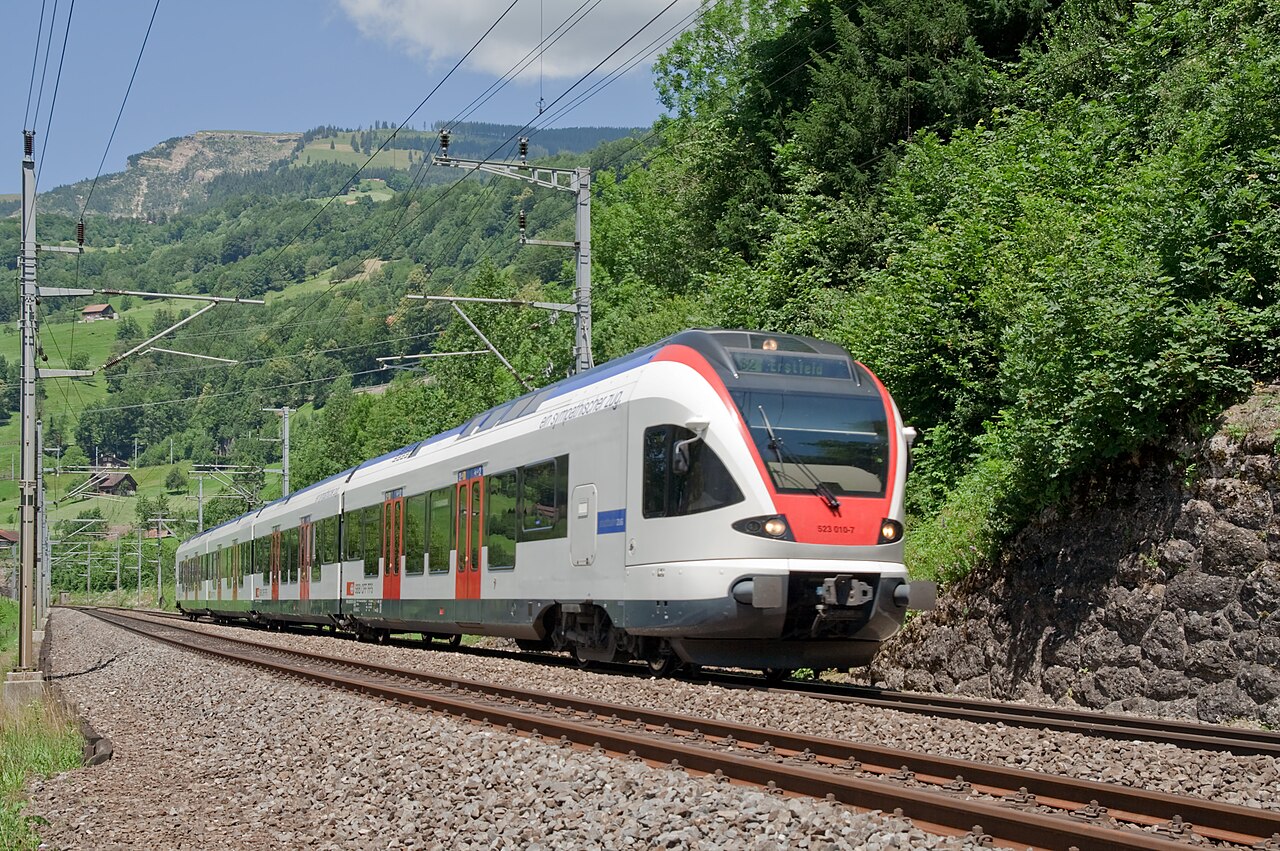
A multiple unit (MU) most commonly denotes a trainset made up of two or more permanently or semi-permanently coupled carriages that each contain their own traction equipment and are controlled from a single driving cab. This arrangement contrasts with a traditional locomotive-hauled train, where one or more locomotives provide motive power for passive passenger or freight cars. The term can also appear in the context of "multiple-unit control," which allows separate locomotives or powered cars to be operated together by one driver.
Image gallery
10 Images




Types and components
Multiple units are classified by their power source and design. Major categories include:
- Electric multiple units (EMU) — draw power from overhead lines or third rails and are common in urban and intercity services.
- Diesel multiple units (DMU) — carry onboard diesel engines and are used where electrification is absent.
- Hybrid and alternative-fuel units — include battery, bi-mode (electric and diesel), or hydrogen-powered sets where flexibility and reduced emissions are desired.
Typical components include driving cabs at one or both ends, traction motors or engines under or within cars, driver control systems that propagate commands through the train, passenger accommodation, gangways for internal movement, and automatic couplers for linking units.
History and development
Multiple-unit principles evolved with early urban and suburban electric railways and later with advances in lightweight traction and control electronics. Adoption accelerated where frequent stopping patterns and rapid acceleration were important—commuter, metro and regional services—because distributed traction gives quicker acceleration and better adhesion than a single locomotive. Over time, electronics and safety systems have enabled longer, more reliable MU formations and multiple-unit control of mixed motive power.
Uses and advantages
Multiple units are widely used for commuter, regional and some high-speed services. Advantages include improved acceleration and braking, redundancy (failure of one unit does not immobilize the whole train), operational flexibility (units can be coupled or split to match demand), and often lower infrastructure loading. They are also amenable to regenerative braking and energy-efficient operation.
Distinctions and notable facts
Multiple units differ from push–pull trains and locomotive-hauled consists by having distributed motive power. "Multiple-unit control" can also refer to the system that links locomotives so several can be driven from a single cab; this concept is widely used in freight and heavy-haul contexts. Modern MU fleets emphasize modularity, accessibility, and energy efficiency as rail operators balance capacity and environmental goals.
Related articles
Author
AlegsaOnline.com Multiple unit Leandro Alegsa
URL: https://en.alegsaonline.com/art/67481