
British Rail Class 151 — prototype diesel multiple unit
A mid-1980s prototype diesel multiple unit built by Metro Cammell for British Rail evaluation. The Class 151 influenced later DMU development despite not entering large-scale production.
Overview
The British Rail Class 151 was a prototype train type produced by Metro Cammell in the mid-1980s for evaluation by British Rail. Conceived as a modern replacement for older first‑generation units, it represented one of several experimental designs intended to inform the next generation of regional diesel trains.
Image gallery
1 Image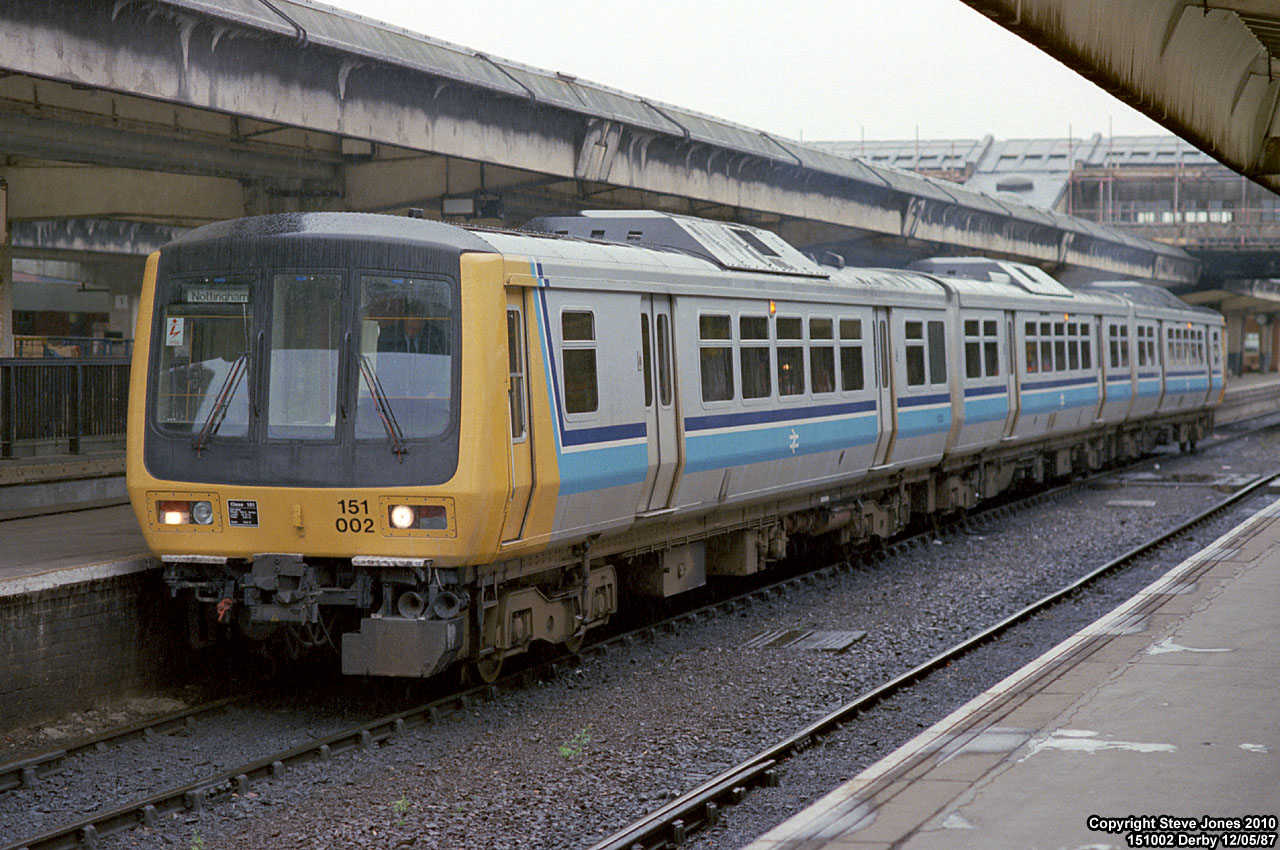
Design and characteristics
Like other modern multiple units of its era, the Class 151 incorporated self-contained traction equipment and driver cabs at each end so that sets could operate in both directions without turning. It was built to provide improved acceleration, comfort and reliability compared with the stock it was intended to succeed. Typical features associated with designs of this period included underfloor diesel engines, hydraulic or mechanical transmission, multiple working capability and standard passenger accommodations.
Development and testing
The type was created as a prototype for assessment rather than immediate mass production. British Rail ran trials to compare performance, maintainability and passenger experience against competing concepts. Trialled units helped engineers evaluate component layout, noise levels, ride quality and operational economics before decisions on large-scale procurement were made.
Service life and influence
Although the Class 151 did not become a standard fleet on the national network, its development contributed practical lessons for subsequent classes of regional DMUs. Elements tested on prototypes—such as ergonomics for drivers and modular equipment arrangements—fed into designs that were produced in quantity and remain familiar on regional services.
Distinctions and notable facts
- The Class 151 is primarily notable for its prototype status and its role in mid‑1980s renewal programmes.
- It was part of a broader evaluation process that examined multiple suppliers and concepts, helping to shape later procurement choices.
- The unit is an example of how short-run experimental types can influence long-term fleet development for regional railways.
Further reading
For general background on the technology and context of British regional trains, see entries on the diesel multiple unit and on rolling stock renewal programmes of the 1980s. Contemporary technical reports and preservation group summaries provide more detailed trial records and photographs.
Related articles
Author
AlegsaOnline.com British Rail Class 151 — prototype diesel multiple unit Leandro Alegsa
URL: https://en.alegsaonline.com/art/14347