
Kramer vs. Kramer
1979 American drama film about divorce and child custody, adapted from Avery Corman’s novel and directed by Robert Benton. Stars Dustin Hoffman and Meryl Streep; noted for its awards and cultural impact.
Overview
Kramer vs. Kramer is a 1979 American drama film adapted from a novel by Avery Corman and written and directed by Robert Benton. The story follows Ted and Joanna Kramer, a married couple living in New York City whose marriage unravels when Joanna leaves, setting in motion a child custody dispute that becomes the emotional core of the film. The movie blends intimate family scenes with courtroom drama to explore the shifting expectations of parenthood and gender roles.
Image gallery
1 Image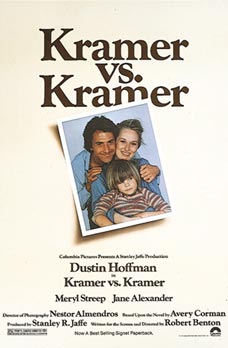
Production and Source
The screenplay was adapted from Corman's novel and shaped by Robert Benton's direction and writing, creating a restrained, character-driven drama. Principal photography and story elements are grounded in a contemporary urban setting; the film emphasizes realistic domestic detail and the everyday pressures that lead to the breakup of a relationship. For background on the literary source and adaptation process see novel and screenwriter-director notes. Casting choices are central to the film's effectiveness: lead performances are often referenced in production histories and interviews (Dustin Hoffman, Meryl Streep).
Themes and Structure
The film examines several interlocking themes: parental responsibility, the legal system's role in private life, and societal expectations of mothers and fathers. It is structured in two main parts—the domestic breakdown and the legal contest for custody—which allows the drama to move from private grief to public adjudication. Critics and scholars often discuss the movie in the context of changing family law and late-20th-century gender norms, with scenes that highlight the nuances of everyday caregiving and emotional labor.
Cast, Characters and Key Scenes
Hoffman plays Ted Kramer, a previously career-focused husband who must learn parenting skills after his wife leaves. Streep portrays Joanna Kramer, whose departure and later return create the conflict that drives the plot. Supporting roles and courtroom sequences flesh out the social and legal milieu in which decisions about children's lives are made; the custody hearing is a pivotal sequence discussed in many analyses and references (custody, court). The New York City setting is an important backdrop (New York City).
Reception, Awards and Influence
On release the film received widespread critical praise and won major awards, becoming a touchstone for films about family and law. It is frequently cited in discussions of cinematic portrayals of divorce and single parenthood. Notable recognitions include top industry honors that are often listed in retrospectives and reference guides (film, screenplay award, divorce depiction). The performances also contributed to the careers of its leads and to ongoing conversations about casting and character realism.
Notable Facts and Further Reading
- The film is adapted from a novel by Avery Corman: see the original book for comparison to the screenplay.
- Central performers earned lasting recognition for their roles: research materials often focus on Hoffman and Streep.
- Discussions of the film typically highlight its courtroom sequences and custody themes (child custody), and its depiction of changing family law (legal context).
For additional context and contemporary reactions consult production notes and retrospective essays (screenplay, director, film history). Kramer vs. Kramer remains a widely referenced example of how mainstream cinema can address private family struggles with both realism and dramatic urgency.
Author
AlegsaOnline.com Kramer vs. Kramer Leandro Alegsa
URL: https://en.alegsaonline.com/art/141044