
Barrier island
Coastal sandbar landforms that run parallel to shore, formed and reshaped by waves, tides, and storms; they provide habitat and storm protection while being dynamic and vulnerable to change.
Barrier islands are elongated, nearshore landforms that lie parallel to a mainland coast. They are typically composed largely of loose sand and other unconsolidated sediments and are shaped by the continuous action of waves and tides. As buffers between the open ocean and inner bays or sounds, barrier islands absorb wave energy and influence coastal circulation and sediment transport.
Image gallery
9 Images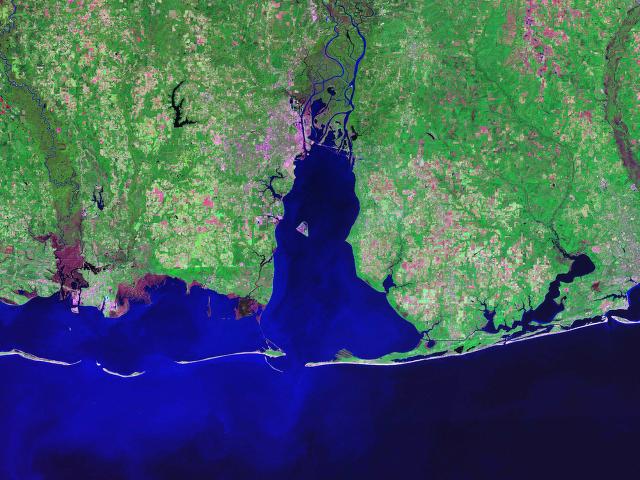


Formation and structure
These islands develop where there is a steady supply of sediment, an appropriate nearshore slope, and the right hydrodynamic conditions. Longshore currents move material along the shore and build up shoals that can grow into islands. Over time a typical barrier island will develop a seaward beach, a dune ridge, and a landward back-barrier area that may include marshes, tidal flats or lagoons. Wind, waves, tides and storms continually reshape these features, so islands may migrate, split, or merge.
Typical components
- Beach and berm: the wave-washed, sandy seaward edge.
- Dunes: wind-built ridges that provide elevation and protect interiors.
- Back-barrier lagoon or marsh: sheltered water bodies behind the island.
- Washover fans and tidal inlets: pathways for water and sediment exchange.
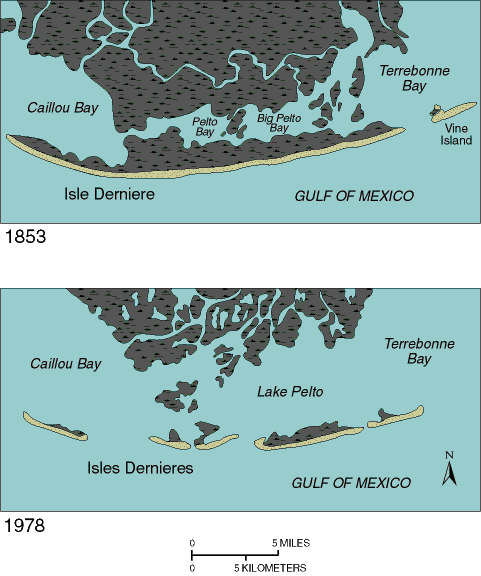
Barrier islands commonly occur in chains of multiple islands and spits rather than as isolated features. They are dynamic: strong storms can erode beaches, breach dunes to create new inlets, or deposit sand that alters the island profile. Over decades to centuries, islands may migrate landward through overwash and sediment redistribution.
Ecological and human importance
Ecologically, barrier islands support a range of habitats—dune grasses, coastal marshes, shorebird nesting areas and estuarine nursery grounds—that rely on the islands' shifting landscapes. For human communities they act as the first line of defense against waves and storm surge, reducing impacts on mainland settlements. At the same time, development, dredging, and hard coastal defenses can disrupt natural sediment supplies and increase island vulnerability.
Notable examples illustrate their range and scale: some systems contain only a few islands, while others comprise dozens. The longest and among the widest barrier islands in the United States is Padre Island. Scientists and coastal managers monitor these shores to balance habitat conservation, hazard reduction and sustainable use. For additional overviews see resources on coastal landforms and local tide and sediment studies.
Author
AlegsaOnline.com Barrier island Leandro Alegsa
URL: https://en.alegsaonline.com/art/134969