
Bow (ship): design, function, and common types
The bow is the forward-most part of a vessel’s hull, shaped to cut through water and protect the deck. This article explains its function, main parts, historical development and common bow types.
The bow is the forward-most portion of a ship or boat and forms the leading edge of the hull. It is the point that projects ahead when a ship or boat is moving and plays a central role in how the craft interacts with waves, spray and the surrounding sea. Designers shape the bow to reduce resistance, improve directional stability and keep the deck drier by deflecting water downward and to the sides. In regular operation the bow also defines the vessel’s profile when a vessel is underway.
Image gallery
5 Images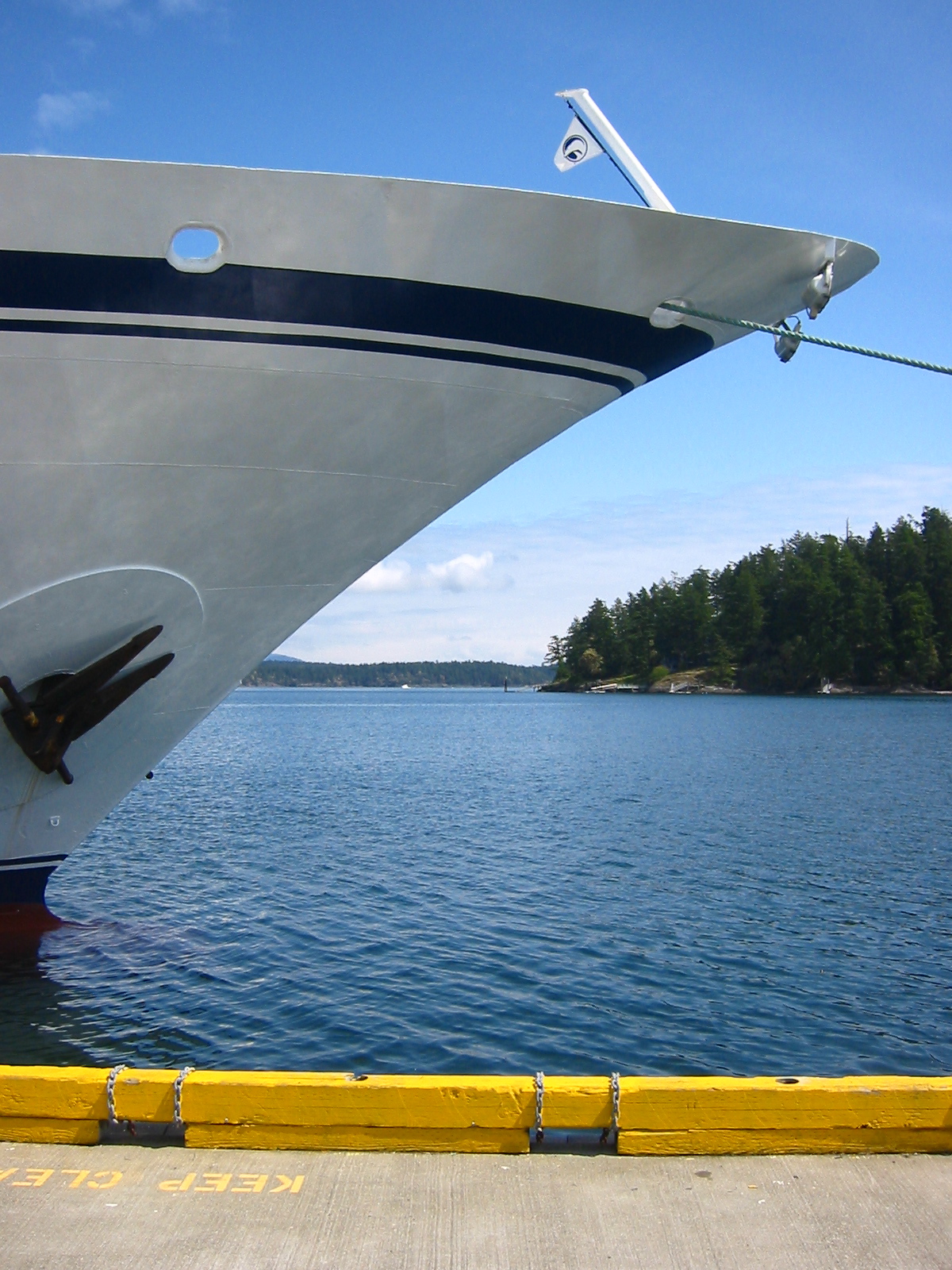


Form and main components
Although bows vary with vessel type and purpose, many share common elements that together determine performance. Typical components and features include:
- Stem: the foremost structural member rising from the keel to the deck.
- Stemhead or prow: the tip or projection at the very front.
- Flare: outward curvature of the hull near the bow that helps deflect waves.
- Bow bulb or bulbous bow: a protruding bulb below the waterline on some modern ships to alter wave patterns and reduce fuel use.
- Forecastle and anchor gear: deck spaces forward of the bow where fittings are mounted.
Common bow types and their purposes
Naval architects select bow shapes according to speed, seaworthiness and cargo needs. Well-known forms include:
- Raked or clipper bow — a pronounced overhang, historically used on fast sailing vessels.
- Plumb bow — nearly vertical, used to maximize waterline length and interior volume.
- Bulbous bow — a modern addition beneath the surface to change wave-making resistance at certain speeds.
- Wave-piercing bow — long and fine, intended to reduce pitching for high-speed craft.
History and development
Bow shapes evolved with changes in propulsion and mission. Traditional wooden sailing ships favored sharp, overhanging bows to cut through waves and shed spray. With steam power and metal hulls came new opportunities to reshape the forward sections for greater efficiency and cargo space. In the 20th century naval architecture introduced features such as the bulbous bow and specialized wave-piercing profiles to improve fuel economy and seakeeping for particular speed ranges.
Operational importance and distinctions
The bow influences fuel consumption, handling in waves, seakeeping and the tendency to ship water on deck. A fuller bow may lift more in waves and provide reserve buoyancy for heavy loads, while a finer bow reduces resistance at higher speeds but may pitch more. Naval, commercial and recreational vessels will often show distinct choices: warships value seakeeping and speed, tankers and freighters emphasize cargo volume and economy, and yachts or ferries balance comfort with performance.
Examples and further reading
Practical examples of bow design differences are visible in classic clipper ships, modern container ships with bulbous bows, and high-speed catamarans with wave-piercing bows. For technical descriptions and diagrams consult ship design texts or an introductory naval architecture resource. Additional maritime terminology and illustrations can be found in specialist sources and illustrated guides.
Related articles
Author
AlegsaOnline.com Bow (ship): design, function, and common types Leandro Alegsa
URL: https://en.alegsaonline.com/art/13445