
BR Standard Class 8 — 71000 Duke of Gloucester
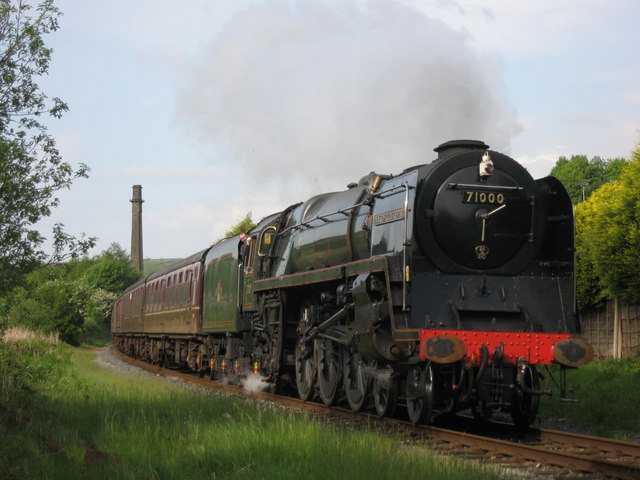
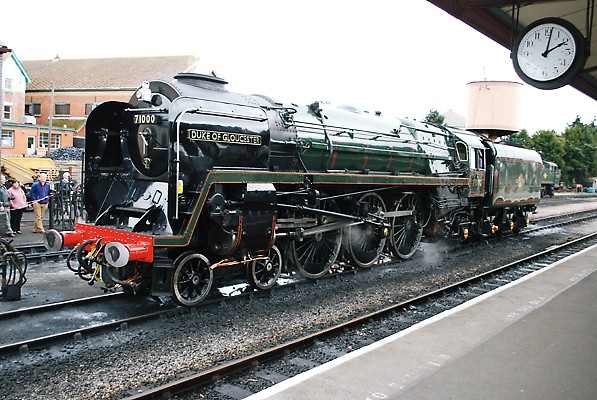
The BR Standard Class 8 was a single 4-6-2 Pacific steam locomotive, 71000 Duke of Gloucester, built at Crewe Works in 1954. Renowned for its unusual features and later restoration, it remains famous in UK preservation.
Overview
The BR Standard Class 8 was a one-off express passenger steam locomotive constructed for British Railways. Numbered 71000 and given the name Duke of Gloucester, it is the only member of the Standard Class 8 series. Built at Crewe Works in 1954 to a design led by Robert Riddles, the engine used the 4-6-2 wheel arrangement commonly called a 4-6-2 Pacific. It was produced as a replacement for the Princess Royal Class locomotive 46202 Princess Anne, which was destroyed in the Harrow and Wealdstone rail disaster of 1952.
Image gallery
6 Images


Design and key characteristics
The Duke combined features drawn from BR's Standard designs with a number of less common mechanical elements. It was notable for being fitted with Caprotti valve gear — a cam-driven poppet valve arrangement intended to improve steam distribution. The locomotive's boiler and exhaust arrangements reflected post‑war attempts to raise efficiency and reduce maintenance compared with older designs.
- Type: 4-6-2 Pacific express passenger locomotive
- Number: 71000
- Name: Duke of Gloucester
- Built at: Crewe Works
Service history
In British Railways service the Duke handled express workings and test duties. Early performance was mixed: while its theoretical efficiency was promising, operators encountered practical problems with draughting and the interaction of some components. Operational difficulties, together with the rapid dieselisation and electrification of main lines in the 1950s and 1960s, limited its working life compared with older, more established classes.
Preservation and legacy
Unlike many single prototypes that disappeared quietly, 71000 attracted considerable attention after withdrawal. It survived into the preservation era, where detailed examination and sympathetic modification corrected earlier shortcomings. When repaired and carefully re‑worked, the Duke demonstrated much better running characteristics and became celebrated among enthusiasts as an example of how design potential can be realised by correcting installation and maintenance issues.
Notable facts and significance
As the only Standard Class 8, the Duke of Gloucester holds a distinctive place in British steam locomotive history. It illustrates both the ambitions of British Railways' post‑war standardisation programme and the limits imposed by changing traction policy. Today the locomotive is frequently cited by historians and preservationists as an instructive case: a design with innovative elements that required detailed attention to reach its full capabilities.
Further reading
For technical summaries, photographs and restoration accounts, consult specialist works and archival material held by railway museums and enthusiast groups. The locomotive is often discussed in publications addressing BR standard classes, preservation practice, and the history of steam traction in Britain.
Questions and answers
Q: What was the BR Standard Class 8?
A: The BR Standard Class 8 was a class of 4-6-2 Pacific steam locomotive made by Robert Riddles for use by British Railways.
Q: How many examples of the BR Standard Class 8 were made?
A: Only one example of the BR Standard Class 8 was made.
Q: What was the name of the only example of the BR Standard Class 8?
A: The only example of the BR Standard Class 8 was named Duke of Gloucester, and is also known as the Duke.
Q: When was the Duke of Gloucester made, and where was it made?
A: The Duke of Gloucester was made in 1954 at Crewe Works.
Q: Why was the Duke of Gloucester made?
A: The Duke of Gloucester was made as a replacement for the destroyed Princess Royal Class vehicle number 46202 Princess Anne.
Q: What was the Harrow and Wealdstone rail disaster of 1952?
A: The Harrow and Wealdstone rail disaster of 1952 was a train derailment and collision that occurred at Harrow and Wealdstone station in London, England, which resulted in the deaths of 112 people.
Q: Was the Duke of Gloucester involved in the Harrow and Wealdstone rail disaster of 1952?
A: It is unclear from the text whether the Duke of Gloucester was involved in the Harrow and Wealdstone rail disaster of 1952.
Related articles
Author
AlegsaOnline.com BR Standard Class 8 — 71000 Duke of Gloucester Leandro Alegsa
URL: https://en.alegsaonline.com/art/13564