
Agujaceratops — horned ceratopsian from the Aguja Formation
Agujaceratops is a chasmosaurine ceratopsid from Late Cretaceous Texas, known from two species. It is notable for its ornamented frill and contributes to understanding southern Laramidian dinosaur diversity.
Agujaceratops is a genus of horned dinosaur (ceratopsid) that lived in what is now Texas during the Late Cretaceous. Its name means "horned face from Aguja," referring to the Aguja area and formation where the first material was found. Paleontologists place Agujaceratops within the chasmosaurine subfamily, a group distinguished by long brow horns and large, often ornamented frills.
Image gallery
10 Images



Physical characteristics
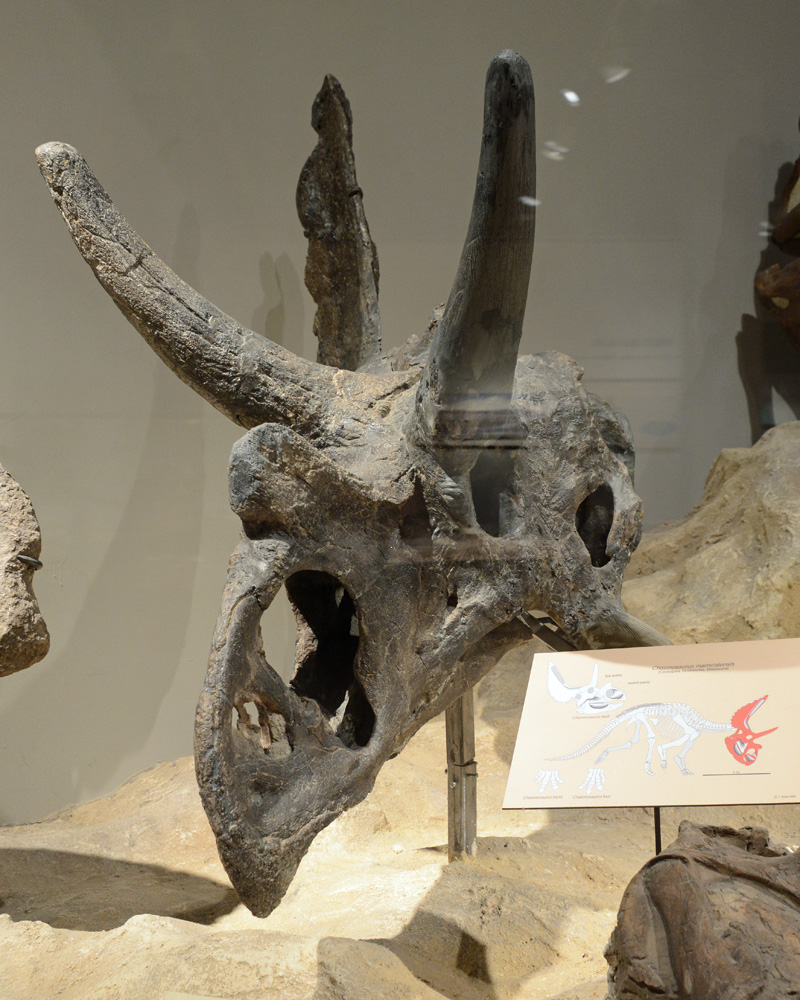
Fossils attributed to Agujaceratops show the typical ceratopsid body plan: a bulky, quadrupedal herbivore with a beaked snout, paired brow horns above the eyes, and a plate-like frill projecting from the back of the skull. Specimens exhibit distinctive frill margin ornamentation and horn proportions that separate the genus from closely related chasmosaurines. Differences between described species involve frill shape and the arrangement of epoccipitals (bony fringe elements).
Species and discovery
Two species have been named: A. mariscalensis, described in 1989, and A. mavericus, described in 2016. Both were recovered from fossil-bearing strata in the Aguja region of Texas. The work on these specimens expanded knowledge of ceratopsid diversity in southern parts of western North America (Laramidia) and highlighted regional variations within chasmosaurines.
Paleoecology and significance
Agujaceratops lived in a warm coastal plain environment populated by other dinosaurs such as hadrosaurs, ankylosaurs and theropods, as well as diverse plants and marine-influenced ecosystems. As a herbivore, it would have fed on low to mid-height vegetation. Its distinctive cranial ornamentation helps scientists study behavior (display, species recognition) and evolutionary relationships among ceratopsids.
How it fits into ceratopsid diversity
- Classification: chasmosaurine ceratopsid — related to other long-frilled horned dinosaurs.
- Regional importance: evidence for distinct southern faunas on Late Cretaceous Laramidia.
- Research value: contributes data on variation in frill anatomy and horn development.
For locality information and collection history, see references to the Aguja sites in Texas and original descriptions by researchers who named the species. More detailed specimen records and stratigraphic context are available through museum publications and field reports (Aguja, Texas).
Related articles
Author
AlegsaOnline.com Agujaceratops — horned ceratopsian from the Aguja Formation Leandro Alegsa
URL: https://en.alegsaonline.com/art/1457