
Saint Andrew
Saint Andrew, one of Jesus' twelve apostles and brother of Peter, is remembered for missionary activity, an X-shaped crucifixion, relic traditions, and as patron saint of Scotland, Romania, Ukraine and others.
Overview
Saint Andrew is traditionally counted among the twelve disciples called by Jesus. In Christian tradition he is identified as the brother of Simon Peter and described as a fisherman by trade before becoming a follower of Jesus. Andrew is commemorated across many Christian denominations and appears in early lists of apostles and in later hagiographical accounts that emphasize his missionary work and martyrdom.
Image gallery
10 Images


Traditional life and mission
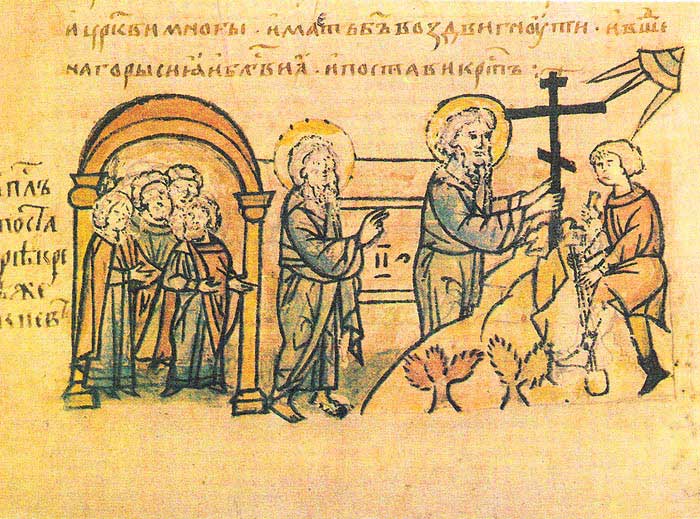
Early Christian writers and later legends place Andrew among the first to preach after the events of the Gospels. Tradition attributes to him journeys to coastal regions of the Black Sea, to parts of Greece and Asia Minor, and to communities around the Aegean. These narratives vary by source and are part of a broader body of apostolic legend that aims to explain the spread of Christianity in the eastern Mediterranean.
Martyrdom and relics
According to longstanding tradition, Andrew was martyred by crucifixion on a diagonal or X-shaped cross, a form now often called a saltire. Accounts commonly associate his death with the city of Patras in what is now Greece. Over centuries, relics and local claims about Andrew’s remains have played an important role in medieval devotion: some traditions link relics with Constantinople and with the Scottish town that took his name. These claims encouraged pilgrimage and local cults without producing a single universally accepted historical account.
Patronage, symbols and flags
Andrew is venerated as the patron saint of several nations and communities. He is particularly associated with Scotland, and is also regarded as patron in parts of Romania, Ukraine and other places. The diagonal white cross linked to his martyrdom — the saltire — appears on the national Saint Andrew's flag of Scotland and is incorporated into other banners and ensigns. Andrew is also widely invoked as a patron of fishermen and sailors, reflecting his background and the maritime use of the saltire.
Feast day and cultural observances
Saint Andrew’s feast day is observed on November 30 in many Christian calendars and serves as a focus for both religious liturgies and civic commemorations. In Scotland the day is marked by services, public events and cultural activities that emphasise national identity; some Scots wear the national thistle as a symbolic emblem on that occasion. Observances elsewhere may combine liturgical observance with local folk traditions.
Legacy and significance
Andrew’s legacy is both religious and cultural. As an apostolic figure he represents the missionary origins of the early church in the eastern Mediterranean; as a patron saint his emblem has shaped national and maritime symbolism. The saltire remains one of the most recognisable Christian symbols in national heraldry and is a visible reminder of the ways saints were incorporated into identity and political history across Europe.
Key points
- Role: One of the twelve apostles, brother of Simon Peter.
- Tradition: Missionary activity in the Black Sea region, Greece and Asia Minor.
- Martyrdom: Tradition records an X-shaped (saltire) crucifixion.
- Patronage: Venerated as patron in Scotland, Romania, Ukraine and elsewhere.
- Symbols: The saltire, visible on the Saint Andrew's flag and in other emblems; cultural markers such as the thistle in Scottish observance.
For a fuller understanding of Andrew’s place in Christian tradition, consult works on early Christianity, collections of saints’ lives and studies of medieval relic cults and national symbolism. These sources explore how devotional, liturgical and political factors combined to produce the enduring images and patronages associated with Saint Andrew.
Author
AlegsaOnline.com Saint Andrew Leandro Alegsa
URL: https://en.alegsaonline.com/art/130311