
Crucifixion: method, history, and cultural significance
Crucifixion is an ancient method of execution in which a victim is affixed to a wooden structure. It was used by several societies, most famously by the Roman state, and has notable cultural and religious meanings.
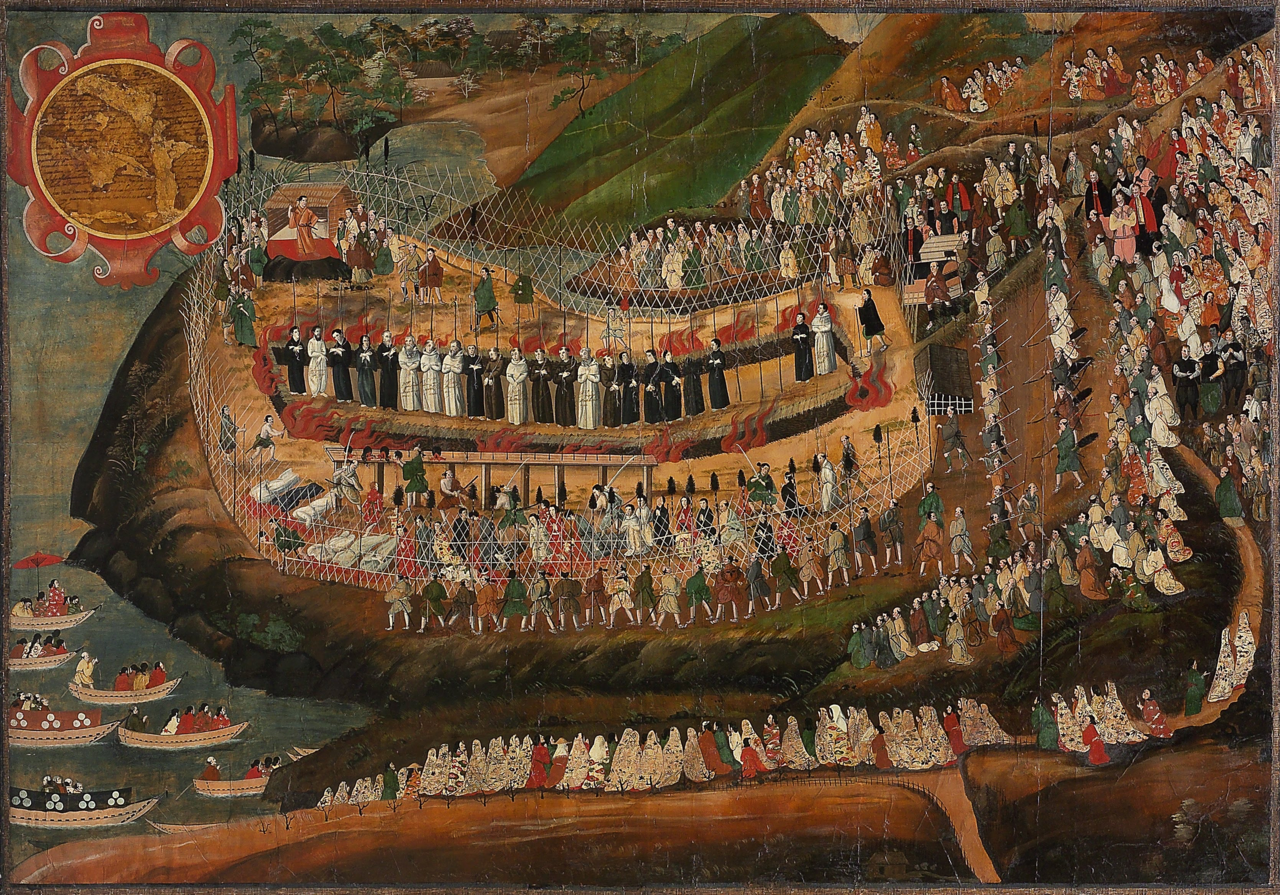
Crucifixion is a form of capital punishment in which a person is bound or fastened to a large wooden structure and left to die. It was practiced in the ancient world by a number of societies and became most closely associated with the Roman state in classical antiquity. In many contexts crucifixion served as a public, punitive spectacle intended to kill and deter, often after a person had been convicted of a serious crime.
Image gallery
10 Images




Characteristics and procedure
The process typically combined preliminary punishment, transport, and exposure. A condemned prisoner might first be scourged, paraded through public places while forced to carry the cross or the beam, and then affixed to a vertical stake or crosspiece. Victims could be tied with rope or pierced with nails; the exact method varied by time, place, and intent. In Roman practice the condemned sometimes carried the cross itself, a visible sign of their fate, to the execution site.
- Common structures included simple upright stakes, the traditional †-style cross, T-shaped crosses, and in some cases the cross-arm placed on existing trees.
- Roman executioners used techniques such as scourging and occasional leg-breaking (crurifragium) to intensify suffering or hasten death.
How it causes death
Death on the cross was the result of several interacting physiological stresses rather than a single mechanism. Blood loss, shock from trauma, dehydration, infection, and impaired respiration all contributed. When the chest muscles and diaphragm were strained by the body's position, breathing became laborious; inability to exhale fully could lead to progressive respiratory failure. Medical reconstructions suggest victims might survive for hours to several days, depending on injuries and conditions.
Origins, adoption, and decline
Forms of suspension as punishment appear in the ancient Near East and Mediterranean before Roman dominance. The Romans systematized crucifixion as a punishment for slaves, rebels, and non‑citizens and used it as a tool of control within their provinces. Over time—especially as the Roman Empire changed its legal and moral codes—crucifixion fell out of favor; imperial edicts in the later Roman period curtailed and eventually abolished the practice within the empire.
Cultural and religious significance
Crucifixion acquired profound symbolic importance through its association with particular historical events and religious narratives. Most prominently, the execution of Jesus of Nazareth by crucifixion is central to Christian belief and transformed the cross into a primary symbol of faith and redemption. In literature, art, and law, the image of the cross has retained strong resonance far beyond its origins as an instrument of capital punishment.
Notable distinctions and facts
Although often described simply as "hanging on a cross," crucifixion differs from other executions such as hanging, beheading, or impalement because it exposes the condemned publicly and typically involves prolonged suffering. The practice was both an instrument of state coercion—employed by governments and their government agents and Roman soldiers—and a cultural phenomenon that communicated power and deterrence to spectators, including city officials and local police. The implements and procedures could vary: sometimes a person carried the crossbeam to the site (cross) as part of the punishment.
Today, crucifixion is studied across disciplines—history, archaeology, medicine, theology—and continues to be a potent symbol in religious and secular contexts. Further reading and archaeological reports provide more detailed regional studies and medical analyses for those seeking deeper technical or historical accounts (Rome and other ancient sources remain primary points of reference).
Author
AlegsaOnline.com Crucifixion: method, history, and cultural significance Leandro Alegsa
URL: https://en.alegsaonline.com/art/24409
Sources
- tools.wmflabs.org : Luke 23:32