
The Twelve Apostles: origins, identity, and role in early Christianity
An overview of the Twelve Apostles — the group of disciples selected by Jesus for mission, their names, mission in the Gospels, later developments, and their significance in Christian tradition.
Overview
The term "Apostles" traditionally refers to the twelve men chosen from among Jesus' followers and commissioned to be his primary representatives and messengers. In the New Testament these figures appear as a distinct group set aside for leadership and mission. Christian writers and communities have long treated the Twelve as foundational to the later organization and memory of the church; see Christian tradition for how theirs has been interpreted.
Image gallery
10 Images




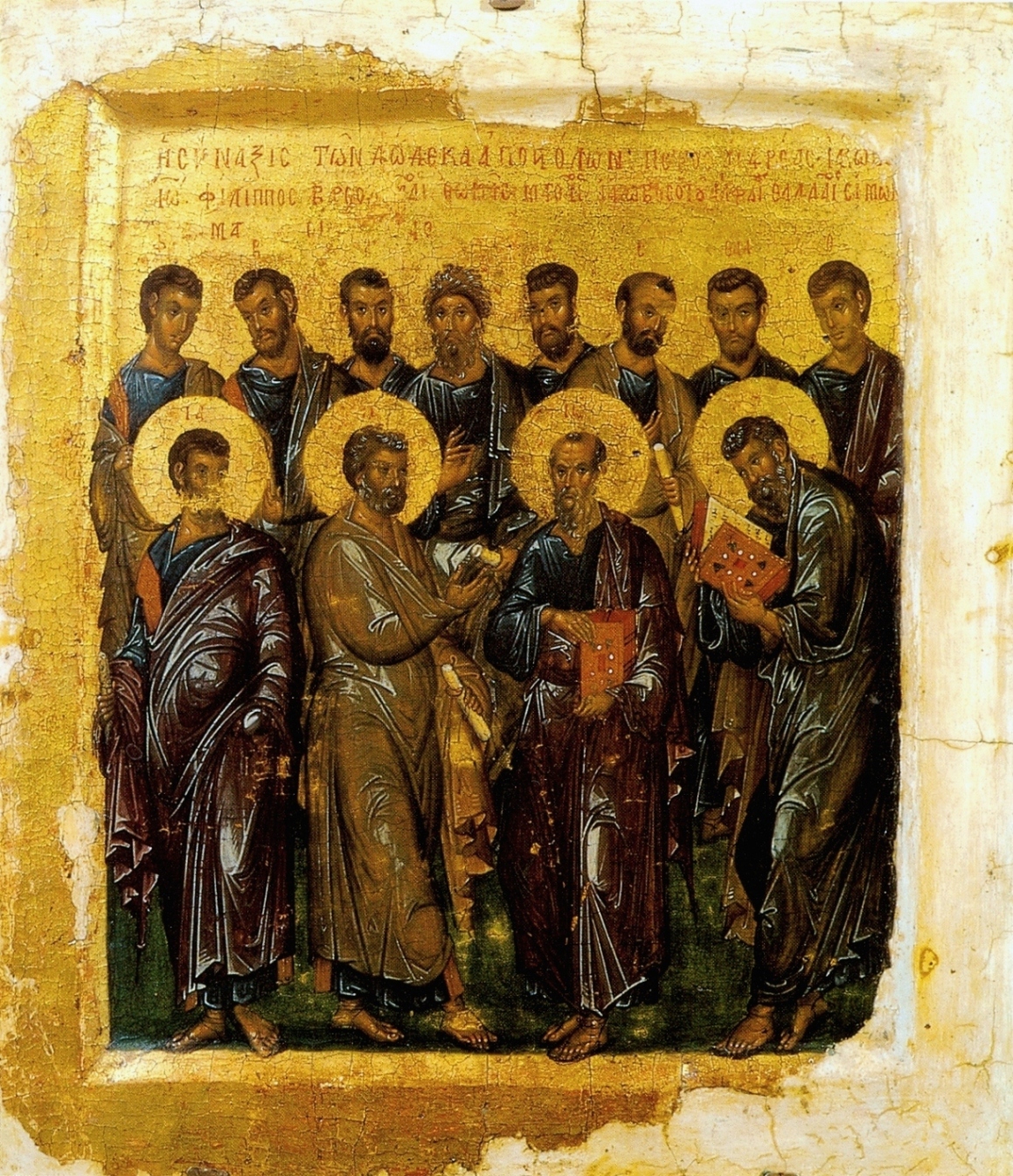

Who they were
The group is described as being selected from Jesus' wider circle of disciples and includes well known individuals such as Peter (Simon), Andrew, James and John (sons of Zebedee), Philip, Bartholomew (often identified with Nathanael), Matthew (also called Levi), Thomas, James son of Alphaeus, Jude (Thaddeus), Simon the Zealot, and Judas Iscariot. Their leaderly role centers on their relationship with Jesus Christ and the tasks he entrusted to them.
Origins and scriptural accounts
New Testament accounts present the Twelve as a selected inner group. The Greek word apostolos means "one sent out," a concept that had parallels in Jewish practice (Hebrew shaliach), which some scholars connect to the background of the office in Judaism. In particular, the Gospel of Mark records that Jesus sent the Twelve out in pairs to proclaim the message and heal in towns of Galilee, emphasizing mission and mutual support.
Functions and developments
In the Gospels and the book of Acts the Twelve engage in teaching, healing, and representing Jesus' authority. After the betrayal and death of Judas Iscariot, the early community chose Matthias to restore the number twelve (Acts). Over subsequent centuries the title "apostle" broadened — figures such as Paul are called apostles though they were not members of the original Twelve — and many churches trace episcopal or ministerial authority back to apostolic figures.
Significance and legacy
The Twelve have been important in theology, liturgy, and art. They symbolize continuity with Jesus' ministry, the missionary commission, and the notion of a representative group authorized to teach and govern. Differences in Gospel lists and emphases also mean that exact details vary between traditions, but the central idea of twelve appointed messengers is a stable element of Christian history.
Further notes
- Names and minor identifications differ among Gospel lists.
- "Apostle" as a category later applied more widely than the Twelve.
- The sending in pairs is an explicit mission pattern in Mark and echoed elsewhere.
For more information on related topics, see discussions of early church leadership and missionary practice in the four Gospels and Acts, or consult broader treatments under Christian tradition, the role of disciples, and the accounts of Jesus Christ and the Gospel of Mark. Historical context may be compared with the Jewish practice of a shaliach and with mission activity in Galilee.
Questions and answers
Q: Who were the Twelve Apostles?
A: The Twelve Apostles were men who were chosen from among the disciples of Jesus Christ for a mission according to the Synoptic Gospels and Christian tradition.
Q: What is the meaning of the term "apostle" in Judaism?
A: In Judaism, the term "apostle" refers to an office known as שליח (shaliah) which means "somebody sent forth/sent out."
Q: Where did Jesus Christ initially send out the Twelve Apostles?
A: Jesus Christ initially sent out the Twelve Apostles in pairs, to towns in Galilee.
Q: What is the difference between a disciple and an apostle?
A: A disciple is a student or follower of a particular teacher or philosophy, while an apostle is someone who is sent forth or commissioned to perform a mission.
Q: How were the Twelve Apostles chosen by Jesus Christ?
A: The method by which Jesus Christ chose the Twelve Apostles is not explicitly stated in the Gospels, but it is believed that he selected them based on their faith, commitment, and potential to carry out his mission.
Q: What was the mission of the Twelve Apostles?
A: The mission of the Twelve Apostles was to spread the teachings of Jesus Christ and to establish his new covenant with humanity.
Q: What is the significance of sending out the Twelve Apostles in pairs?
A: Sending out the Twelve Apostles in pairs emphasized the importance of companionship, support, and accountability in carrying out the mission of Jesus Christ. It also allowed for more efficient and effective evangelization by covering more ground and impacting more people.
Related articles
Author
AlegsaOnline.com The Twelve Apostles: origins, identity, and role in early Christianity Leandro Alegsa
URL: https://en.alegsaonline.com/art/102221
Sources
- perseus.tufts.edu : Liddell & Scott
- blueletterbible.org : Strong's G652
- tools.wmflabs.org : Mark 6:7-13
- tools.wmflabs.org : Matthew 10:5-42
- tools.wmflabs.org : Luke 9:1-6
- newadvent.org : Catholic Encyclopedia: The Brethren of the Lord