
Philip Glass
Philip Glass (born 1937) is an American composer known for repetitive-structure music associated with minimalism, influential across opera, chamber music, dance and film.
Philip Glass (born January 31, 1937) is an American composer whose work helped define late 20th-century musical currents. He is widely associated with musical minimalism but describes his output more narrowly as "music with repetitive structures." For an outline of his life and career see biography resources.
Image gallery
10 Images




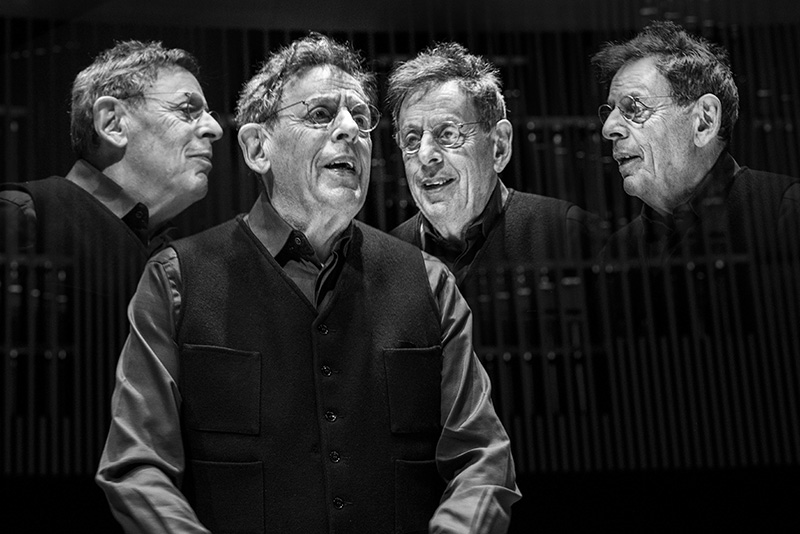
Style and defining features
Glass's music often emphasizes repeated motifs, steady pulse, gradual additive processes and shifting harmonies. Its surface can seem static while underlying patterns move in subtle ways. Critics and listeners recognize characteristic arpeggiated figures, layered textures and rhythmic insistence. For discussions of terminology and approach consult analyses of his style and the broader minimalism literature.
Development and influences
After formal training and early exposure to Western classical techniques, Glass encountered non-Western music and experimental practice that shaped his sound. Important phases include his 1960s experiments with small ensembles and his emergence in the 1970s with ensemble pieces and staged works. A history of his creative development can be found at chronologies and catalogs.
Major works and genres
Glass has produced operas, orchestral scores, chamber music, solo pieces, dance music and film soundtracks. Notable works include:
- Einstein on the Beach (landmark opera, 1976)
- Music in Twelve Parts (extended ensemble cycles)
- Glassworks (accessible chamber collection)
- Film scores such as Koyaanisqatsi and acclaimed later film work
He has collaborated with choreographers, stage directors and filmmakers, bringing his repetitive structures to diverse performance contexts.
Importance, reception and legacy
Glass's influence extends beyond concert halls: his textures and harmonies have fed contemporary classical practice, film scoring, dance and popular music sampling. Over decades he broadened his palette, writing larger orchestral and operatic works while maintaining a signature concern with pattern and pulse. Readers seeking authoritative lists of works and recordings may consult reference pages and specialized catalogs at music archives.
Although often labeled a minimalist, Glass's career shows continual evolution and cross-genre engagement; he remains one of the most discussed and widely performed composers of his generation.
Author
AlegsaOnline.com Philip Glass Leandro Alegsa
URL: https://en.alegsaonline.com/art/128675