
Quartet
A quartet is a group of four, most commonly a musical ensemble. This article explains definitions, typical instrumentations, historical development, common types, and why quartets are important in music and culture.
Overview
A quartet denotes any group of four individuals or elements working together. In the performing arts the term is most often applied to music: a small ensemble of four players or singers performing distinct parts to create a harmonic and rhythmic whole. For a general introduction to music ensembles see music ensembles.
Image gallery
3 Images

Instrumentation and roles
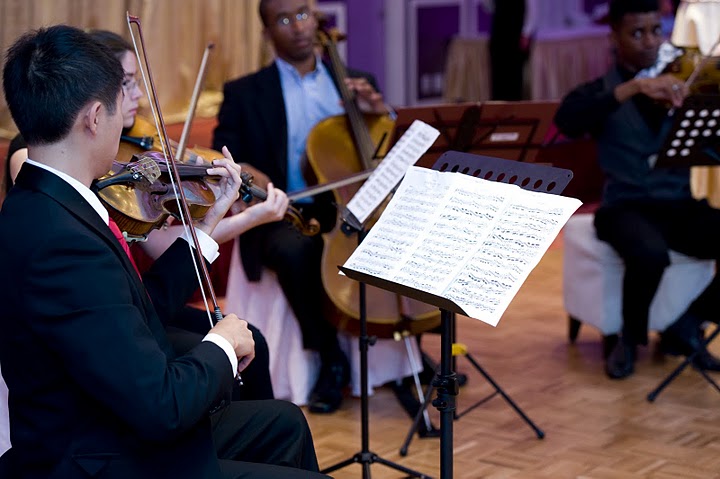
Different quartets assign roles according to genre. The canonical classical string quartet features two violins, a viola and a cello; this formation balances melody, inner harmony and bass. A piano quartet pairs piano with three string instruments (usually violin, viola and cello). Vocal quartets divide parts into ranges such as soprano, alto, tenor and bass (SATB) or adopt styles like barbershop with close harmony.
- Typical instrumental quartets: string quartet, piano quartet, saxophone quartet, brass quartet.
- Typical vocal quartets: SATB chamber quartet, barbershop quartet.
History and development
The quartet became a central chamber formation in the Classical era when composers explored intimate textures and conversational counterpoint. The string quartet in particular developed as a primary medium for composers from the late 18th century onward, offering clarity of line and scope for rigorous structural invention. Popular music and jazz later adapted the quartet format to new instrumentation and improvisational practice.
Types, examples and uses
Quartets serve many functions: performance ensembles, pedagogical groups for training ensemble skills, and compositional vehicles for experimenting with texture and form. Common forms include the classical string quartet, jazz quartet (piano or guitar, bass, drums, one horn), and vocal barbershop quartets. Each type emphasizes different priorities such as written counterpoint, improvisation, or tight vocal harmony.
Notable facts and distinctions
Quartets are valued for balance and flexibility: four parts allow independent inner voices while maintaining a clear bass and lead. The string quartet has been described as a composer’s most exacting laboratory because its small forces reveal structural detail. For more on the classical tradition see string quartet.
Related articles
Author
AlegsaOnline.com Quartet Leandro Alegsa
URL: https://en.alegsaonline.com/art/80408