
Norbert Wiener: Mathematician and Founder of Cybernetics
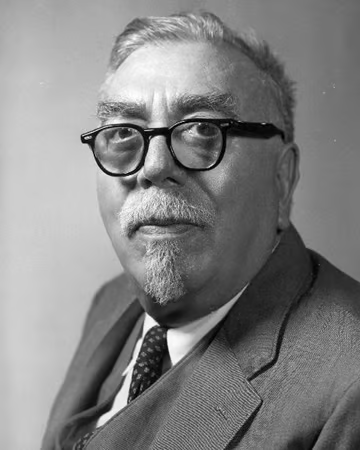
Norbert Wiener (1894–1964), American mathematician who founded cybernetics; major contributions to stochastic processes, control theory, signal processing, and the idea of feedback in machines and organisms.
Overview
Norbert Wiener was an American theoretical mathematician and applied mathematician best known for creating the interdisciplinary field of cybernetics. Born in Columbia, Missouri in 1894 and dying in Stockholm, Sweden in 1964, Wiener combined rigorous mathematics with questions about communication, control and prediction. He was widely regarded as a child prodigy, and his career bridged pure analysis, probability theory, and practical problems in engineering and computing.
Image gallery
8 Images





Major contributions and concepts
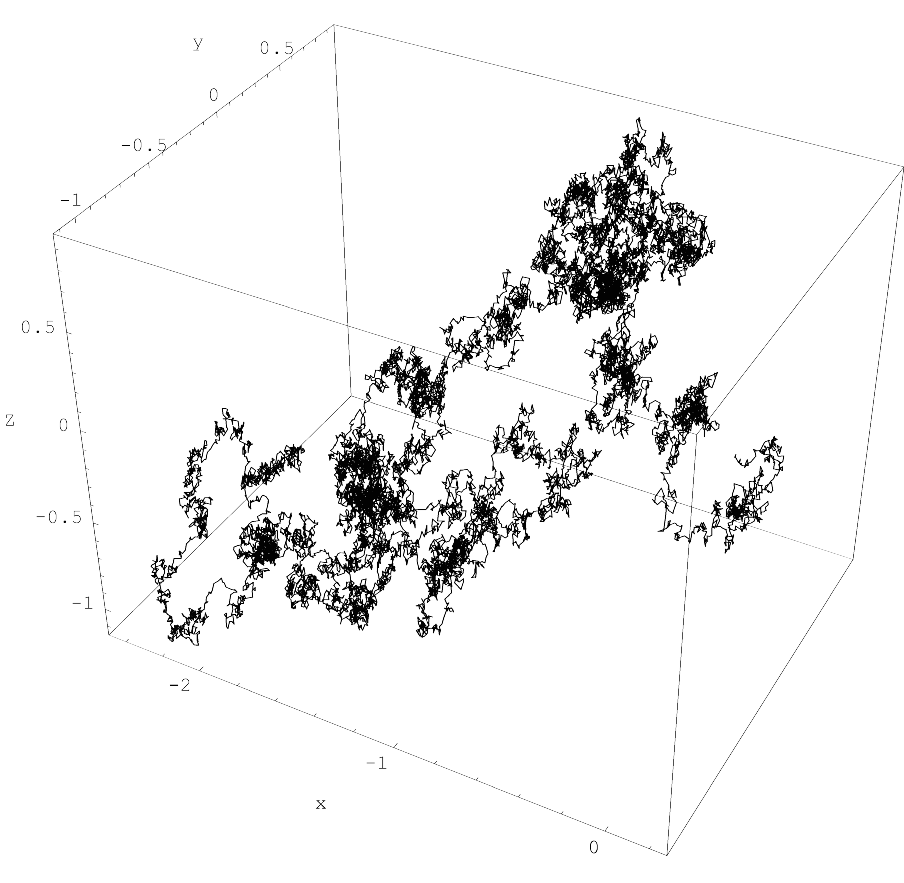
Wiener made foundational advances in the mathematical theory of stochastic processes and prediction. The Wiener process (a mathematical model of Brownian motion) and the Wiener filter (a method for optimal noise reduction and prediction) bear his name. His work formalized ways to treat randomness, noise, and signal estimation, influencing later developments in statistics, electrical engineering, and information theory.
Cybernetics and the idea of feedback
In 1948 Wiener published Cybernetics: Or Control and Communication in the Animal and the Machine, which articulated how systems—biological or mechanical—use information and feedback to regulate behavior. He described control and communication processes that apply across disciplines: from thermostats and servomechanisms to nervous systems. His formulation stressed that "information is information, not matter or energy", a concise view linking signal content to function rather than physical substrate; readers can find the original discussion in his book and its influence across fields.
Influence and applications
- Engineering and control theory: practical designs for regulation and automation (engineering).
- Computer science and computing machines: concepts that later informed algorithmic thinking and early computing (computer science).
- Biology and neuroscience: metaphors and models for information flow and adaptive behavior (biology).
- Philosophy and social thought: questions about purposeful systems, ethics of automation, and the philosophical implications of machine intelligence.
- Organization and society: early considerations of how information systems affect institutions and the organization of society.
Life, career and legacy
Wiener studied and taught in both the United States and Europe, contributing to mathematical analysis, harmonic analysis, and probability while engaging on applied problems arising from wartime research and emerging technologies. He cautioned about social consequences of automation and emphasised responsible application of scientific discoveries. His interdisciplinary approach encouraged collaborations that persist in control engineering, robotics, AI, and systems biology.
Notable facts and further reading
Several technical terms honor his work (Wiener filter, Wiener process), and his 1948 book remains a historic reference for the study of information and control. For context on Wiener’s life, writings, and the broader historical setting of his work, readers can consult biographies and subject overviews that discuss both his technical achievements and his social commentary on technology and ethics. For an introduction to the subject and how Wiener’s ideas intersect with modern fields, see treatments that cover control, communication, and control and communication in natural and engineered systems, as well as writings that explore his famous aphorism that separates information from matter or energy.
Author
AlegsaOnline.com Norbert Wiener: Mathematician and Founder of Cybernetics Leandro Alegsa
URL: https://en.alegsaonline.com/art/127750