
Marta Colvin — Chilean sculptor (1907–1995)
Biography and overview of Marta Colvin, a Chilean sculptor known for monumental abstract forms, her education in Chile, studies in Europe, teaching career, awards and lasting influence.
Marta Colvin Andrade (22 June 1907 – 27 October 1995) was a prominent Chilean sculptor celebrated for large-scale, often abstracted works that combine organic references with a modernist vocabulary. Born in Chillán, Chile, she developed an international reputation through decades of work in both Latin America and Europe, producing public monuments, studio pieces, and a body of teaching and exhibition work that influenced later generations of Chilean sculptors.
Image gallery
5 Images
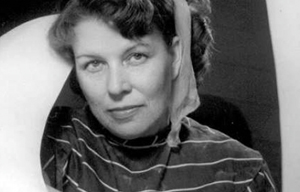


Life and education
Colvin began sculpting after establishing a family in her native region. The 1939 Chillán earthquake and its aftermath led her to relocate to Santiago, where she enrolled at the Belle Arts School of the University of Chile. There she studied with national teachers and emerged as a distinctive voice in Chilean sculpture. In the 1940s she taught and later became a formal instructor and then a professor, helping to shape studio practice for younger artists.
Her studies were not confined to Chile. In 1948 Colvin traveled to France, where she worked in the atmosphere of Parisian modernism and encountered sculptors whose approaches broadened her language of form. In London she accepted an invitation from the British Council to study at the Slade School in England, experiences that deepened her interest in abstract and semi-figurative expression.
Artistic characteristics
Colvin's work is frequently described as monumental, with an emphasis on mass, volume and surface. She often worked in stone, bronze and other durable materials suited to public commissions. Her forms draw on natural motifs—rocks, bones, vegetal shapes—and are distilled into simplified, powerful silhouettes. The result is a language that balances modernist abstraction with a sense of rootedness in landscape and cultural memory.
Career, recognition and works
- Throughout the mid-20th century she produced numerous public pieces and exhibited in European and Latin American venues.
- She lived and worked for long periods in Europe, returning periodically to Chile while maintaining an international profile.
- In recognition of her contribution to Chilean art, she received major national honors, including the National Prize of Art.
Colvin's teaching and public commissions extended her influence beyond individual works. Her approach to scale and material encouraged an expanded sense of how sculpture could occupy civic space and address collective memory. Many of her larger works remain installed in plazas and institutional settings, testifying to a career engaged with both craft and public life.
Legacy and distinctions
Today Marta Colvin is remembered as one of Chile's leading 20th-century sculptors. Her synthesis of modernist form and natural inspiration positioned her within international currents while keeping a distinct Chilean sensibility. Scholars and curators continue to study her development, situating her practice in relation to teachers, contemporaries and the institutions where she taught and exhibited.
For further reading on her life and work, consult institutional histories and exhibition catalogues that document Colvin's teaching roles, European studies and major commissions.
Key places and institutions connected to her biography: Chillán, Chile, Santiago, the University of Chile, study opportunities in France and at the Slade School in England, supported by initiatives such as the British Council. Her professional roles included work as an instructor and professor, and official recognition such as the National Prize of Art.
Author
AlegsaOnline.com Marta Colvin — Chilean sculptor (1907–1995) Leandro Alegsa
URL: https://en.alegsaonline.com/art/126203