
Italian Place Names in Dalmatia
Overview and examples of historical Italian-language place names used along the Dalmatian coast and islands, with background on their origin, use, and cultural significance.
This article surveys Italian-language place names historically applied along the Dalmatian coast and its islands, an area long shaped by maritime contact and shifting rule. For clarity, the term Dalmatian coast here denotes the eastern Adriatic shoreline from Istria and Rijeka/Fiume down to Dubrovnik. Many of the Italian forms survive in old maps, travel accounts, legal records and family histories; a concise guide to those Italian names helps researchers and readers recognize parallel toponyms.
Image gallery
1 Image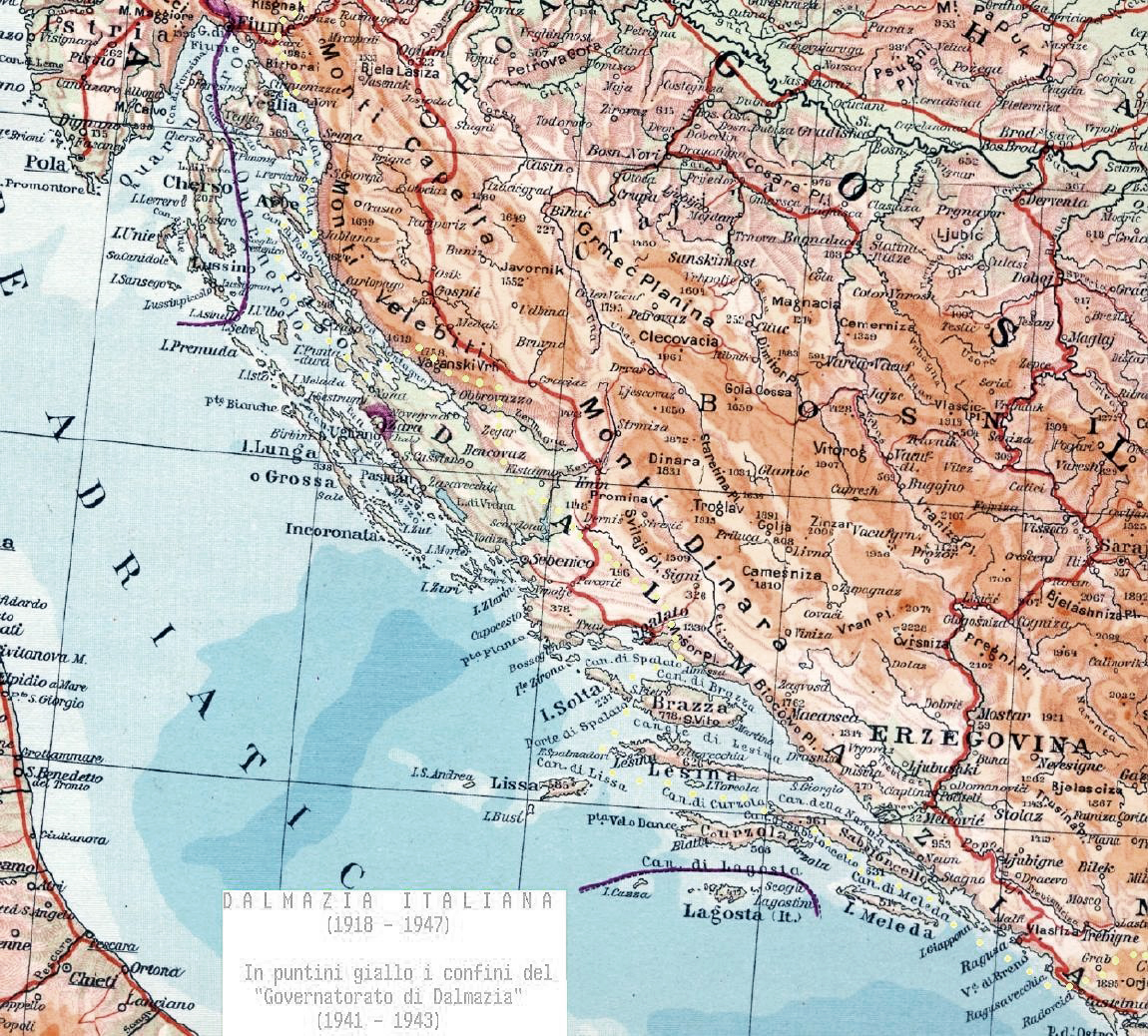
Origins and characteristics
Italian place names in Dalmatia are primarily the result of centuries of Venetian influence, maritime trade and administration. They often reflect phonetic adaptations of Slavic names (Spalato from Split) or older Latin and medieval forms (Ragusa for Dubrovnik). Such names were standardized in Italian-language documents and navigation charts, and can show morphological changes like suffix shifts or consonant changes to fit Italian phonology.
Historical development
From the Middle Ages through the early modern period, the Republic of Venice controlled or influenced many Dalmatian ports and islands; Italian toponyms were used in administration and commerce. Later Austro-Hungarian and 19th‑century maps recorded both Italian and Slavic names. Political changes in the 20th century — nation‑state formation, World War II and postwar population movements — reduced everyday use of Italian names, though they remain important in historical sources.
Examples and uses
Below are commonly encountered pairings (current Croatian name — traditional Italian form). This list is illustrative rather than exhaustive and is intended to aid identification in older texts and maps.
- Dubrovnik — Ragusa
- Split — Spalato
- Zadar — Zara
- Šibenik — Sebenico
- Hvar — Lesina
- Korčula — Curzola
- Brač — Brazza
- Vis — Lissa
- Lastovo — Lagosta
- Trogir — Traù
- Ston — Stagno
- Rijeka — Fiume
Significance and distinctions
Italian toponyms are useful for historians, genealogists, linguists and mariners consulting legacy charts or archival records. Today, the official names in Croatia are the Croatian forms; Italian names persist in cultural memory, scholarly works and among minority communities. Bilingual signage and official recognition of Italian cultural rights occur primarily in Istria and nearby areas, while in much of Dalmatia Italian forms are mainly historical.
For further reading and navigational resources, see specialized historical atlases and archives that record both Italian and local place names. The parallel forms illuminate the region's layered linguistic and political history and remain an important tool for interpreting older documents and maps.
Related articles
Author
AlegsaOnline.com Italian Place Names in Dalmatia Leandro Alegsa
URL: https://en.alegsaonline.com/art/124766