
List of craters on Puck
Overview and context for the named impact craters on Puck, a small inner moon of Uranus, including naming conventions, observation history, and brief description of their characteristics.
Overview
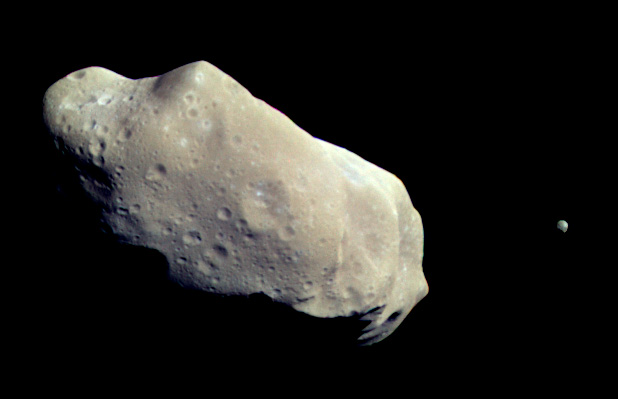
Puck is a small inner moon of Uranus and bears a number of impact scars whose catalogued names form the subject of the list of craters on Puck. Because Puck is modest in size and remote, most information about its surface comes from the single close spacecraft encounter and subsequent telescopic study; detailed mapping is limited and many features remain only roughly measured.
Image gallery
6 Images


Naming conventions
The International Astronomical Union (IAU) applies a thematic rule when assigning names to surface features on Uranian moons. On Puck, craters are named after spirits from mythology, specifically drawing on figures described in European sources and collections of folkloric beings. This convention helps distinguish features on Puck from those on other moons, which may follow different naming themes.
Characteristics of the craters
- Scale: Puck is a relatively small body, so most craters are simple, bowl-shaped depressions rather than complex basins.
- Preservation: Low gravity and lack of atmosphere mean that impact morphology is preserved, but limited imaging resolution restricts fine detail.
- Distribution: Craters appear across the surface, recording a long history of collisions in the Uranian system.
Because imagery of Puck is sparse, many named craters are identified from low-resolution spacecraft images and later refined by Earth-based observations. The formal name list is maintained by the IAU and can be consulted for official spellings and coordinates; names reflect the established theme and are intended to be stable identifiers for scientific use.
Historical and scientific context
Puck was imaged during the exploration of the Uranian system, which provided the first close views of its surface and revealed the presence of impact features. Scientists use crater counts and sizes to infer relative ages and the collisional environment around Uranus. The named craters on Puck therefore serve both as navigational landmarks for describing the moon and as data points in comparative studies of small icy satellites.
For more detail, see official catalogs and thematic naming guidelines maintained by the IAU and reference pages that summarize the known features on Puck. Background on the mythological sources used for names is available through collections of spirits and folklore studies in European mythology. Additional lists and inventories can be found on specialist planetary nomenclature resources and mission archives.
Related articles
Author
AlegsaOnline.com List of craters on Puck Leandro Alegsa
URL: https://en.alegsaonline.com/art/124653