
Lists and catalogs of galaxies
Overview of how astronomers organize and list galaxies: classification, major catalogs and lists, notable examples and groups, and the difference between galaxies and galaxy clusters.
Overview
A "list of galaxies" is any organized compilation that groups individual galaxies for study, comparison or reference. Because the cosmos contains an enormous number of galaxies visible across many wavelengths, astronomers maintain many complementary lists: some emphasize nearby systems, others focus on extreme objects (brightest, most distant, most active), and still others arise from large surveys. Separate compilations exist for galaxy clusters, which are gravitationally bound assemblies of galaxies.
Image gallery
10 Images
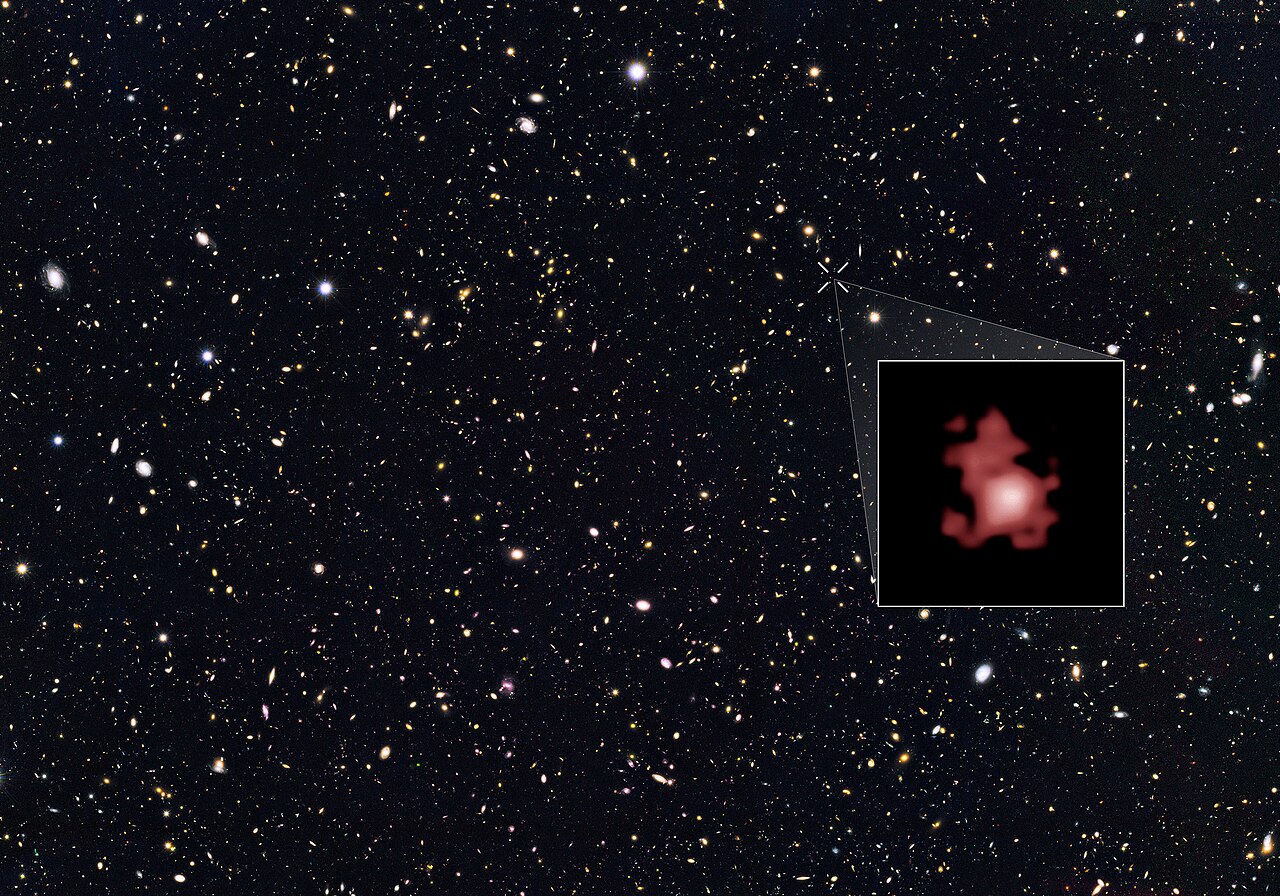


Classification and common categories
Galaxies are often grouped by morphology, environment and observational properties. Typical categories used in lists include:
- Morphological types: spiral, elliptical, lenticular (S0) and irregular — originally organized under Hubble's tuning-fork scheme and modern refinements.
- Activity: active galactic nuclei (AGN), quasars, starburst galaxies and radio galaxies, identified by energetic processes at their centers or intense star formation.
- Distance or brightness: nearest galaxies, brightest in the sky, or highest-redshift (most distant) examples.
- Environmental grouping: members of the Local Group or the Virgo Cluster, satellite galaxies around a larger host, and systems inside galaxy clusters or filaments.
Major catalogs and curated lists
Astronomical catalogs collect galaxies by systematic surveys or historical observations. Well-known compilations include historical catalogs (Messier and the New General Catalogue) and large survey catalogs produced by photographic and digital sky surveys. The first widely used modern compilation was the Catalogue of Galaxies and of Clusters of Galaxies; later efforts and digital surveys expanded the number and level of detail for listed objects.
Examples of commonly referenced lists and catalogs are provided as curated resources: lists of individual galaxies, compilations of galaxy clusters, and broad survey results and context summaries accessible via general resources such as comprehensive astronomical summaries.
Notable examples and groups
Some galaxies appear frequently in lists because they are nearby, bright, or scientifically important. The Andromeda Galaxy and the Milky Way are often cited as representative large spirals; the Large and Small Magellanic Clouds are well-known irregular satellites of the Milky Way. Other frequently listed systems include iconic objects like the Whirlpool and Sombrero galaxies, and extreme sources such as luminous quasars or galaxies undergoing dramatic mergers. Lists also highlight galaxy groups and clusters, which serve as laboratories for studying galaxy evolution and large-scale structure.
Uses and importance of galaxy lists
Organized lists are essential tools in observational astronomy and cosmology. They allow researchers to select targets for follow-up observations, to compile statistical samples for population studies, and to cross-match objects across different wavelength surveys. Educators and amateur astronomers also rely on compact lists (for example, visible targets for small telescopes) when planning observations.
Distinctions and notable facts
It is important to distinguish between a galaxy and a galaxy cluster: a galaxy is a single gravitationally bound system of stars, gas and dark matter, while a cluster contains many galaxies bound together and embedded in a hot intracluster medium. Catalogs vary in scope and criteria: some list every resolved source above a survey threshold, others emphasize specific physical properties. Because the sky has been observed at many wavelengths, complementary lists exist for infrared, radio, ultraviolet and X-ray selected galaxy samples.
Questions and answers
Q: What is the Catalogue of Galaxies and of Clusters of Galaxies?
A: It is the first catalog that catalogues galaxies and clusters of galaxies.
Q: Why has the list of galaxies been divided into several categories?
A: Because there are so many galaxies in the universe.
Q: What does the list of galaxies contain?
A: It contains galaxies and galaxy clusters.
Q: What is the importance of the Catalogue of Galaxies and of Clusters of Galaxies?
A: It is important because it was the first catalog that catalogues galaxies and clusters of galaxies.
Q: Why is it necessary to catalogue galaxies and galaxy clusters?
A: It is necessary because there are so many galaxies in the universe.
Q: What is the purpose of the Catalogue of Galaxies and of Clusters of Galaxies?
A: Its purpose is to list and categorize galaxies and galaxy clusters.
Q: Is the Catalogue of Galaxies and of Clusters of Galaxies the only catalog of its kind?
A: No, there may be other catalogs of galaxies and galaxy clusters.
Related articles
Author
AlegsaOnline.com Lists and catalogs of galaxies Leandro Alegsa
URL: https://en.alegsaonline.com/art/124721
Sources
- arxiv.org : arxiv.org/PS_cache/astro-ph/pdf/0209/0209205v2.pdf
- ui.adsabs.harvard.edu : 1990Sci...250..539U
- doi.org : 10.1126/science.250.4980.539