
Counties of Illinois
Overview and context for the 102 counties of Illinois, including government roles, historical background, common subdivisions, and notable counties and functions.
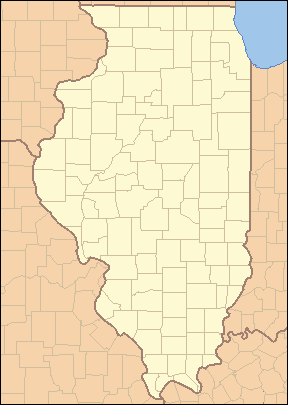
The state of Illinois is divided into 102 counties, each serving as a primary unit of local government. A comprehensive official list of counties records names, county seats and basic facts. Counties together form the framework through which the state delivers many public services and organizes elections.
Image gallery
2 Images
Functions and administration
Counties in Illinois administer law enforcement, courts, property records, tax collection, road maintenance and public health at the local level. Most counties are governed by an elected board (sometimes called a board of commissioners or county board) and maintain a set of countywide elected officers such as sheriff, county clerk, treasurer and state's attorney. The county seat is the town or city where the courthouse and main administrative offices are located; the county seat is not always the largest community in the county.
Subdivisions and local organization
Many Illinois counties are further divided into townships, which provide services like property assessment, road maintenance in rural areas, and general assistance. Municipalities (cities, villages and towns) lie within counties and handle local zoning, police for incorporated areas and utilities. The relationship between county, township and municipal governments varies across the state, producing a mix of urban, suburban and rural arrangements.
History and names
The present county map developed over the 19th century as population grew and new administrative units were carved from existing ones. County names reflect a mix of national figures, state leaders, explorers, Native American words and geographic terms. Over time county boundaries and seats shifted in response to transportation, settlement patterns and political decisions.
Notable counties and examples
- Cook County — the state's largest population center and home to the city of Chicago.
- Sangamon County — location of Springfield, the state capital and its associated institutions.
- DuPage, Lake and Will counties — examples of large suburban counties surrounding the Chicago metropolitan area.
- Many rural counties — often with small towns and an economy centered on agriculture or local industry.
For people researching property, local law, election precincts or family history, county records are a primary resource. For a complete alphabetical table of all counties with seats and founding notes, consult the state or archival related resources. The Illinois county system remains a fundamental layer of government, adapting over time to changing demographics and administrative needs.
Related articles
Author
AlegsaOnline.com Counties of Illinois Leandro Alegsa
URL: https://en.alegsaonline.com/art/124606
Sources
- naco.org : "EPA County FIPS Code Listing"
- naco.org : "Find a county"
- genealogytrails.com : "Illinois County Biographies"
- genealogytrails.com : "The Origin of Illinois County Names"
- ledgersentinel.com : "Reflections: Was Dr. Conrad Will really worth his salt?"