
BMW Z4
Two-seat rear-wheel-drive sports car from BMW introduced in 2002, produced across multiple generations with roadster and coupe variants, noted for its styling, sporty handling, and shifting roof designs.
Overview
The BMW Z4 is a two-seat, rear-wheel-drive sports car produced by the German manufacturer BMW. Launched in 2002 as the successor to the Z3, the Z4 continued BMW’s line of small roadsters that includes the Z1, 507, Z8 and Z3. Designed as a driver-focused vehicle, the Z4 emphasizes balance, steering feedback and a direct connection between driver and chassis. Across its production life the model has been offered in multiple generations with differing roof configurations and a range of engines tuned for everyday usability as well as spirited driving.
Image gallery
10 Images




Design and engineering
Typical Z4 engineering combines a front-mounted inline engine with rear-wheel drive and a near 50:50 weight distribution to encourage neutral handling. Early models favored naturally aspirated inline-six engines and later generations adopted turbocharged four- and six-cylinder units to meet emissions and performance targets. Suspension geometry and damping were tuned for a sportier character than BMW’s larger models, and the cars often featured direct steering calibration, performance brakes and chassis options that sharpened handling. The Z4’s exterior styling has generally followed classic sports-car proportions—long hood, short overhangs and a compact cabin—while interiors balance driver orientation with modern infotainment and safety systems.
Generations
- First generation (E85/E86, 2002–2008): Introduced as a soft-top roadster (E85) with a coupé-like fixed-roof variant (E86). Produced in Greer, South Carolina for global markets, the first Z4 was larger and stiffer than the Z3 and included high-performance variants such as the Z4 M that used BMW’s S54 inline-six engine.
- Second generation (E89, 2009–2016): Adopted a retractable hardtop, giving the Z4 a cleaner silhouette and greater year-round usability. Built in Regensburg, Germany, this generation emphasized refinement and won design awards during its production run.
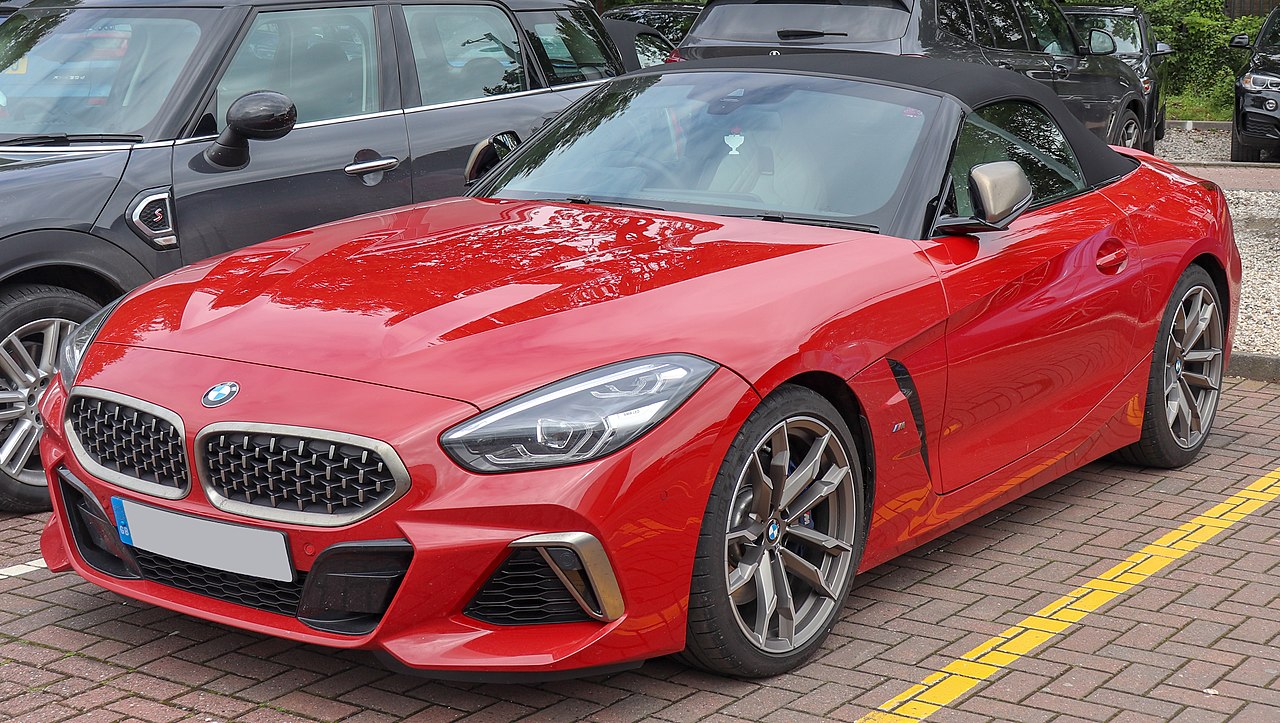
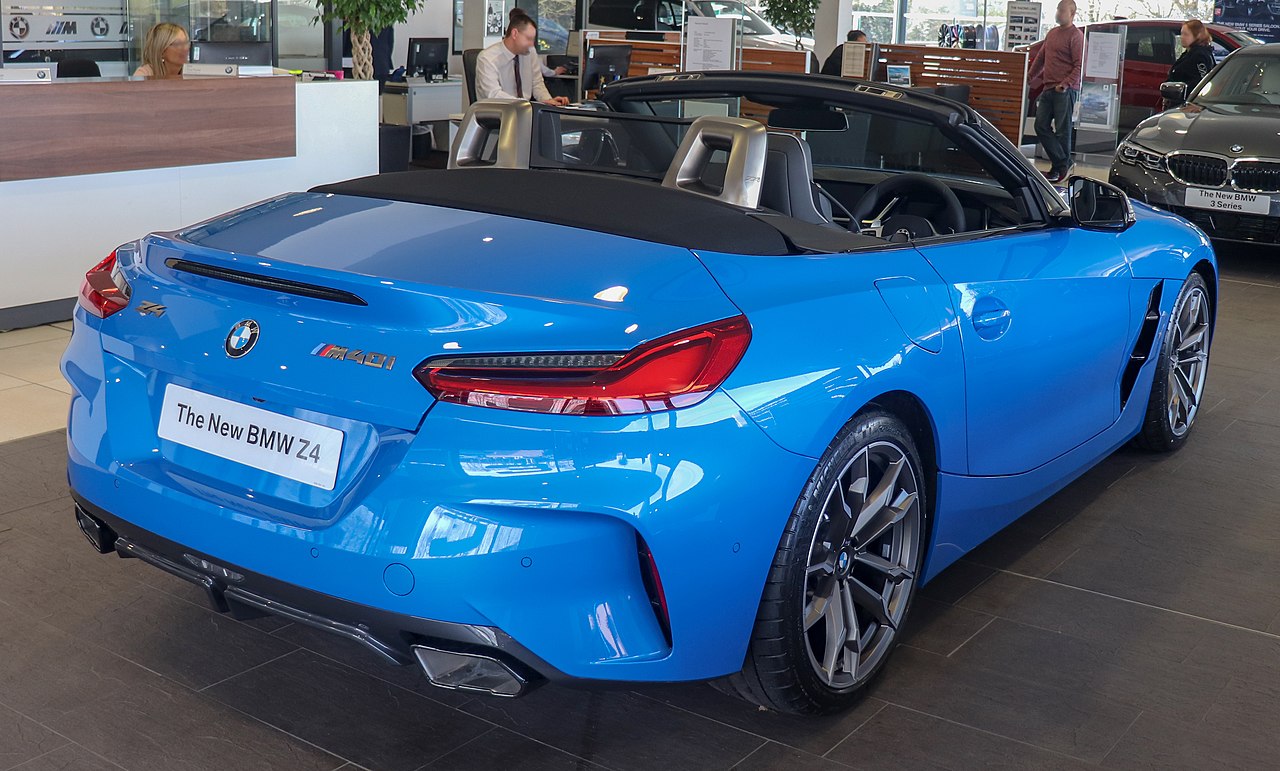
- Third generation (G29, 2018–present): Developed on a modern sports-car platform and produced with the assistance of external assembly partners. The G29 returned to a fabric soft-top and shares development elements with other contemporary sports cars, reflecting industry trends toward platform sharing while retaining distinctive BMW driving dynamics.
Performance and variants
BMW offered the Z4 with a range of trims from comfortable touring-focused models to sharp, track-capable versions. The Z4 M and other performance derivatives featured uprated engines, stiffer suspension, braking upgrades and aerodynamic enhancements. Throughout its life the Z4 has been available with manual and automatic transmissions; later generations also incorporated advanced traction and stability controls to make higher power outputs manageable on public roads.
Motorsport and special editions
Factory-derived racing versions of the Z4 have been campaigned in GT competition, demonstrating the platform’s adaptability to circuit use. BMW and private teams developed competition-focused variants that included reinforced chassis components, stripped interiors, aerodynamic aids and racing-spec drivetrains. The Z4 name has also been used for limited editions and option packages that altered appearance, equipment and dynamic settings for collectors and enthusiasts.
Production, reception and legacy
Production has taken place in multiple locations over the model’s life, reflecting shifts in BMW’s global manufacturing strategy. The Z4 received attention from the automotive press for its styling when first released, earning design awards such as Automobile magazine’s Design of the Year and later honors for subsequent generations. The car’s alternating roof concepts—soft-top, fixed coupé and retractable hardtop—illustrate how BMW adapted the model to changing market preferences and technical possibilities. The most recent generation demonstrates continued emphasis on lightweight construction, modern powertrains and shared development to reduce costs while keeping driving characteristics that appeal to enthusiasts.
Further information
For technical specifications, historical model summaries and buyer guidance consult technical references and market guides. Manufacturer materials and specialist publications provide detailed equipment lists, production figures and option explanations. Useful starting points include a technical reference: technical reference, market guides: market guides, and company model histories: model histories. For brand context and broader corporate information see the manufacturer’s general pages: BMW overview.
Related articles
Author
AlegsaOnline.com BMW Z4 Leandro Alegsa
URL: https://en.alegsaonline.com/art/12440