
Boeing 377 Stratocruiser
A post‑World War II long‑range, double‑deck piston airliner developed from military transports; noted for luxury, complex engines, limited production and a brief era of transoceanic service.
Overview
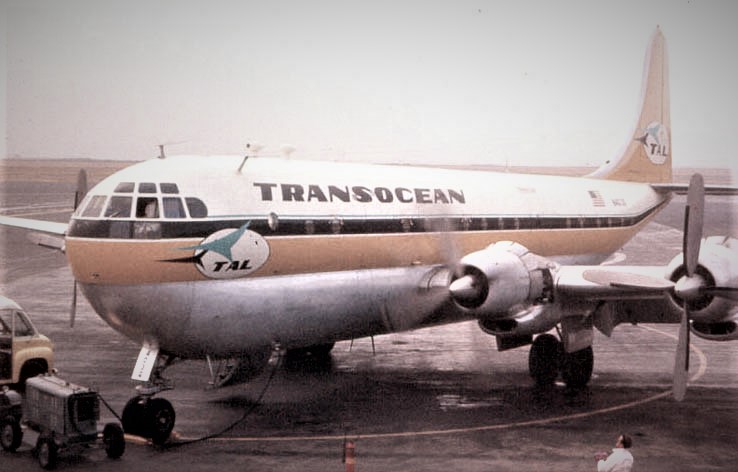
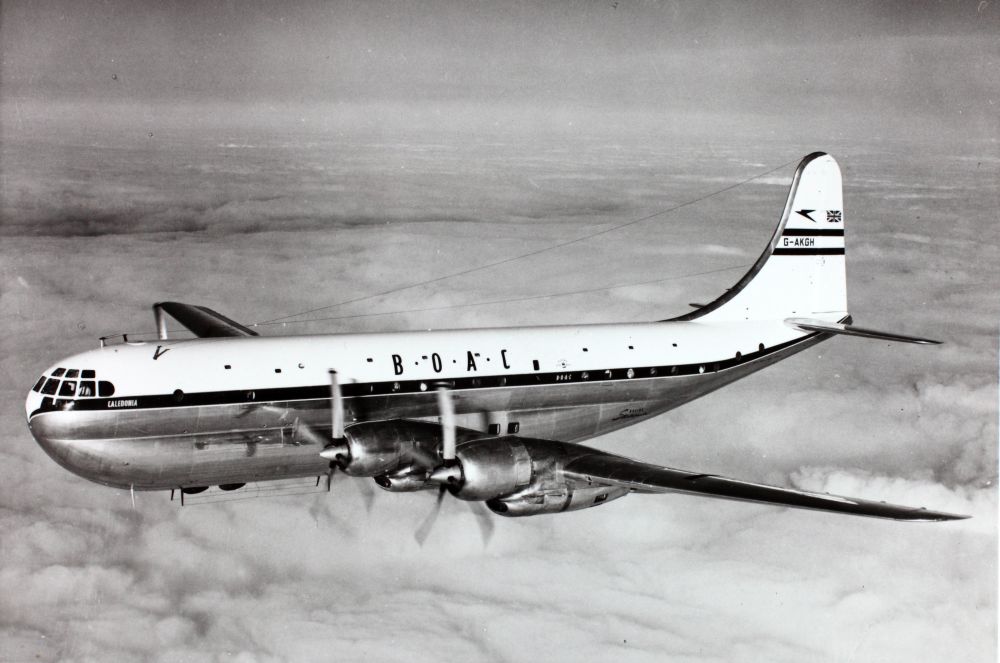
The Boeing 377, commonly known as the Stratocruiser, was a large long‑range airliner developed in the late 1940s by Boeing. Conceived after World War II, it adapted the large transport fuselage of the military C‑97 Stratofreighter, itself derived from the B‑29 family, to carry passengers on transoceanic routes. The Stratocruiser first flew in 1947 and represented one of the most ambitious piston‑engine airliners of its era.
Image gallery
10 Images




Design and characteristics
The 377 featured a pressurized, two‑deck fuselage with a distinctive bulbous cross‑section that allowed a main cabin above and a lounge or sleeping area below. Propulsion came from four powerful radial engines equipped with power‑recovery features to boost efficiency; these engines required intensive maintenance but gave the airplane long range and reasonable cruising altitudes. Interior fittings for some operators emphasized luxury, with lounges, roomy seating and sleeper arrangements for long flights.
Typical arrangements and features
- Double‑deck cabin allowing a forward lower lounge or baggage space converted for passengers on some services.
- Pressurization enabling higher altitude flight and more comfortable long‑distance cruising.
- Large fuel capacity and long endurance for crossing oceans and serving isolated destinations such as Hawaii.
Operational history
The Stratocruiser entered airline service with a handful of carriers and was used on premium long‑haul routes. Major operators included international and domestic airlines that sought a flagship aircraft capable of extended nonstop legs. Production for civil operators was limited—only about fifty‑odd examples were completed for airline use—because the type was expensive to buy and operate compared with contemporary airliners such as the Douglas DC‑6 and Lockheed Constellation.
Legacy and decline
Although celebrated for comfort and innovation, the 377’s complex engines and high operating costs reduced its commercial appeal. The rapid progress of aviation technology in the 1950s, especially the introduction of jet airliners, shortened the piston‑powered transoceanic era. Nevertheless, the Stratocruiser influenced subsequent large transport designs and remains notable for its distinctive two‑level cabin and role in the transition from wartime transports to postwar passenger air travel.
Further reading and context
For more on the aircraft’s military antecedents and the engineering lineage that led to the 377, see materials on the C‑97 and the B‑29 lineage; contemporary accounts also explore how postwar airlines adapted surplus and derivative designs for civilian service. A concise technical and historical overview is available through manufacturer and aviation history sources covering the B‑29/C‑97 family and general postwar air transport developments by Boeing and other repositories. Contemporary route maps and passenger accounts illustrate the type’s use on routes to destinations such as Hawaii and across the Pacific and Atlantic.
Questions and answers
Q: What was the Boeing 377?
A: The Boeing 377, also known as the Stratocruiser, was an airliner made by Boeing after World War II.
Q: What was the Stratocruiser made from?
A: The Stratocruiser was made from the C-97 Stratofreighter, which was a type of Boeing B-29 Superfortress used to move troops around.
Q: When did the Stratocruiser first take off?
A: The Stratocruiser first took off on July 8, 1947.
Q: How many engines did the Stratocruiser have?
A: The Stratocruiser had four piston engines.
Q: Did the Stratocruiser have a pressurized cabin?
A: Yes, the Stratocruiser had a pressurized cabin.
Q: How did the Stratocruiser enable airlines to fly for longer distances?
A: The Stratocruiser allowed airlines to fly for much longer distances due to its advanced capabilities, even to places like Hawaii.
Q: Why were only 55 Stratocruisers made for airlines?
A: The Stratocruiser was much more expensive than the Douglas DC-6 and Lockheed Constellation, which led to only 55 Stratocruisers being made for airlines.
Related articles
Author
AlegsaOnline.com Boeing 377 Stratocruiser Leandro Alegsa
URL: https://en.alegsaonline.com/art/12635
Sources
- boeing.com : "Boeing History: Stratocruiser Commercial Transport"
- chris.boots-faubert.com : Flight Simulation is Stimulation - Boeing 377 Stratocruiser
- israeli-weapons.com : Israeli-Weapons.com - Anak(Boeing 377)
- flickriver.com : Flickriver - Israel07 Israel Air Force Museum by brewbooks
- allaboutguppys.com : All About Guppys.com
- aviastar.org : Aviastar.org - Boeing 377 Stratocruiser
- ovi.ch : Boeing 377 – Stratocruiser
- aviation-history.com : The Aviation History On-Line Museum – Boeing 377 Stratocruiser
- calclassic.com : California Classic – The Boeing Model 377 Stratocruiser