
Leo Baekeland — inventor of Velox photographic paper and Bakelite, pioneer of plastics
Belgian-born chemist Leo Baekeland (1863–1944) created Velox photographic paper and Bakelite, a first synthetic thermosetting plastic that helped launch the modern plastics industry.
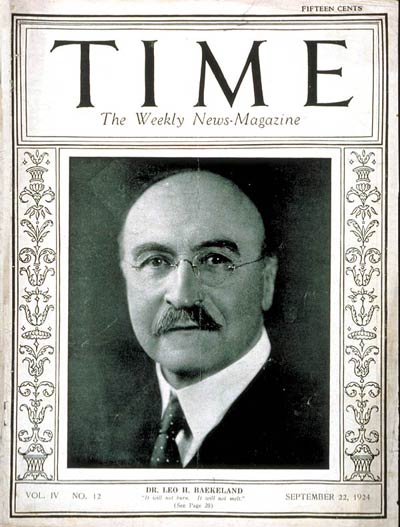
Leo Hendrik Baekeland (November 14, 1863 – February 23, 1944) was a Belgian-born chemist whose inventions had lasting commercial and technological impact. Born in Ghent, he trained in chemistry and later moved to work in the United States, where his laboratory work produced two widely used products that reshaped photography and manufacturing.
Image gallery
7 Images


Early innovations: Velox photographic paper
Baekeland's early career included advances in photographic materials. He developed Velox photographic paper in the 1890s, a commercially successful type of paper that could be developed under artificial light. The invention won practical acceptance and its commercial value helped finance Baekeland's later research and industrial ventures.
Bakelite and the chemistry of early plastics
In 1907 Baekeland discovered and developed what became known as Bakelite, the first fully synthetic thermosetting resin. Formed by the condensation of phenol and formaldehyde, Bakelite is a cross‑linked polymer that does not melt on reheating, distinguishes itself from later thermoplastic materials, and exhibits electrical nonconductivity and heat resistance.
Properties and common uses
- Key properties: electrically insulating, heat resistant, rigid once set, dimensionally stable, and relatively inexpensive to mold.
- Typical uses: housings and casings for radios and telephones, electrical insulators, buttons and jewelry, kitchenware, and early automotive parts.
Commercialization and legacy
Bakelite's practical advantages made it attractive to manufacturers and helped establish the basis for large‑scale production of synthetic polymers, often summarized as the start of the modern plastics industry. Baekeland patented his processes and moved to commercialize the material, founding enterprises to produce and market the new resin. His work is frequently cited by historians of technology as a turning point in materials science.
Notable facts and distinctions
Baekeland is commonly described as a pioneer of industrial plastics. His earlier success with photographic paper and the profits it generated enabled extended laboratory work that led to Bakelite. Although newer polymers have largely replaced Bakelite in many applications, its historical role and distinctive properties keep it notable in museum collections and the history of manufacturing.
For more information on Baekeland's birthplace and biography consult sources linked to Ghent and accounts of his life as a Belgian scientist who made enduring contributions to materials chemistry. Further reading on his inventions can be found via general histories of photography (Velox) and polymer science (Bakelite, plastic).
Related articles
Author
AlegsaOnline.com Leo Baekeland — inventor of Velox photographic paper and Bakelite, pioneer of plastics Leandro Alegsa
URL: https://en.alegsaonline.com/art/124270
Sources
- chemheritage.org : "Chemical Achievers: Leo Hendrik Baekeland"
- time.com : "Time 100: Leo Baekeland"