
Leo Esaki: Pioneer of Electron Tunneling and the Tunnel Diode
Reona (Leo) Esaki, Japanese physicist who discovered electron tunneling in solids, invented the Esaki (tunnel) diode, advanced semiconductor superlattices, and shared the 1973 Nobel Prize in Physics.
Reona "Leo" Esaki (born March 12, 1925) is a Japanese physicist whose experimental work brought a fundamental quantum effect into practical electronics. Esaki is best known for demonstrating electron tunneling in solid-state devices and for inventing the tunnel diode, a device that displays negative differential resistance. His work earned him the Nobel Prize in Physics in 1973, awarded jointly with Ivar Giaever and Brian D. Josephson.
Image gallery
4 Images


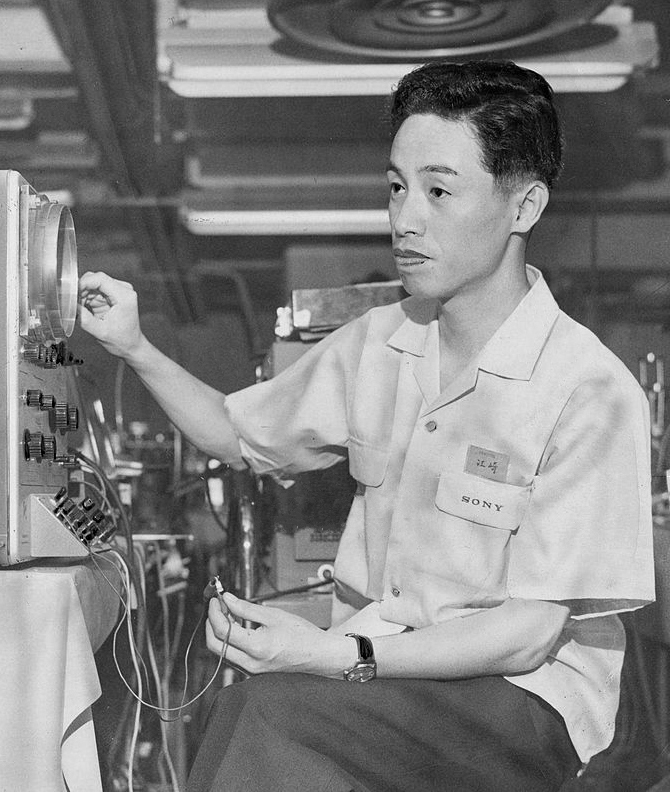
Early life and education
Esaki was born in Osaka, in what is now Japan. He studied at the University of Tokyo, where he received training that combined electrical engineering and solid-state physics. His education and early laboratory experience gave him the experimental skill and materials knowledge needed to investigate electronic transport at small length scales.
Electron tunneling and the Esaki diode
In the late 1950s Esaki demonstrated that electrons in a semiconductor can pass through a thin energy barrier by quantum mechanical tunneling. He fabricated heavily doped p–n junctions in which a narrow depletion region allows tunneling currents to dominate. As a result, the device current falls with increasing voltage over a limited range, producing a region of negative differential resistance. This device became known as the Esaki diode or tunnel diode and was one of the first electronic components whose operation depended directly on an explicitly quantum mechanical process.
Semiconductor superlattices and engineered band structures
Following his work on tunneling, Esaki explored artificial layered structures in which alternating thin layers of different semiconductor materials form a periodic potential for carriers. These semiconductor superlattices produce minibands and minigaps that change carrier motion and optical properties. While the realization of high-quality superlattices later relied on specialized growth techniques such as molecular beam epitaxy, Esaki's conceptual contributions helped establish the field of engineered band-structure materials, paving the way for quantum wells, heterostructures, and other nanostructured electronic systems.
Career and research settings
Esaki carried out his early tunneling experiments while working at Tokyo Tsushin Kogyo, the company that later became Sony. He also spent part of his career in international industrial and academic research environments, including laboratory collaborations with IBM and other institutions, where he continued research on quantum transport and layered semiconductor systems. His work bridged industrial development and fundamental physics, influencing both device engineering and theoretical understanding.
Applications and influence
The Esaki diode found practical use in high-frequency oscillators, microwave detectors and mixers, and in early logic circuits due to its fast response and negative resistance. Beyond the device itself, demonstrating controllable tunneling in semiconductors validated quantum transport models and stimulated development of devices such as resonant tunneling diodes and tunnel field-effect transistors. The broader impact of Esaki's research is visible in modern microelectronics and optoelectronics, where engineered interfaces and quantum confinement are central design tools.
Honors and legacy
Esaki shared the 1973 Nobel Prize in Physics for his discovery of electron tunneling phenomena in solids. His name is associated with the tunnel diode and with foundational ideas about artificial crystalline structures in semiconductors. Esaki's experiments are frequently cited in histories of semiconductor physics as key demonstrations of how quantum mechanics can be harnessed to create new electronic functions.
Key facts
- Full name: Reona (Leo) Esaki
- Born: March 12, 1925, Osaka, Japan
- Education: University of Tokyo
- Early employer: Tokyo Tsushin Kogyo (later Sony)
- Major prize: Nobel Prize in Physics (1973), shared with Ivar Giaever and Brian D. Josephson
Esaki's research exemplifies the translation of quantum theory into functioning devices. His discoveries helped shift electronics from a domain governed solely by bulk material properties to one in which atomic-scale and interface engineering are routinely used to control electron behavior. For more on his published work and historical context, consult standard histories of semiconductor physics and collections of Nobel Prize materials available through major libraries and archives.
Related articles
Author
AlegsaOnline.com Leo Esaki: Pioneer of Electron Tunneling and the Tunnel Diode Leandro Alegsa
URL: https://en.alegsaonline.com/art/124275
Sources
- doi.org : 10.1147/rd.141.0061
- nobelprize.org : Nobel Lecture