
Léon Foucault
French experimental physicist best known for the Foucault pendulum, methods to measure the speed of light, and optical testing techniques in the mid‑19th century.
Overview
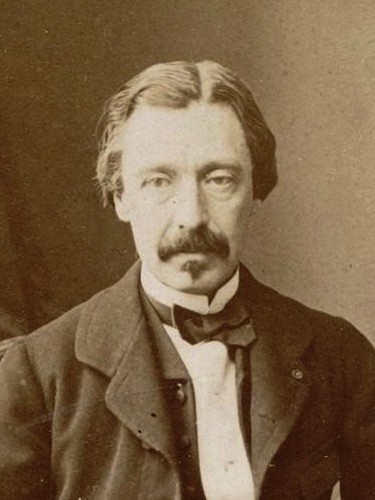
Jean‑Bernard‑Léon Foucault was a French experimental physicist active in the mid‑1800s. He is most widely remembered for devising a simple, striking demonstration that the Earth rotates and for developing laboratory methods to measure the absolute speed of light with greatly improved precision. His work also produced practical techniques used in optics and in public scientific demonstrations.
Image gallery
4 Images


Life and early career
Foucault was born on 18 September 1819 in Paris and died on 11 February 1868. Trained originally for the medical profession, he shifted to experimental science and became known as a meticulous and inventive physicist. Early in his career he worked with colleagues such as Armand Fizeau on investigations of light and heat, combining practical skill with clear demonstrations.
Foucault pendulum and demonstration of Earth's rotation
Foucault devised an experiment involving a long, freely swinging pendulum whose plane of swing appears to rotate relative to the Earth beneath it. The effect is a direct, visual confirmation of Earth’s rotation that requires no astronomical observation and can be performed in a building. Large, public installations of the pendulum helped make the concept accessible to non‑specialists and cemented Foucault's reputation as a communicator as well as an experimenter.
Speed of light and optical methods
Building on and refining earlier work, Foucault introduced a rotating‑mirror technique to determine the absolute velocity of light with greater accuracy than many predecessors. He used laboratory apparatus to compare propagation in different media and produced results that supported the wave description of light by showing that light travels more slowly in denser media than in air. In optics he also developed practical tests for mirror figures—most famously the knife‑edge test—that remain part of optical practice.
Other contributions and instruments
Beyond the pendulum and speed‑of‑light measurements, Foucault demonstrated gyroscopic effects and created clear, hands‑on experiments that illustrated fundamental physical principles. His approaches emphasized precise measurement and reproducible demonstration; several of his techniques were adopted by instrument makers and observatories in the later nineteenth century.
Legacy
Foucault’s experiments bridged laboratory physics and public demonstration. The pendulum remains a popular exhibit in science museums and cathedrals, while his rotating‑mirror method and optical tests influenced later generations of experimentalists. His combination of elegant concept and careful technique exemplifies 19th‑century experimental physics and continues to be cited in historical accounts of the field.
- Key experiments: Foucault pendulum, rotating mirror measurement of light speed, knife‑edge mirror test.
- Collaborations: notable work with Armand Fizeau on light and heat.
- Impact: popular science demonstrations and improved experimental optics.
Related articles
Author
AlegsaOnline.com Léon Foucault Leandro Alegsa
URL: https://en.alegsaonline.com/art/123943