
Joseph McCarthy (1908–1957): U.S. senator and central figure in Cold War anti‑communism
Republican U.S. Senator from Wisconsin, Joseph R. McCarthy became the leading public face of 1950s anti‑communist campaigns—his tactics coined the term 'McCarthyism' and left a lasting controversial legacy.
Overview
Joseph Raymond McCarthy (November 14, 1908 – May 2, 1957) was an American politician and a Republican party member who represented Wisconsin in the United States Senate as a U.S. Senator from 1947 until his death in 1957. He rose to national prominence in 1950 by alleging that communists and communist sympathizers had infiltrated the federal government. His name became eponymous with aggressive, often unsubstantiated, accusations and investigatory tactics that sought to expose subversion.
Image gallery
10 Images



Career and the anti‑communist crusade
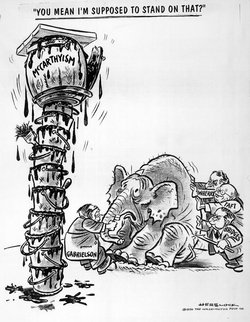
At the height of Cold War tensions, fears of Soviet influence and espionage were widespread. McCarthy tapped into those anxieties and claimed that large numbers of Communists and Soviet agents or sympathizers worked inside government agencies. The period of intense suspicion and public accusation that followed became known as McCarthyism. His allegations helped shape congressional investigations and public debate about national security, loyalty, and civil liberties in the early 1950s.
Methods, public response, and consequences
McCarthy’s approach relied on public speeches, headline-making lists of names, and high-profile hearings. Televised congressional proceedings and sensational claims amplified his reach but also exposed weaknesses: many accusations were unproven or exaggerated. Political opponents, journalists, and later Senate colleagues criticized his methods for undermining due process and individual reputation. By 1954, a combination of investigative reporting, televised hearings, and loss of political support led to formal rebuke by the Senate and a decline in his influence.
Background and personal life
Before his national prominence, McCarthy served in the military during World War II as a captain in the United States Marine Corps. He had previously worked in law and local government in Wisconsin. His political style was confrontational and populist, which helped him gain attention but also provoked sustained controversy. In his later years McCarthy’s health deteriorated.
Death and legacy
McCarthy died in 1957 of hepatitis while at Walter Reed National Military Medical Center. Historians and commentators continue to debate his impact: he is remembered both for raising genuine concerns about espionage during the Cold War and for promoting tactics that damaged civil liberties and ruined careers through public accusation without adequate evidence.
Notable facts
- His campaigns contributed to heightened anti‑communist sentiment during the early Cold War era (Cold War context).
- The word McCarthyism remains in common use to describe reckless or unsubstantiated public accusations.
- While asserting the presence of communists in government, many targeted individuals were later cleared or had their allegations disputed.
- McCarthy’s career illustrates tensions between national security concerns and protections for civil liberties in democratic societies.
Related articles
Author
AlegsaOnline.com Joseph McCarthy (1908–1957): U.S. senator and central figure in Cold War anti‑communism Leandro Alegsa
URL: https://en.alegsaonline.com/art/122929