
Joseph Merrick, the Elephant Man: life, condition, and legacy
Joseph Merrick (1862–1890), called the Elephant Man, was an Englishman with severe deformities who performed in Victorian exhibitions and later lived at the London Hospital; his case shaped medical and social views on disability.
Overview
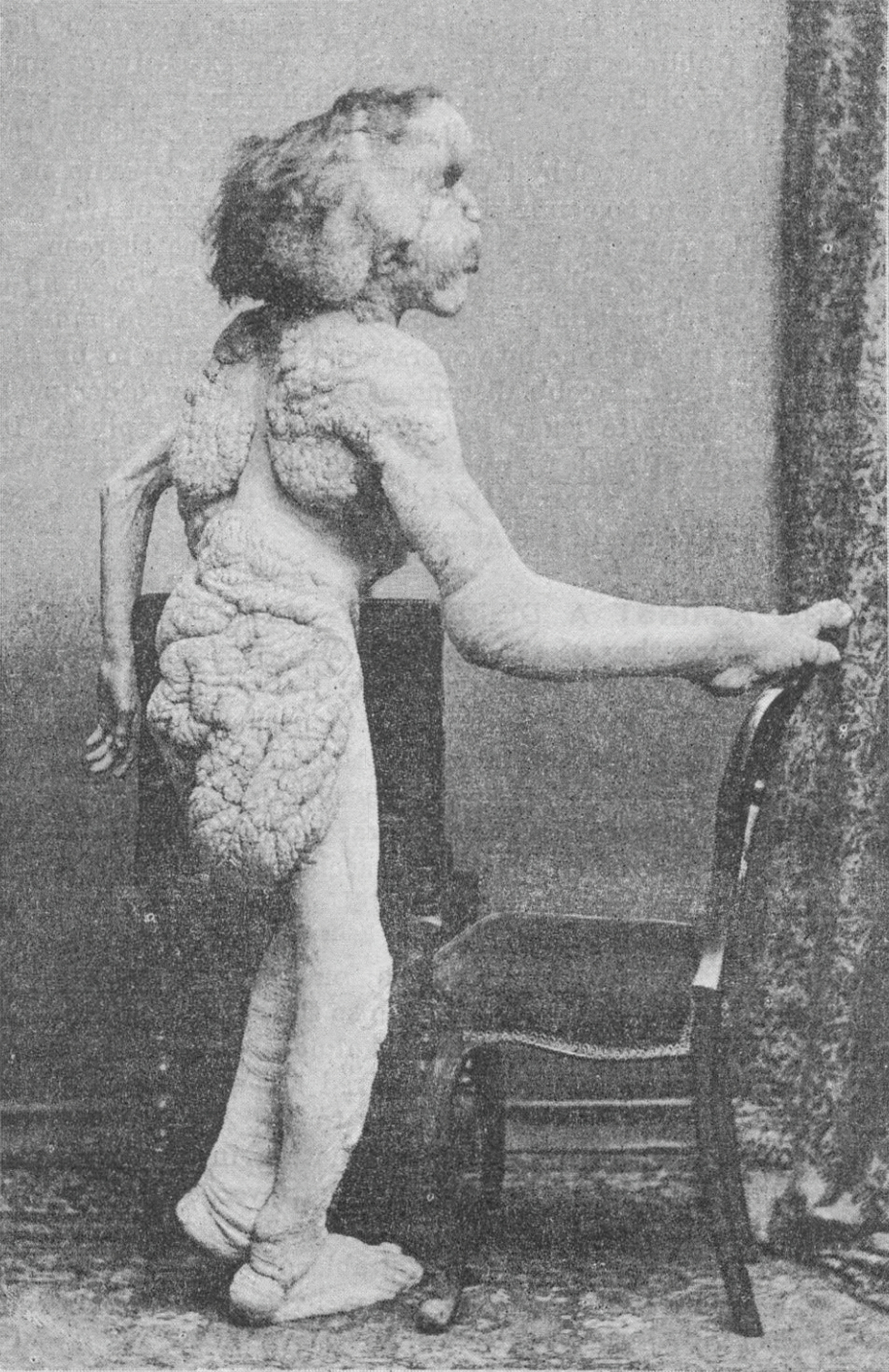
Joseph Carey Merrick (5 August 1862 – 11 April 1890), commonly known as the "Elephant Man," became a prominent figure in late Victorian Britain because of extreme deformities affecting his face and body. He spent part of his life in travelling exhibitions and the later years as a resident of the London Hospital, where he was examined by physicians and visited by the public. Early published accounts sometimes used the incorrect forename "John," an error that persisted for decades.
Image gallery
9 Images




Medical discussion and condition
Merrick exhibited severe asymmetric overgrowth of soft tissues and bone, with extensive skin folds and skeletal abnormalities. Contemporary doctors recorded his appearance and difficulties with movement, feeding and sleeping. Retrospective medical discussion has proposed several diagnoses; in recent decades many clinicians and historians have considered Proteus syndrome the most likely explanation, while others have argued for variants of neurofibromatosis or mixed conditions. Because historical records and postmortem evidence are limited, any retrospective diagnosis remains cautious rather than definitive.
Early life and public exhibitions
Born in Leicester, Merrick showed differences early in life that made regular employment difficult. To support himself and his mother he entered public exhibitions and sideshows, a common but contested source of income in the nineteenth century. Visitors paid to see people with unusual appearances, and such displays raise complex questions about exploitation, agency and survival. Accounts from people who knew him describe Merrick as articulate, intelligent and capable of forming friendships; these accounts also point to the social isolation and prejudice he faced.
Care at the London Hospital
In the mid-1880s Merrick came under the care of the London Hospital after being identified by medical staff. Dr. Frederick Treves examined and wrote about him, which increased public interest but also led to some inaccuracies in early narratives. At the hospital Merrick received steady meals, room and board, and some attention to comfort and occupation; he was photographed and visited by curious members of the public as well as by friends among the medical staff. Hospital life improved his material conditions and allowed observers to learn more about his capabilities and personality.
Death, burial and legacy
Merrick died in 1890; contemporary reports described his death as accidental asphyxia, probably related to difficulty finding a tolerable sleeping position because of the size and shape of his head. He was buried in a public cemetery in east London. Since his death Merrick's life has informed discussions in medical history, disability studies and ethics. His story has been retold in books, a celebrated stage play and a widely seen film, where dramatists and filmmakers used his life to explore dignity, compassion and public attitudes toward visible difference.
Historical and cultural significance
Merrick's case remains important for several reasons: it prompted medical curiosity about rare growth conditions; it highlighted Victorian social responses to disability, charity and spectacle; and it continues to prompt ethical reflection about the treatment of people with visible differences. Modern scholars consider both the human story of Merrick's daily life and the broader institutional and cultural contexts that shaped how he was seen and cared for.
Further reading
- Careful biographies and collections of historical documents provide fuller accounts of Merrick's life and the medical debate; see general biographical resources: biographical resources.
- For context on Victorian exhibitions and the history of public display, consult works on theatre, sideshows and social history: exhibition histories.
Merrick's story continues to be studied both as a singular human narrative and as a case that illuminates changing ideas about illness, embodiment and social responsibility in the nineteenth and twentieth centuries.
Questions and answers
Q: Who was Joseph Merrick?
A: Joseph Carey Merrick was an Englishman who had a deformed face and body due to an illness.
Q: How did Joseph Merrick make money?
A: Joseph Merrick made money by being shown at freak shows.
Q: What was Joseph Merrick famously called?
A: Joseph Merrick was famously called the Elephant Man.
Q: What happened to Joseph Merrick after he went to live at the London Hospital?
A: Joseph Merrick became famous after he went to live at the London Hospital.
Q: What was Joseph Merrick wrongly referred to as by some people who wrote about him?
A: Some people who wrote about Joseph Merrick wrongly referred to him as John Merrick.
Q: When was Joseph Merrick born and when did he die?
A: Joseph Carey Merrick was born on 5th August 1862 and he died on 11th April 1890.
Q: What was the cause of Joseph Merrick's physical deformities?
A: Joseph Merrick's physical deformities were caused by an illness.
Related articles
Author
AlegsaOnline.com Joseph Merrick, the Elephant Man: life, condition, and legacy Leandro Alegsa
URL: https://en.alegsaonline.com/art/122931
Sources
- oxforddnb.com : "Merrick, Joseph Carey [Elephant Man] (1862–1890)"
- doi.org : 10.1093/ref:odnb/37759