
Johannes Rau (1931–2006) — German politician and statesman
Johannes Rau, SPD leader and statesman, served as Minister-President of North Rhine-Westphalia (1978–1998) and as President of the Federal Republic of Germany (1999–2004).
Overview
Johannes Rau (born 16 January 1931 in Wuppertal, died 27 January 2006 in Berlin) was a German politician and a leading member of the Social Democratic Party (SPD). Over a long public career he combined pragmatic statecraft with an emphasis on social justice and civic reconciliation. He is widely remembered for two major offices he held at state and federal levels.
Image gallery
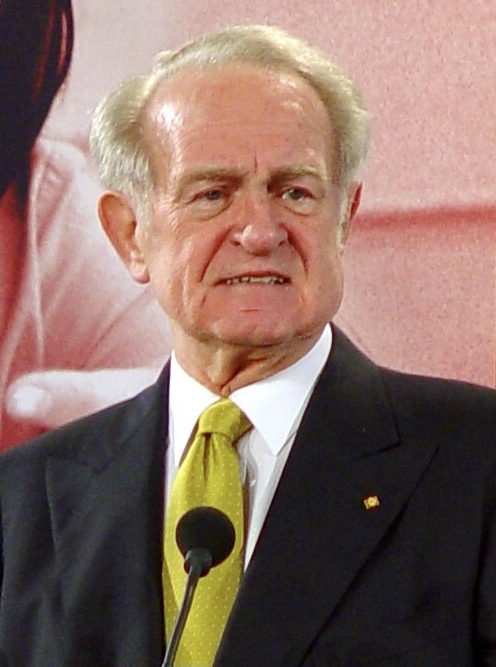
4 Images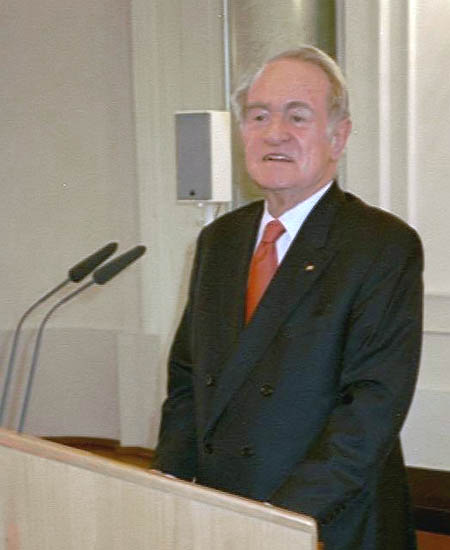


Career and offices
Rau's political life spanned local, regional and national roles. He served as the head of Germany's most populous state, acting as Minister-President of North Rhine-Westphalia from 1978 until 1998, and later became the eighth President of the Federal Republic of Germany, occupying the largely ceremonial but morally influential presidency from 1 July 1999 to 30 June 2004.
- Minister-President of North Rhine-Westphalia (1978–1998) — state leadership
- President of the Federal Republic of Germany (1999–2004) — federal office
Political style and priorities
Rau was known for a conciliatory, moral tone rather than confrontational rhetoric. His public persona emphasized listening, compromise and social responsibility. As a senior SPD figure he advocated policies that sought to balance economic needs with social protections and frequently addressed the ethical dimensions of public life.
Historical context and significance
Rau led North Rhine-Westphalia during years of economic transition when traditional industries were shrinking and regional development was a central concern. His long tenure there reflected political stability and an ability to work across interest groups. As federal president he occupied a role that allowed him to speak on national values, remembrance and Germany's place in Europe and the world without directing day-to-day government policy.
Legacy and notable facts
Observers remember Rau for his steady, modest leadership and for promoting reconciliation in public discourse. His career exemplifies the path from regional influence to a national, representative office. He remained an influential figure after leaving formal office and is frequently cited in discussions of post‑war German leadership styles and the role of moral authority in politics.
For more context on his policies and public addresses, see contemporary records and biographies that document his two decades of state leadership and his five-year presidency, as well as analyses of postwar German political life and the SPD's evolution during the late 20th century.
Questions and answers
Q: Who was Johannes Rau?
A: Johannes Rau was a German politician belonging to the SPD party who served as the eighth President of the Federal Republic of Germany from 1999 to 2004.
Q: When was Johannes Rau born and where?
A: Johannes Rau was born on January 16, 1931, in Wuppertal, Germany.
Q: When did Johannes Rau pass away and where?
A: Johannes Rau passed away on January 27, 2006, in Berlin, Germany.
Q: What were Johannes Rau's political affiliations?
A: Johannes Rau was a member of the SPD (Social Democratic Party of Germany).
Q: What was Johannes Rau's position in North Rhine-Westphalia?
A: Johannes Rau was minister-president of North Rhine-Westphalia from 1978 to 1998.
Q: How long did Johannes Rau serve as the President of Germany?
A: Johannes Rau served as the President of the Federal Republic of Germany from July 1, 1999, to June 30, 2004, for a total of five years.
Q: What were some of Johannes Rau's notable accomplishments during his political career?
A: Some notable accomplishments of Johannes Rau's political career include his contributions to the advancement of bilateral ties between Germany and Israel, his advocacy for social justice and defense of human rights, and his commitment to promoting international peace and cooperation.
Related articles
Author
AlegsaOnline.com Johannes Rau (1931–2006) — German politician and statesman Leandro Alegsa
URL: https://en.alegsaonline.com/art/122279