
Jane Jacobs: Urbanist, Writer, and Community Activist
Jane Jacobs (1916–2006) was a Canadian-American writer, activist, and critic of modernist urban planning whose ideas on mixed uses, density, and street life reshaped urban studies and neighborhood advocacy.
Overview
Jane Jacobs (born May 4, 1916 — died April 25, 2006) was a prominent Canadian and American thinker who worked as a journalist, author and activist. Best known for her 1961 book The Death and Life of Great American Cities, Jacobs challenged mid-20th century urban policy and argued that cities thrive when they support street-level diversity, pedestrian activity and locally informed decision making. Her writing brought practical neighborhood knowledge into debates that had long been dominated by professional planners and large-scale redevelopment schemes.
Image gallery
6 Images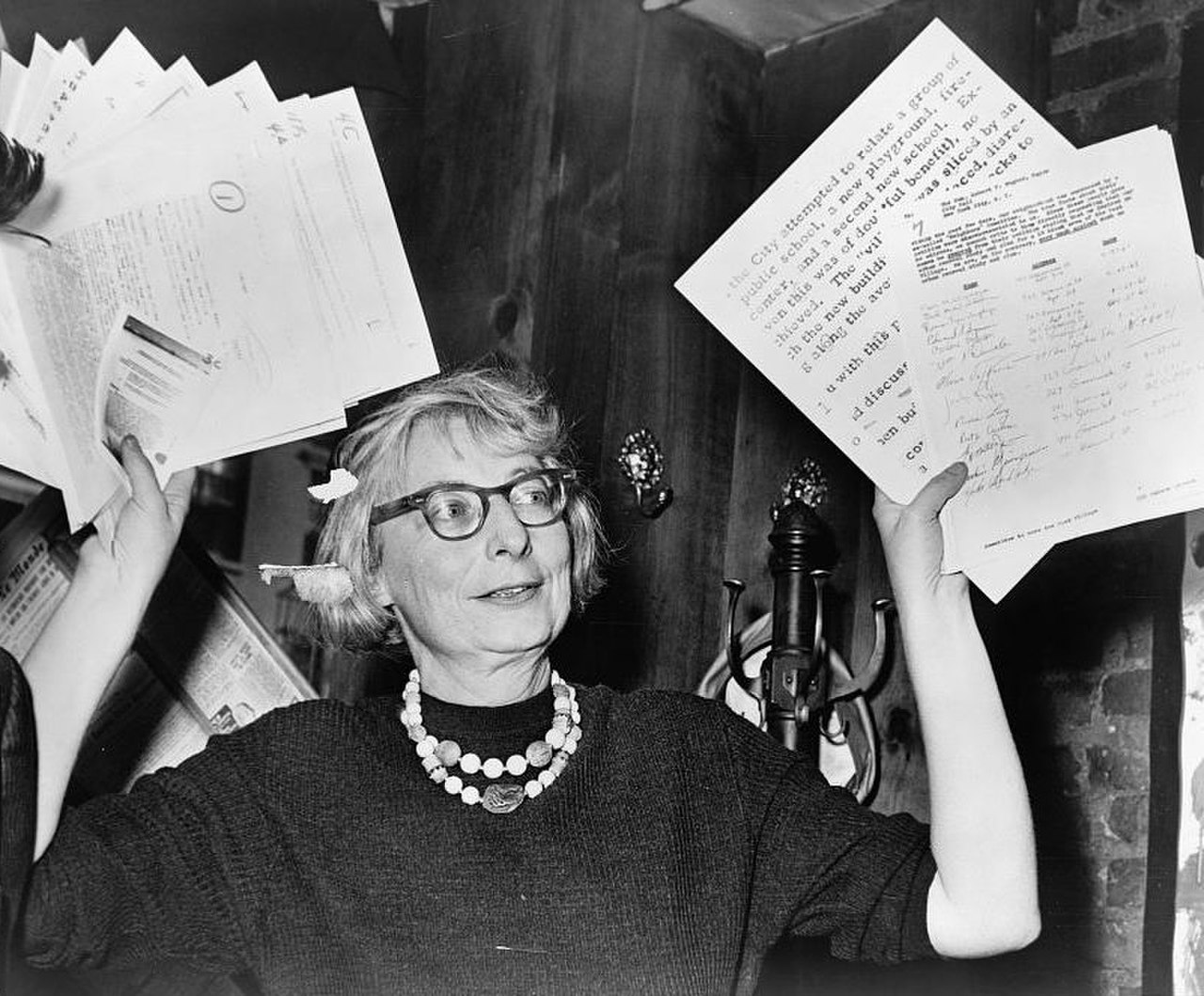


Core ideas and characteristics
Jacobs emphasized several interrelated features of healthy urban neighborhoods: fine-grained mixed uses rather than strictly zoned districts; short blocks that encourage circulation and chance encounters; sufficient density to sustain local businesses and public life; and “eyes on the street,” a concept describing informal public surveillance created by active sidewalks and buildings oriented toward the street. She favored organic, incremental change over top-down clearance and argued that residents’ lived experience is a vital source of planning insight.
History of activism and development
Originally from Scranton, Pennsylvania, Jacobs moved to New York City as a young adult and became involved in neighborhood campaigns during the postwar era. Her critique of large-scale urban-renewal projects and freeway-building placed her in conflict with powerful officials and planners of the time. In the 1960s she helped organize residents opposing the proposed Lower Manhattan Expressway and was arrested in 1968 during protests. That same year she relocated to Toronto, where she continued to intervene in public debates — most notably opposing the extension of an expressway into the city — helping to shift the conversation about roads, preservation, and public space.
Reception, influence, and distinctions
Jacobs had a complicated reception. Working outside formal academic or professional planning circles, and as a woman in a field then dominated by men, she was often dismissed by established figures who questioned her credentials. Over time her observations gained broad respect across disciplines. Urban scholars, economic commentators and practitioners have credited her work with influencing approaches to neighborhood preservation, community-led planning, and the later New Urbanism movement. She received honors including the Vincent Scully Prize from the National Building Museum in 2000, and her ideas continue to be cited in discussions about sustainable, walkable cities.
Practical impact and legacy
Jacobs’ influence is visible in many concrete outcomes: fewer destructive expressways cut through central neighborhoods; stronger preservation of mixed-use districts; and an increased emphasis on pedestrian-friendly street design. Activists and community groups around the world still draw on her arguments when opposing large-scale demolition or advocating incremental improvements. Her insistence that ordinary residents are experts in their own neighborhoods helped broaden who participates in urban decisions.
Main themes at a glance
- Mixed uses and short blocks support vibrant street life.
- Density, when well configured, sustains local services and social interaction.
- Local knowledge and community organization are essential to planning.
- Top-down clearance and highway projects often damage established urban fabrics.
Jacobs died of a stroke in Toronto at age 89, leaving a body of work and a style of civic engagement that remain influential in contemporary urban thought and practice. For further reading and resources see urban planning discussions and collections of her essays and documentaries that explore her life and ideas.
Related articles
Author
AlegsaOnline.com Jane Jacobs: Urbanist, Writer, and Community Activist Leandro Alegsa
URL: https://en.alegsaonline.com/art/121441
Sources
- nytimes.com : "Jane Jacobs, Urban Activist, is Dead at 89"