
Jørn Utzon: Life, Work and Legacy of the Sydney Opera House Architect
Danish architect Jørn Utzon (1918–2008) designed the Sydney Opera House. This article outlines his life, major works, design approach, the Opera House controversy and his lasting influence on modern architecture.
Overview
Jørn Utzon was a Danish architect whose inventive forms and emphasis on spatial quality made him one of the most influential figures in 20th‑century architecture. Born in Copenhagen and raised in Aalborg, he achieved worldwide recognition after winning the international competition to design the Sydney Opera House, a project that both defined his career and illustrated the tensions between creative ambition and public building processes. He is widely remembered for combining modern engineering with sculptural, organic forms and for his belief in the importance of craftsmanship and light.
Image gallery
10 Images
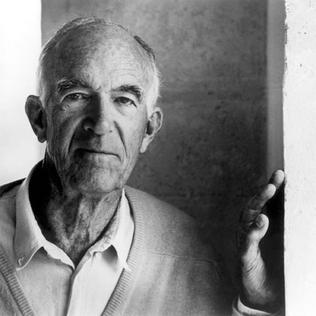


Early life and training
Utzon was born in Copenhagen and brought up in the northern Danish city of Aalborg, where the landscapes and traditional building types influenced his early sensibilities. He studied architecture in Denmark and spent time visiting buildings and workshops across Europe to learn construction techniques and materials. These experiences shaped his later work, which often married clear structural logic with forms derived from nature and traditional crafts.
The Sydney Opera House: design, construction, and dispute
In 1957 Utzon won the international competition to design an opera house for Sydney, Australia. His concept used a sequence of shell‑like vaulted roofs that he described with the famous analogy of "peeling an orange": the roof shells can be generated from sections of a single sphere. Construction involved novel engineering and complex geometry, and the project became controversial because of escalating costs, technical challenges and political disagreement. Utzon resigned from the commission in 1966 and left Australia before the building was completed. The opera house opened in 1973 and later attained UNESCO World Heritage status, becoming one of the most recognizable civic buildings of the modern era. In later decades Utzon was consulted about restoration and modifications, and in 2001 he was invited to contribute to bringing aspects of the completed building closer to his original intentions. He received the profession's highest honors, including the Pritzker Prize in 2003.
Other works and design approach
Beyond the Sydney project, Utzon designed houses, churches and public buildings that illustrate his consistent concerns: careful siting, a humane sense of scale, and an interest in natural light and structural clarity. His work often employs simple materials and modular systems yet yields expressive spatial sequences. Colleagues and later architects have praised his ability to translate a concept into building details that support everyday use and long‑term durability.
Awards, later life and legacy
Utzon received international awards and growing recognition late in life; the Pritzker Prize acknowledged both the quality of his completed work and the lasting influence of his ideas. He returned to Denmark after his Australian years and continued to develop projects and sketches that informed later restorations of earlier buildings. He died in Copenhagen in 2008. Today Utzon is remembered for expanding the vocabulary of modern architecture toward more sculptural, site‑responsive and humanistic directions.
Notable facts and timeline
- Born in Copenhagen in 1918 and typically associated with Danish modernism.
- Raised in Aalborg, where local craft traditions influenced his approach.
- Won the Sydney Opera House competition in 1957 and worked on design and early construction through the 1960s; left Australia in 1966.
- The completed opera house opened in 1973 in Australia and remains a major cultural landmark.
- Utzon likened his roof concept to "peeling an orange" and explained the shells as parts of a sphere assembled to create the forms.
- Over his career he exemplified a balance between innovation and attention to construction: a practical modernism attentive to users and builders.
- Invited in later years to advise on restoring aspects of the Opera House toward his original ideas; he was offered formal roles in redesign discussions but did not return to live in Australia.
- Awarded major honors including the Pritzker Prize in 2003.
- The Opera House and Utzon's broader legacy continue to be studied by architects and students worldwide; the building is frequently cited as an example of how bold conceptual design can transform a city.
For an introduction to Utzon's life and work, readers can follow institutional and archival resources that collect his drawings, writings and project records. These materials illuminate how a single imaginative idea — a sequence of elegant shells — came to be engineered, contested and ultimately celebrated as part of the modern architectural canon. For further reading see curated collections and exhibition catalogues held by architectural libraries and museums. Architectural biographies and retrospectives provide deeper chronological detail, while technical studies discuss the engineering solutions that made Utzon's concept buildable. Additional resources and galleries can be found through regional and international architecture organizations: Sydney Opera House archives and professional institutes document the project's long aftermath and ongoing cultural significance. For general context about his methods and buildings, consult online and printed surveys of postwar architecture and Danish modern design. Historical summaries and critical essays explore how Utzon's ideas continue to influence architects and conservators today.
Further institutional links and exhibition entries: local archives, design studies, technical reports, architectural analyses, and awards listings offer entry points for more detailed research.
Related articles
Author
AlegsaOnline.com Jørn Utzon: Life, Work and Legacy of the Sydney Opera House Architect Leandro Alegsa
URL: https://en.alegsaonline.com/art/121062
Sources
- scandinaviastandard.com : "Six Important Buildings to Know by Danish Architect Jørn Utzon"
- flyvbjerg.plan.aau.dk : "Design by Deception: The Politics of Megaproject Approval"
- pritzkerprize.com : "Jørn Utzon, 2003 Laureate"