
Tallest buildings in Australia
Comprehensive overview of Australia’s tallest buildings: measurement criteria, historical development, notable examples across major cities, recent trends, and how rankings are compiled and interpreted.
Overview
Australia's tallest buildings form a changing skyline that reflects economic cycles, urban policy and advances in construction. Tall towers appear in Sydney and Melbourne as primary high-rise cores, with notable clusters of residential skyscrapers on the Gold Coast and growing numbers of tall buildings in Brisbane, Perth and other capital cities. Rankings of the tallest structures are dynamic and updated as projects complete.
Image gallery
10 Images


Measurement and criteria
Height can be measured in several ways: architectural height (which includes permanent spires), highest occupied floor and tip height (which includes antennas or masts). Most published rankings prioritize architectural height for comparability. Distinctions are also drawn between habitable buildings and non-habitable structures such as observation towers, chimneys or broadcast masts, which are typically listed separately.
Historical development
The first multistorey office towers appeared in the mid-20th century; larger-scale skyscraper development accelerated from the 1970s and again around the turn of the 21st century. Recent decades have seen a proliferation of tall residential towers, driven by urban consolidation policies and demand for inner-city living.
Notable tall buildings (selected)
- Q1 — Surfers Paradise (Gold Coast): a landmark residential tower and long-standing benchmark for Australian height.
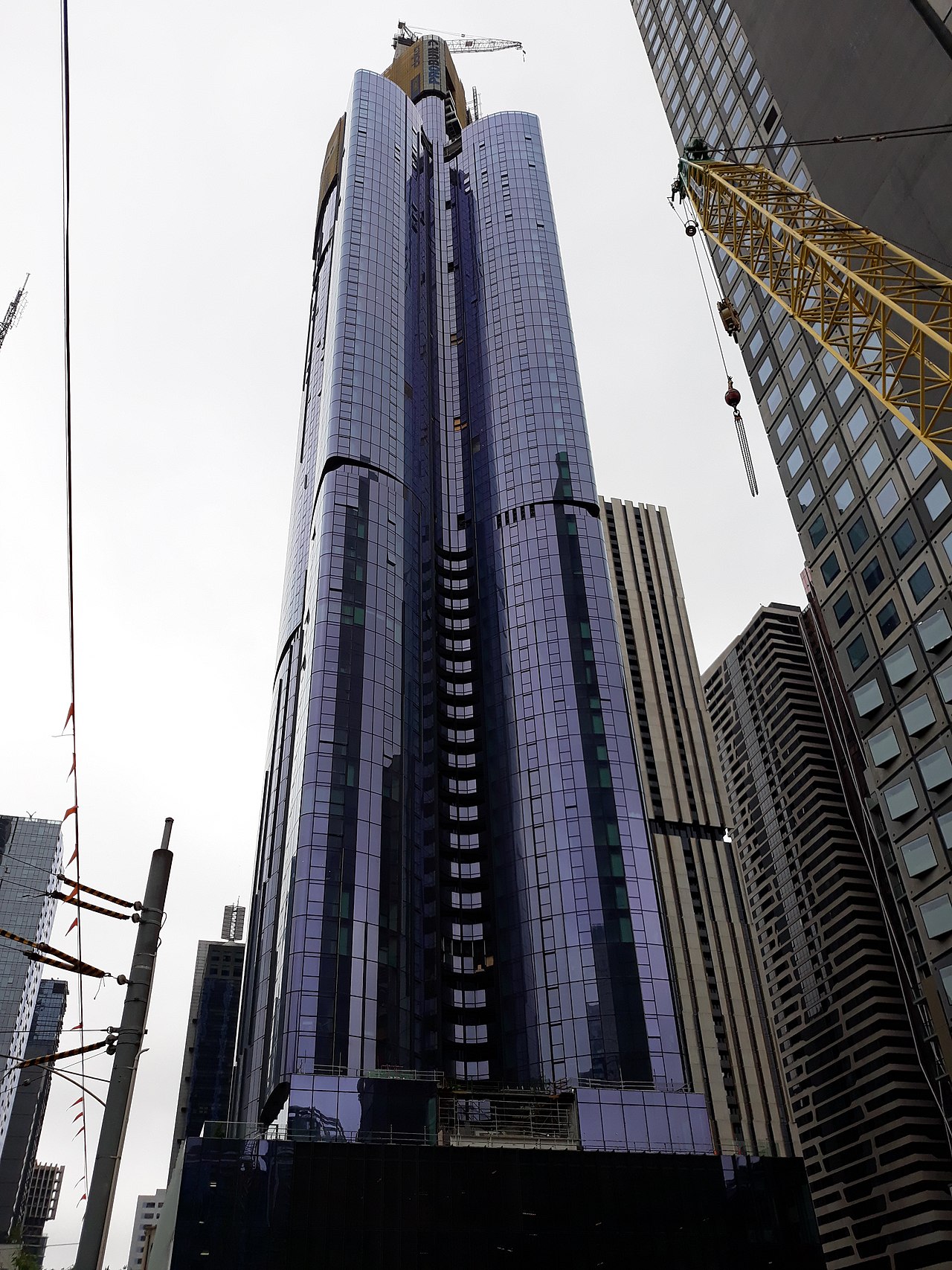
- Australia 108 — Melbourne: a notable residential supertall that reshaped the city skyline.
- Eureka Tower — Melbourne: mixed residential and observation uses, a prominent city landmark.
- Crown Sydney (One Barangaroo) — Sydney: a recent waterfront tower symbolizing high-end mixed-use development.
Trends, planning and significance
Contemporary trends emphasise mixed use, residential towers with amenity floors, and high-rise precincts designed to limit shadowing and respect heritage overlays. Aviation flight paths, local planning controls and infrastructure capacity remain key constraints on where tall buildings can be built. Tall buildings often become visual symbols of their cities and are central to debates about skyline character, housing supply and urban design.
Recording and sources
Authoritative lists are maintained by national and international tall-building registries and are revised as new projects complete. Because of differing measurement standards, readers should check which height definition a list uses when comparing entries.
Questions and answers
Q: What is the list about?
A: The list is about the tallest buildings of Australia.
Q: How many buildings does the list include?
A: The number of buildings on the list is not specified.
Q: Does the list only include completed buildings?
A: It is not specified whether the list only includes completed buildings or not.
Q: Are all the buildings on the list located in a specific city?
A: It is not specified whether all the buildings on the list are located in a specific city or not.
Q: Are there any restrictions on the height of buildings in Australia?
A: There are no federal height restrictions on buildings in Australia, but individual states and territories may have their own regulations.
Q: What is the tallest building in Australia?
A: As the list is not specified, it is not possible to answer this question without further information.
Q: Is the list regularly updated to include new buildings?
A: It is not specified whether the list is regularly updated or not.
Related articles
Author
AlegsaOnline.com Tallest buildings in Australia Leandro Alegsa
URL: https://en.alegsaonline.com/art/125165