
Ilhan Omar — Somali‑American U.S. Representative and progressive leader
Ilhan Omar is a Somali‑American politician representing Minnesota's 5th district since 2019. A refugee‑born lawmaker, she is known for progressive policy priorities, membership in 'The Squad', and prominent national profile.
Ilhan Abdullahi Omar (born October 4, 1981) is a Somali‑American politician who has represented Minnesota's 5th congressional district in the U.S. House of Representatives since January 2019. A refugee who resettled in the United States as a child, Omar became one of the first Muslim‑American women elected to Congress and is widely identified with a progressive group of lawmakers often called The Squad.
Image gallery
10 Images




Early life and education
Omar was born in Somalia and spent part of her childhood in refugee camps before her family resettled in the Minneapolis area. She became active in local civic life and community organizing, particularly around issues affecting immigrant and Muslim communities. Omar completed higher education in the United States and worked in nonprofit and advocacy roles before entering electoral politics.
State and national political career
Omar won election to the Minnesota state legislature in 2016 as a member of the Democratic–Farmer–Labor Party, representing a district that includes parts of Minneapolis. In 2018 she won the Democratic nomination and the general election for Minnesota's 5th congressional district. Her 2018 victory—alongside that of Rashida Tlaib of Michigan—marked the first time Muslim‑American women served in the U.S. Congress. Omar was re‑elected subsequently and has remained a prominent voice on both local constituent issues and national debates.
Committee work and legislative focus
In Congress Omar has served on committees that influence foreign policy and domestic social policy. Her legislative priorities have commonly included strengthening social safety nets, supporting labor and workers' rights, advancing immigrant and refugee protections, pursuing diplomacy and human rights in international affairs, and addressing systemic inequality and racial justice. These priorities reflect her background in community organizing and her district's urban, diverse constituency.
Policy positions
- Economic justice: support for measures to expand access to affordable housing, health care, and fair wages.
- Immigration and refugees: advocacy for comprehensive immigration reform and protections for refugees and asylum seekers.
- Foreign policy: emphasis on human rights and diplomatic solutions, with calls for accountability for abuses.
- Social equity: work on legislation and oversight related to criminal justice reform, education, and anti‑discrimination initiatives.
Controversies and public response
Omar has been a polarizing figure in national politics. She has been praised by many on the left for outspoken critiques of power structures and for elevating perspectives from immigrant communities. At the same time, some of her remarks about foreign policy and lobbying provoked strong criticism from opponents and prompted broader discussions about political rhetoric, antisemitism, and the role of identity in public life. Omar has publicly clarified or apologized for specific statements at times while also defending the substance of her critiques.
Allies, endorsements and political associations
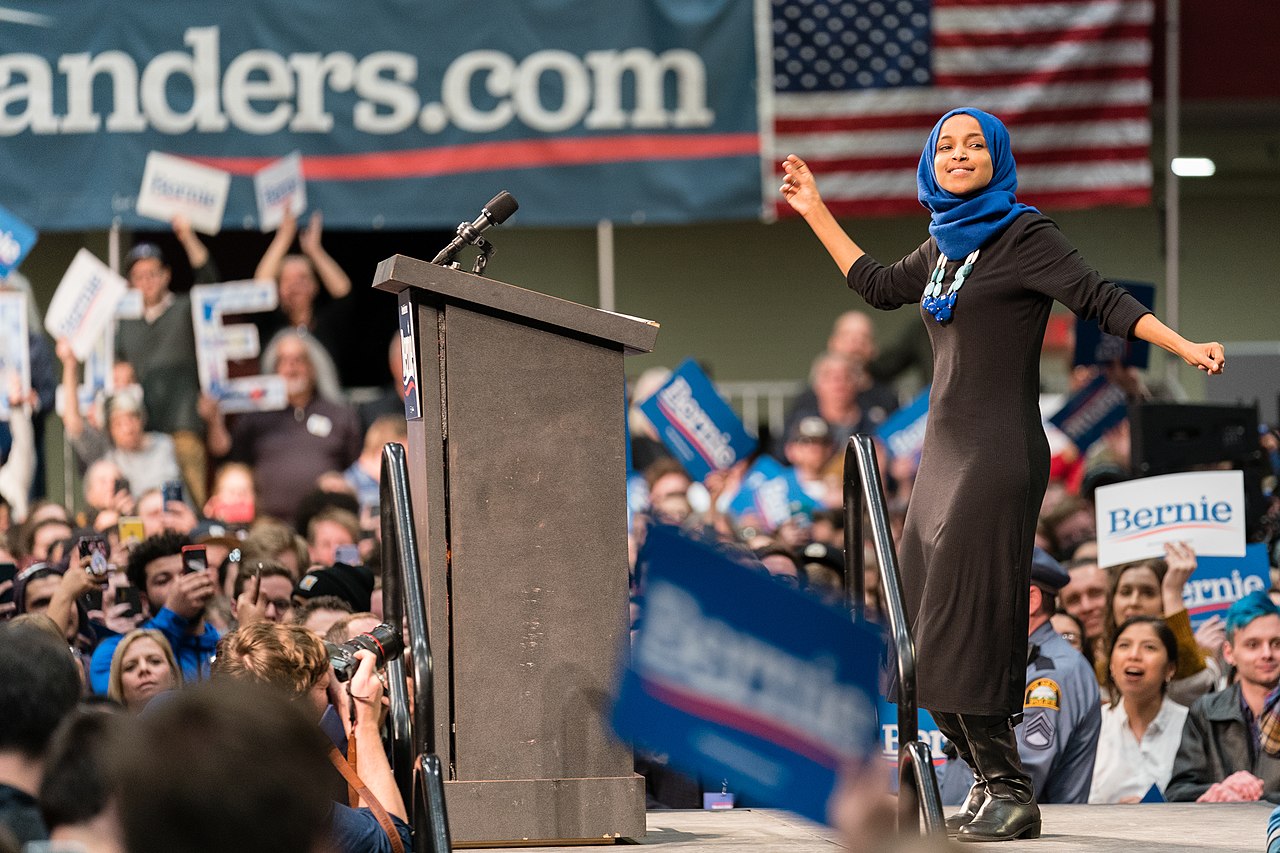
Omar is commonly discussed alongside other progressive House members such as Alexandria Ocasio‑Cortez and Ayanna Pressley as part of a younger, diverse cohort reshaping Democratic politics. She endorsed Bernie Sanders during the 2020 Democratic presidential primary and has participated in national debates on the direction of the party and on policy priorities for working families and marginalized communities. Her involvement in national campaigns and caucus activity has increased her profile beyond her district.
Electoral history and significance
- 2016: Elected to the Minnesota House of Representatives as a member of the Democratic–Farmer–Labor Party.
- 2018: Won the Democratic primary and general election for Minnesota's 5th congressional district; took office in January 2019.
- Subsequent re‑elections reaffirmed her standing in a strongly Democratic district and sustained her national visibility.
Omar's rise from refugee resettlement to state and national elected office is frequently cited as an example of changing demographics and political representation in the United States. Her role has sparked conversation about the intersection of identity, policy, and civic participation, and she remains a central figure in debates about the priorities and strategies of the progressive wing of the Democratic Party.
Readers seeking primary documents, detailed voting records, and committee assignments should consult official congressional resources and reputable news archives. For context on her relationships within Congress and with other progressive lawmakers see materials relating to The Squad and profiles of colleagues such as Rashida Tlaib, Alexandria Ocasio‑Cortez, and Ayanna Pressley. Her endorsements and activity in national campaigns—such as support for Bernie Sanders during a presidential primary—reflect her engagement beyond district‑level politics. She is widely identified with the Somali‑American community and with advocacy for immigrant and refugee issues in the U.S. political landscape; see resources on Somali‑American civic life for additional context.
Related articles
Author
AlegsaOnline.com Ilhan Omar — Somali‑American U.S. Representative and progressive leader Leandro Alegsa
URL: https://en.alegsaonline.com/art/120889
Sources
- news.yahoo.com : "Rep. Omar filed joint tax returns before she married husband"
- nypost.com : "Inside Ilhan Omar's tangled web of relationships"
- startribune.com : "Minnesota U.S. Rep. Ilhan Omar finalizes divorce"
- apnews.com : "US Rep. Ilhan Omar divorces husband in Minnesota"
- cqrcengage.com : Rep. Ilhan Omar (DFL-MN)
- independent.co.uk : "Ilhan Omar: Former refugee is elected as America's first Somali American Muslim woman legislator"
- mprnews.org : "Filing deadline drama: Rep. Omar jumps into race for Congress"
- chicagotribune.com : "Democrats draft an anti-Semitism resolution in response to Rep. Ilhan Omar's remarks on Israel"
- politi.co : "House Dems will take floor action to confront Omar's latest Israel comments"