
Henri Becquerel — discoverer of natural radioactivity
French physicist who discovered spontaneous radioactivity in 1896; co‑recipient of the 1903 Nobel Prize in Physics. The SI unit becquerel is named after him.
Overview
Antoine Henri Becquerel (15 December 1852 – 25 August 1908) was a French scientist best known for discovering that certain materials emit penetrating radiation without an external energy source. His work in 1896 established the phenomenon now called natural radioactivity and opened a new field of physics and chemistry. He shared the 1903 Nobel Prize in Physics with Marie Curie and Pierre Curie for their investigations of these emissions.
Image gallery
4 Images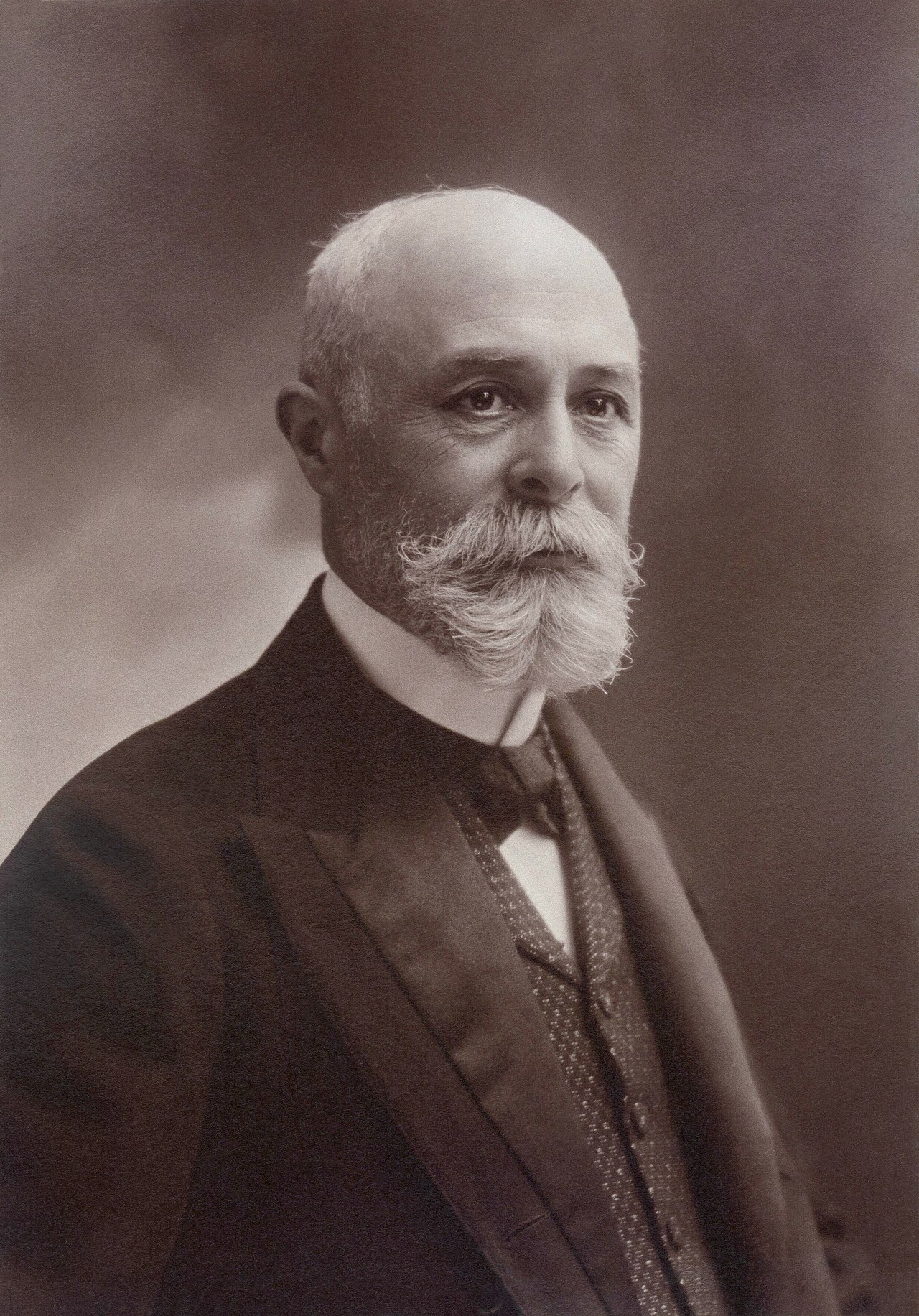


Background and scientific context
Becquerel belonged to a family of scientists; he became the third generation to hold the physics chair at the Muséum National d'Histoire Naturelle in Paris. Trained as a physicist and experimentalist, he worked on optics, electricity and phosphorescence before his key discovery. At the time, X‑rays had just been reported by Röntgen in 1895, and researchers were exploring related effects. Becquerel was interested in the connection between phosphorescent materials and the new kinds of rays, a line of inquiry that led him to study uranium compounds.
Discovery of radioactivity
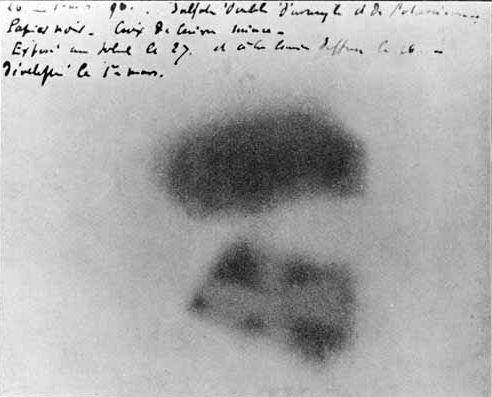
While investigating whether phosphorescent minerals emitted X‑ray‑like radiation, Becquerel placed uranium salts on photographic plates wrapped in black paper. He expected that sunlight would be the activating cause, but on developing the plates he found that they were fogged even when the samples had been kept in the dark. This showed that the emission from uranium was spontaneous and did not require prior exposure to light. That observation distinguished the phenomenon from ordinary fluorescence or phosphorescence and identified a new property of certain elements.
Experiments and immediate findings
Becquerel followed up with systematic measurements, showing that the penetrating rays could pass through thin metal and affect photographic emulsions. He documented that the strength of the emission varied with the mineral and with quantity of material, and he compared it with X‑rays already known to physicists. These careful experimental reports provided the basis for others — notably the Curies — to isolate new radioactive elements such as polonium and radium and to classify the emissions into different types later named alpha, beta and gamma.
Career, recognition and legacy
For his role in revealing spontaneous radioactivity, Becquerel was co‑awarded the Nobel Prize in Physics in 1903. Beyond the prize, his name is preserved in the SI unit of activity: the becquerel (Bq), defined as one radioactive decay per second. His publications and experimental methods influenced early 20th‑century studies of atomic structure and the newly emerging fields of nuclear physics and radiochemistry.
Importance and later developments
The discovery that some elements emit radiation spontaneously had profound scientific and practical consequences. It led to the development of medical imaging and radiotherapy, to techniques in geology and archaeology for dating materials, and to fundamental changes in the understanding of atoms and energy. At the same time, awareness of the health hazards associated with unshielded radioactive materials grew only later; in Becquerel's time, the biological effects were not fully understood.
Key facts
- Born: 15 December 1852; died: 25 August 1908.
- Shared the 1903 Nobel Prize in Physics with Marie Curie and Pierre Curie.
- The SI unit for radioactive activity, the becquerel, honors his name.
- His experiments used uranium compounds and photographic plates to show spontaneous emission; later work classified emissions into types.
For further reading on Becquerel's life and experiments, consult scientific biographies and historical treatments of the early radioactivity research program. Contemporary summaries and translated excerpts of his original reports provide direct access to the experiments that launched a major branch of modern physics. See also related topics on early X‑ray work and the discoveries by Marie Curie, Pierre Curie and other contemporaries (historical context). Additional reference material and archival sources are available through scientific libraries and museum collections (mineral examples, photographic processes, and technical discussions of Becquerel's methods). Finally, modern educational resources explain how the concept of a decay rate translates into the unit Bq used in scientific and regulatory contexts.
Related articles
Author
AlegsaOnline.com Henri Becquerel — discoverer of natural radioactivity Leandro Alegsa
URL: https://en.alegsaonline.com/art/120506
Sources
- nobelprize.org : "The Nobel Prize in Physics 1903"
- Nobel Prize in Physics